Lenin participates in affiliate programs. Using links helps fund archiving and scanning work.
(1603/4–1677)
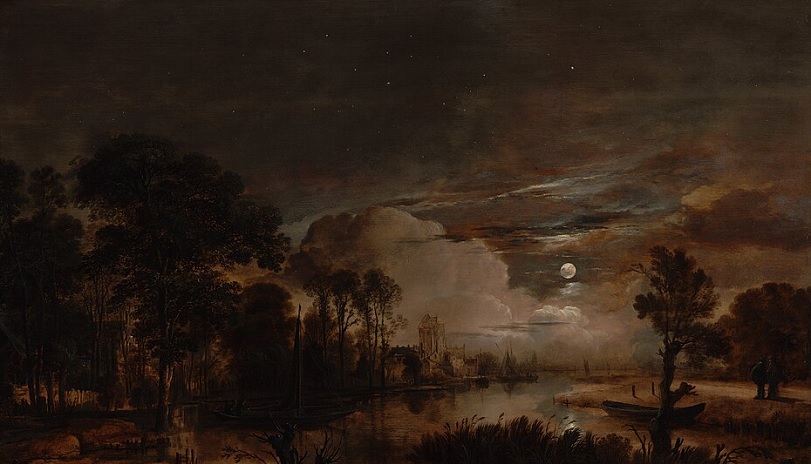
Aert van der Neer was a Dutch landscape painter celebrated today for his extraordinary moonlit scenes, which remain some of the most atmospheric works of the Dutch Golden Age. Living primarily in Amsterdam, he developed a distinctive talent for capturing the shimmering reflections of moonlight on quiet canals, the soft diffusion of night air, and the peaceful rhythms of the Dutch countryside after dusk. Despite the poetic beauty of his work, van der Neer struggled financially and, in 1658, attempted to supplement his income by running a wineshop. Unfortunately, this venture fared no better than his painting sales, and he soon returned fully to his artistic pursuits.
Although best known for his moonlit landscapes, van der Neer also painted a number of winter scenes, often reminiscent of the lively and detailed compositions of Hendrik Avercamp. However, where Avercamp excelled in bustling ice-skating scenes, van der Neer brought a more tranquil and contemplative mood to his winter paintings. His true artistic signature, though, remains his nocturnes — works in which he mastered the difficult balance between darkness and illumination, creating haunting, glowing worlds that feel both naturalistic and otherworldly.
Fine examples of his paintings can be found in major collections, including museums in Amsterdam (Rijksmuseum), Cambridge, Leicester, London (National Gallery, Victoria & Albert Museum, Wallace Collection), and New York (Metropolitan Museum of Art). These holdings reveal the range and refinement of his work, underscoring the lasting value of an artist appreciated far more today than in his own lifetime.
Aert’s son, Eglon Hendrik van der Neer (1634–1703), also pursued painting but forged a very different career. Although he produced some landscapes, he became far better known for his elegant genre paintings, created in a refined style influenced by the work of Metsu. Eglon’s scenes often focus on intimate domestic moments, finely dressed figures, and carefully rendered interiors, demonstrating a polished technique and a graceful sense of composition. His paintings are represented in several prominent collections, including museums in Boston, Glasgow, London (National Gallery and Wallace Collection), and New York (Metropolitan Museum of Art).
Lenin participates in affiliate programs. Using links helps fund archiving and scanning work.