//biog.//
JEAN SIBELIUS
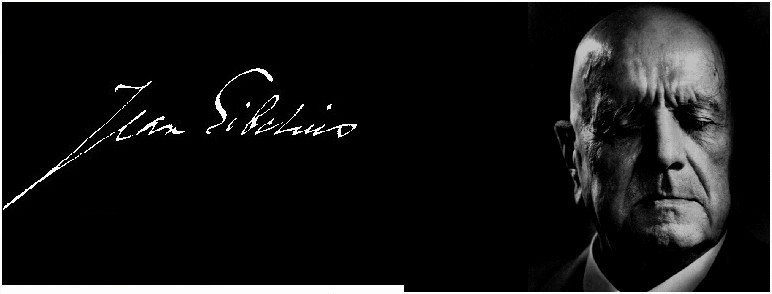
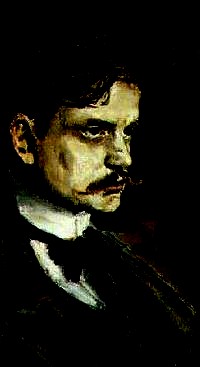
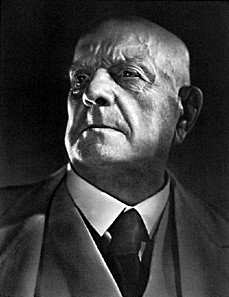
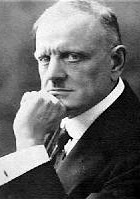
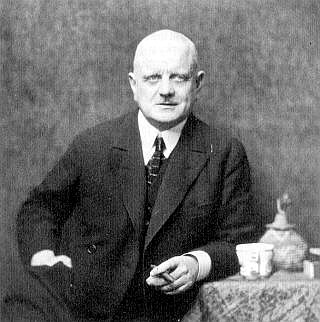
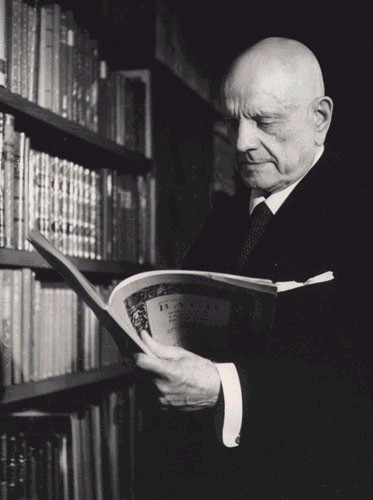
Sibelius was, arguably, the greatest classical composer of the 20th century. His brooding, magnificiently melancholic face mirrored his music which in turn mirrored the Finnish psyche. Later in life, his face looked as though it had been chiselled from Finnish granite and the freezing Finnish winters looked as though they had been chiselled from the music of Sibelius. That is how as one Finland and Sibelius were, and remain so to this day.
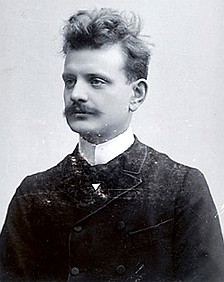
He was born Johan Julius Christian Sibelius on December 8, 1865, into a Swedish-speaking family in Hämeenlinna in the Russian Grand Duchy of Finland.
Though known as Janne to his family, he used the French form of the name, Jean, from his student years onwards. Due to his importance to Finnish culture and history, it is worth noting that his family had to make a conscious effort to send him to an important Finnish language school. He attended the Hämeenlinna Normal-lycée from 1876 to 1885.
After graduating from high school in 1885, Sibelius started to study law at Aleksander's Imperial University in Helsinki. It was short-lived, for from 1885 to 1889, he studied music in Helsinki music school. One of his teachers there was Martin Wegelius. Sibelius continued studying in Berlin (from 1889 to 1890) and in Vienna (from 1890 to 1891).
He married Aino Järnefelt at Maxmo on June 10, 1892. Jean and Aino Sibelius's home Ainola was completed at Lake Tuusula in 1903. They had six daughters , Eva, Ruth, Kirsti, Katarine, Margaret and Heidi. Sibelius gave up on composing in the late 1920s.
Sibelius died of cerebral hemorrhage on September 20, 1957 in Ainola. He is buried at a garden in Ainola. Aino Sibelius lived on for 12 years after her husband's death. She died in Ainola on June 8 of 1969 and is buried at the same grave where Sibelius is buried. In 1972 Jean Sibelius's daughters, Eva, Ruth, Katarina, Margareta and Heidi, sold Ainola to the state. It was opened as a museum in 1974.