1950 Drama
-
• US • BW • 86mins •
- Marlon Brando Ken "Bud" Wilozek
- Teresa Wright Ellen
- Everett Sloane Dr Brock
- Jack Webb Norm Butler
- Richard Erdman Leo
- Arthur Jurado Angel
- Virginia Farmer Nurse Robbins
- Dir:
- Fred Zinnemann
- Prod:
- Stanley Kramer
- Scr:
- Carl Foreman, from his story
- Ph:
- Robert de Grasse
- Ed:
- Harry Gerstad
- Mus:
- Dimitri Tiomkin
books | dvds | posters | videos
cast
crew
-
(United Artists)
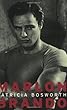
- Extract from the book:
Marlon Brando - available: amazon.co.uk


- [ t h e m e n : m o v i e r e v i e w ]
- Extract from the book:
Marlon Brando - available: amazon.co.uk
Oscars:- 1950: Nominations: Best Story & Screenplay


Classification: 
-
'Broadway's Marlon Brando in his first movie does
a magnificent job. His halting, mumbled delivery,
glowering silences and expert simulation of paraplegia
do not suggest acting; they look chillingly like the real thing.'
- Time on The Men
Brando didn't relate to the symbolism; he related to the story, because to the outside world, little was known about these poor, shattered young men who lay in veterans' hospitals all over the country, marriages broken, fiancees gone, returning to former careers out of the question. How to find a purpose, a reason to go on: This was a dramaric predicament that appealed to Brando. He felt that the story and the character had social significance.
When he arrived in California, he was met by his new agent, twenty-one-year old Jay Kanter, who'd just been hired by MCA. They became close friends, and eventually Kanter became his most trusted adviser and one of the few people Brando liked in Hollywood. He hated almost everything about the film community, especially the glaring sun and the nosy gossip columnists who kept at him with inane questions. He was privately worried his face wouldn't photograph well; he briefly considered plastic surgery. He also hated his hands and wondered how they would look on film; even when he was young, they were wrinkled and deeply marked like an old man's.
He was glad to be staying with close family. His aunt, Betty Lindemeyer, put him up in her modest little house in Eagle Rock., a working-class suburb fifteen miles from Hollywood. Nana, his grandmother, was there too. Feisty and good humored, she raised his spirits briefly. He'd had some bad news from his sister Jocelyn, who had decided to divorce her husband, Don; then he'd heard from Senior, who had experienced severe reversals in a cattle feed scheme he had invested in heavily.
Before he started filming, Brando suddenly began shocking reporters with his rude comments on Hollywood. He called it a frontier town ruled by fear and love of money. "But I'm not afraid of anything and I don't love money," he declared, adding that he'd been born in "outer Mongolia and ate gazelle's eyes for breakfast." When asked about his mother, he
retorted, "She's a drunk." As for his background, "It was
terrible." Kramer's press agents quickly decided Brando
should stop talking to the press for a while.
He wanted to concentrate on researching the role. He asked
to be admitted to the amputees' ward of Birmingham Veterans Hospital in Van Nuys as a paralyzed vet with a background similar to Ken's.
Few members of the staff or patients knew who Brando
was, so for a while he was able to blend in with the amputees,
a cross section of America: blue-collar workers, farmers,
enlisted men. He shared their physiotherapy, spending hours
tumbling out of bed and into his wheelchair. He watched the
paraplegics reach for their hand exercisers, and so did he.
He learned to lift himself out of bed using only his arms.
Eventually he was racing down the hall with the amputees in
their wheelchairs.
By the end of the third week in the hospital, Brando had
been completely accepted by the vets, some of whom played
roles in The Men. He told them why he was there: He was
going to act in a movie about them, and he just wanted to do
it right. The vets began confiding in Brando. They told him
that they were disappointments to their wives because they
would never be able to make love again. Brando became
especially close to one vet who had struggled for a year to
learn how to light a cigarette, since he no longer had the use
of his arms. (Later this man committed suicide.)
At night Brando accompanied the vets to the Pump Room,
a popular bar in the San Fernando Valley where they all went
to drink. Drink was their only solace. Like the vets, Brando
was in a wheelchair, lined up with the others, ordering beer
and talking and joking. Once a little old lady, slightly tipsy,
staggered over to them and began ranting about the healing
powers of Jesus and how if they kept on believing, they might
really walk again.
Brando studied her for a long time, and then with a gigantic
effort, he hoisted himself up. A few people gasped, and the
room fell silent as he took a few halting steps unaided. Everyone else lounging at the bar assumed he was a paraplegic,
and waiters stood by to catch him if he fell. The woman stared
at him bug-eyed when he burst out laughing and began to
perform a softshoe dance up and down the length of the
barroom floor before crying out, "I can walk! I can walk!"
to the wild applause of the vets as he disappeared into the
night.
On the set, things were not as enjoyable. Brando was having
difficulty adjusting to moviemaking. He couldn't remember
his lines. He hated doing scenes out of sequence, and he was
unable to relax as the crew moved about adjusting lights and
cables. "He seemed under a huge strain," Zinnemann recalled
later. "And he was very defensive. I phoned Kazan, and he
assured me, 'Marlon will be all right, just be patient. He'll
come through, I promise you.'"
And he did, although for a while he struggled. He felt
exhausted by having to turn his feelings on and off. In The
Men he had a big emotional scene in which he had to acknowledge his sexual impotence to his fiancee. He arrived at the
studio at 7:30 A.M. and hid out in his dressing room, loaded
with mood music and poetry, anything that would trigger a
big emotional response. He played the scene over and over in
his mind, rehearsed until he felt moved. But when he walked
out in front of the camera at 9:30 A.M., he had nothing left
inside himself.
That evening he watched the rushes and thought his performance was terrible, wooden. He never forgot that moment and from then on proceeded to learn how to pace himself on
the set so that he wouldn't dry up.
Under Zinnemann's austere and expert direction, Brando
not only mastered the mechanics of film acting during the
shooting of The Men but came through with a heartrending
portrayal of someone who faces his limitations and marries his
girl; even though he's no longer "whole," he finds purpose and
reason to live. "Do you want me to help you up the steps?" asks
his new wife, played by the luminous Teresa Wright, and he
answers, "Please." He cannot make it alone, but admitting
failure doesn't mean he's less manly. Brando was able to
express this. In that moment he transcends the traditional
macho John Wayne/Clark Gable male screen star image.
The most important thing about this picture, however, is
that it was Brando's screen debut, and it has to be considered
in relation to the stage work that preceded it and to what
followed on film. It is the young Brando, utterly original, true
to himself and the character. More than any other actor at
that time, Brando presented the ordinary American guy to
the public. The interest he engendered, and the acclaim, were
a response to the vulnerability he projected as well as the
strength. And always his own anger and passion transcend
the roles.
The Men did not make Brando a star in Hollywood the
way Streetcar had made him a star on Broadway, although
his reviews were superlative. Time magazine:
And the New York Times Bosley Crowther:
However, the movie had the bad fortune to open in July
1950, two weeks after the Korean War had started, and nobody
wanted to see a movie about paraplegics. The Men died at the
box office within two weeks.
Months later Brando started filming the movie version of
A Streetcar Named Desire, and just as there had never been a performance like it onstage, there would be nothing like it
on-screen either.
In late 1949 Marlon Brando signed to do his first movie, The Men, produced by Stanley Kramer and directed by Fred Zinnermann, with a script by Carl Foreman. Based on much research, it was inspired by a story about a soldier named Ken Wilocek, whose spine had been shattered by a German sniper at the end of the war. Paralyzed from the waist down, he has to struggle to be a man despite this handicap. The paralysis could also be seen as symbolic of the general powerlessness felt in America during the repressive 1950s, with its blacklists and emphasis on conformity.
"Broadway's
Marlon Brando in his first movie does a magnificent job.
His halting, mumbled delivery, glowering silences and expert
simulation of paraplegia do not suggest acting; they look
chillingly like the real thing."
"His face, the
whole rhythm of his body and especially the strange timbre
of his voice, often broken and plaintive... are articulate in
every way. Out of stiff and frozen silences he can lash into a
passionate rage, with the fearful and flailing frenzy of a taut
cable suddenly cut."
With his movie earnings from The Men, he'd bought his
parents a larger farm in the little town of Mundelein, outside
Libertyville—forty windswept acres of cornfields, a huge
barn, and lilac bushes out front. His mother Dodie loved the place, loved
her garden, her plants, driving her pickup truck around to
AA meetings, and then bringing some of her AA buddies out
to the farm for a meal.


