Index
Biog. >> Trivia >>
Collections >> Gallery >> Large Canvas Prints >>
Caravaggio The Lives of Caravaggio Book Scans - Smartphone Page >>
Caravaggio Books available @ amazon.com
Biography
So called from the Bergamasque town near Milan, when Michelangelo Merisi da Caravaggio was 13, he was apprenticed for four years to a Bergamasque working in Milan, Simone Peterzano. When his apprenticeship came to an end, he may have gone to Rome though there is also evidence that he may have been in Venice (like so many artists of this era and before, hard evidence is hard to come by). At some point, Caravaggio arrived in Rome and worked for the Cavaliere d'Arpino.
In the 1590 he worked for Cardinal del Monte and in 1599 he obtained the commission to decorate the French chapel in Rome, the Contarelli Chapel in S. Luigi dei Francesi. The original altarpiece was rejected due to supposed indecorum and had to undergo radical repainting.
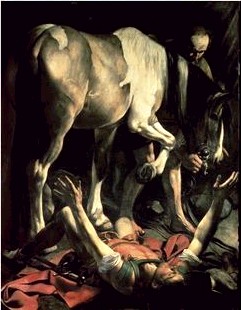
Between 1600-01, he painted the Martydom of St Peter and the Conversion of St Paul for the Cerasi Chapel in Sta Maria del Popolo. Again, it is probale that these were rejected. Other altarpieces he did were heavily criticized on the grounds of indecorum due to his harsh realism. Indeed, much of his work was attacked though any rejected work found a ready buyer among cardinals and noblemen.
Caravaggio's famed reputation for his, er, love of a fight, was first documented in 1603 when Baglione brought a libel action against him. He soon became notorious for his numerous fracas with the police. His violent temper brought his career in Rome to an end in 1606 when during a game of racquet he argued with an opponent and stabbed him. He fled, ending up in Naples and working there for a time; then he went to Malta and was received by the Grand Master of the Order of St John. He was made a Knight of Grace which was the lowest grade and his temple soon got the better of him for he assaulted a Knight Justiciary (the highest grade) and was imprisoned. In 1608, he escaped and fled to Sicily and was, unsurprisingly, expelled from the Order.
He may have worked for the Order of Messina next but what is definate is that the following year he was back in Naples, and was seriously wounded in a fight in a tavern. He left Naples by sea for Port'Ercole. Once there, he was imprisoned by mistake; when he was released he discovered the felucca which he thought had all his goods on board had sailed. His frantic efforts to overhaul the felucca brought on a fever, and a few days later he died in a tavern.
The goods, in fact, were in the customs house in the port.
Trivia
Collections
Gallery :: Notes
Caravaggio, or more accurately Michelangelo Merisi da Caravaggio (Milan 1571 - Porto Ercole 1610), was a legend even in his own lifetime. Celebrated by some for his naturalism and his revolutionary pictorial inventions, he was considered by others to have destroyed painting. Few other artists have attracted such controversial and contradictory interpretations right up to modern times and to the latest art historical research.
Source: Caravaggio: The Complete Paintings [Hardcover] Book available @ amazon.com
Below is a taster of what the above words actually mean. A little visual journey beyond words. Get inside the mind of a genius, look around awhile, and see what was once achieved on this mortal coil.
Gallery :: Paintings

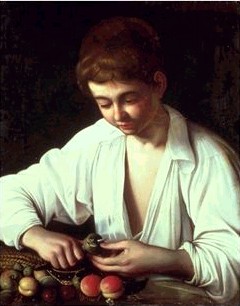
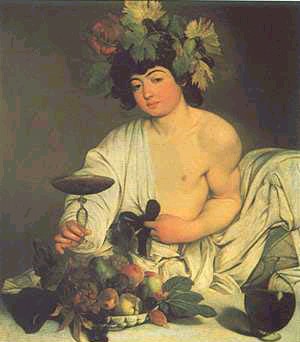
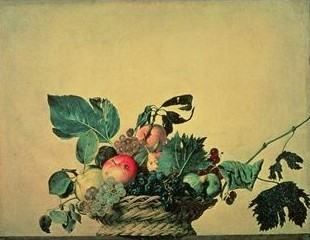







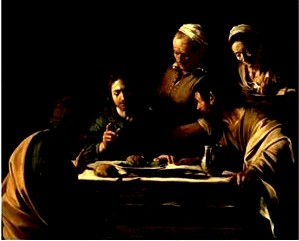


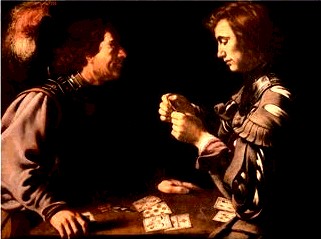

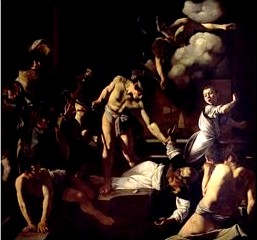

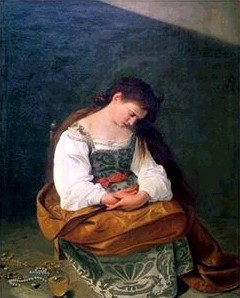


Canvas Prints

Rest On The Flight To Egypt Large Canvas Print

Sacrificing Isaak Large Canvas Print

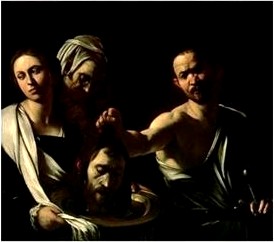
Salome Receives The Head Large Canvas Print

Self-Portrait as Bacchus Large Canvas Print
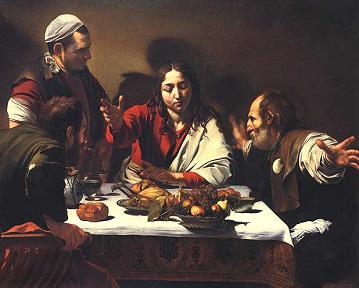
The Supper at Emmaus Large Canvas Print
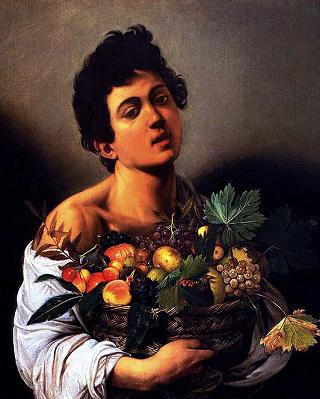
Young Man With Fruit Basket Large Canvas Print
Links
Biog. >> Trivia >>
Collections >> Gallery >> Large Canvas Prints >>
Caravaggio The Lives of Caravaggio Book Scans - Smartphone Page >>
Caravaggio Books available @ amazon.com