
paul newman
(born 1925)
biography
filmography
gossip
interview
books
dvds
posters
videos
humphrey bogart
james coburn
steve mcqueen
paul newman
robert redford
james stewart
frank capra
charlie chaplin
alfred hitchcock
fritz lang
f.w. murnau
erich von stroheim
wim wenders
robert wiene
richard attenborough
richard burton
john gielgudstewart granger
cary grant
jack hawkins
stanley holloway
trevor howard
james mason
john mills
david niven
laurence olivier
eric portman
dennis price
richard todd
peter ustinov
isabelle adjani
ursula andress
f. barber
bardot
emmanuelle beart
j. bisset
madeleine carroll
julie christie
dalle
josette day
dietrich
britt ekland
garbo
ava gardner
rita hayworth
valerie hobson
grace kelly
margaret lockwood
monroe
m. sologne
- paul
newman
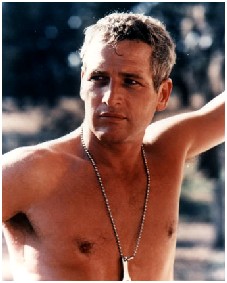
[ p a u l n e w m a n : b i o g ] "The embarrassing thing is that my salad dressing
is out-grossing my films."
- Paul Newman
biography | filmography | gossip
interview | books | dvds | posters | videos
paul newman
charles bronson | yul brynner | james coburn | steve mcqueen
paul newman | robert redford | james stewart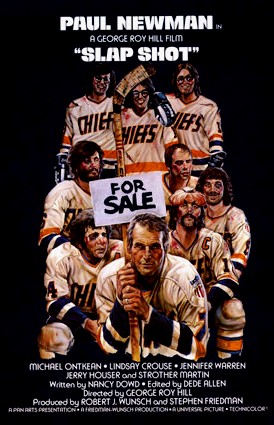
- biography: first page
filmography"The Silver Chalice" (1954)
"Somebody Up There Likes Me" (1956)
"Cat On a Hot Tin Roof" (1958) (Oscar nomination, best actor)
"Until They Sail" (1957)
"The Long Hot Summer" (1958)
"The Left Handed Gun" (1958)
"The Young Philadelphians" (1959)
"Exodus" (1960)
"From the Terrace" (1960)
"The Hustler" (1961) (Oscar nomination, best actor)
"Paris Blues" (1961)
"Sweet Bird of Youth" (1962)
"A New Kind of Love" (1963)
"Hud" (1963) (Oscar nomination, best actor)
"The Prize" (1963)
"The Outrage" (1964)
"Lady L" (1965)
"Torn Curtain" (1966)
"Harper" (1966)
"Hombre" (1967)
"Cool Hand Luke" (1967) (Oscar nomination, best actor)
"The Secret War of Harry Figg" (1968)
"Winning" (1969)
"Butch Cassidy and the Sundance Kid" (1969)
"Sometimes a Great Notion" (1971)
"The Life and Time of Judge Roy Bean" (1972)
"Pocket Money" (1972)
"The Mackintosh Man" (1973)
"The Sting" (1973)
"The Towering Inferno" (1974)
"The Drowning Pool" (1975)
"Silent Movie" (1976)
"Buffalo Bill and the Indians, or Sitting Bull's History Lesson" (1976)
"Slap Shot" (1977)
"Quintet" (1979)
"When Time Ran Out" (1980)
"Absence of Malice" (1981) (Oscar nomination, best actor)
"Fort Apache - The Bronx" (1981)
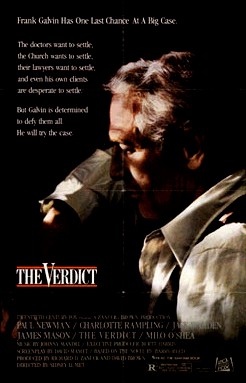
"The Verdict" (1982) (Oscar nomination, best actor)
"Harry and Son" (1984)
"The Color of Money" (1986) (Oscar, best actor)
"Blaze" (1989)
"Fat Man and Little Boy" (1989)
"Mr. and Mrs. Bridge" (1990)
"The Hudsucker Proxy" (1994)
"Nobody's Fool" (1994) (Oscar nomination, best actor)
"Twilight" (1998)
"Message in a Bottle" (1999)
"Where the Money Is" (2000)
"Road to Perdition" (2002) (Oscar nomination, best supporting actor)
biography
But 1981 saw a dramatic turn in Newman's fortunes. In Fort Apache: The Bronx, he was tough copper Murphy, battling crime and cynicism in trying to bring justice to a hard-up community. Then came Absence Of Malice where he played the wholly innocent son of a dead Mob boss, who's named by journalist Sally Field as the subject of a murder investigation - an allegation that causes his whole life to fall apart. Both Newman and Melinda Dillon were Oscar-nominated. And then came another classic, The Verdict, directed by Sidney Lumet and written by David Mamet. Here Newman was washed-up lawyer Frank Galvin, a drunken ambulance-chaser who gets a chance at redemption when he risks taking a medical malpractice suit to trial, rather than settling out-of-court. Trouble is, just when all is looking good, James "the f***ing Prince of Darkness!" Mason enters as the defence lawyer. For the second year running, Newman was Oscar-nominated, as was Mason. Throughout the Seventies, Newman had pretty much put his directorial career on the back-burner. After 1972's The Effect Of Gamma Rays On Man-In-The-Moon Marigolds, where Woodward played a rough middle-aged woman dreaming of a kinder life, all was quiet till 1980's The Shadow Box. This, again with Woodward, followed the hopes, dreams and cruel realities of three terminally ill patients in hospital, and saw Newman Emmy-nominated as director. Now, after the triumph of The Verdict, he helmed and starred in Harry & Son, where he played a redundant construction worker who can't get work, fighting with son Robby Benson, who could get work but doesn't want it. Woodward appeared once more, as a friend who fancies Newman, with Ellen Barkin as her daughter and Benson's sexy partner. In 1987, Newman would revisit his past by directing Woodward, as well as John Malkovich and Karen Allen, in Tennessee Williams' The Glass Menagerie. Including Rachel, Rachel, Paul had by 1985 been Oscar-nominated 7 times and never won. So, as if out of pity, the Academy redressed the balance by presenting him with an honorary statue, recognising his body of work, his integrity and his dedication. And, for it is the Law of Sod, Newman actually won for real the very next year. This was for his deft reprising of the role of Fast Eddie Felson, from The Hustler. This time, in Martin Scorsese's The Colour Of Money, Felson is drawn back into the pool hall to teach the brilliant but wayward Tom Cruise how to live with the big boys. Though now approaching 70, there was still more to come. In the Coen brothers' The Hudsucker Proxy, he was Sidney J. Mussburger, devious director of a vast corporation, who plots to install apparent idiot Tim Robbins as president, wait for him to destroy the company, and then pick up all the shares for nothing. 1994 also brought Nobody's Fool where, as naughty loser Sully Sullivan, he seeks compensation for his bad knee, rediscovers his family and flirts once more with Melanie Griffith, the wife of his boss, Bruce Willis. Still convincingly roguish after all these years, Paul was Oscar-nominated for the 9th time. Clearly still guilty about this, the Academy now gave him another statue, this time for his humanitarian efforts. Sticking with Nobody's Fool director Robert Benton (as he had done with directors so often before), next came Twilight, where he played a retired cop delivering blackmail money for dying actor Gene Hackman. Then he stole all his scenes in Message In A Bottle, as the father of widowed shipbuilder Kevin Costner. Next came another great performance in a weakish movie with Where The Money Is, where he played a bank robber who fakes a stroke to get out of jail and then plots a heist with restless nurse Linda Fiorentino. Paul Newman, quite rightly, is a screen legend. Bridging the gap between larger-than-life studio stars and today's more realistic variety, he's been on top for nearly 50 years, as well as becoming a champion racing driver and a philanthropist of inordinate generosity. Perhaps retirement is now on the cards - but rest assured he'll still fill his time well.
Newman now faced a difficult time. First, in 1978, his only son Scott died of an overdose, prompting Paul to set up the Scott Newman Foundation, devoted to educating people about drug and alcohol abuse. Professionally, too, it was said that he was finished. In Robert Altman's gloomy thriller Quintet, he played a seal-hunter in a future ice age, who seeks his brother in a ruined city where dogs feed on the dead. Then came When Time Ran Out, another star-studded disaster flick where Paul had to lead hotel guests to safety when a South Pacific volcano blew up, Jacqueline Bisset providing the love interest. Neither film impressed many.
nobody's fool
(1994)
Now, with his reputation firmly rebuilt, Paul concentrated on the other aspects of his life. Aside from the racing, as said, both he and Woodward were political animals of a humanitarian bent. In 1978, he'd been appointed by Jimmy Carter as a US delegate to a UN disarmament conference. But now he did something bigger, infinitely bigger. 1982 saw him start up the Newman's Own brand, selling pasta sauces, microwaveable popcorn and the like. All profits were to go to charity, particularly the Hole In The Wall Camp (the Hole In The Wall Gang being Butch Cassidy's crew). This was a summer camp in Ashford, Connecticut, for kids with cancer, AIDS and other blood-related diseases. Julia Roberts would later join the board. In the autumns, inner-city kids would attend on the Discovery programme. Incredibly, Newman's Own would be an outrageous success, launching an organic line run by Paul's daughter and, by 2002, donating over $125 million to charity. Ever-humble, Newman joked that "The embarrassing thing is that my salad dressing is now out-grossing my films". When asked about his philanthropy, he simply stated "You can only put so much stuff in your closet".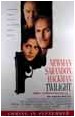
twilight
(1998)
Three years passed before the next burst of activity. 1989 saw him in Shadow Makers, as General Leslie R. Groves, commander of a secret plant in New Mexico, making the first atomic bomb. Then Blaze had him as Earl Long, pragmatic and hard-living governor of Louisiana in the '50s, who falls for stripper Lolita Davidovich and fights for Civil Rights. And then there was the Merchant-Ivory production Mr And Mrs Bridge, following the stiff marriage of a stuffy Kansas City lawyer and his painfully restrained wife through the '20s and '30s. As his wife, Woodward would be Oscar-nominated again, as she had been back in 1973 for Summer Wishes, Winter Dreams.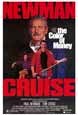
the color of money
(1986)
Come 2002 and Paul returned to the stage in Our Town, in the stage manager role played by Frank Sinatra on TV back in 1955, when a young Newman had sung Love And Marriage. The play ran at the Westport Country Playhouse in Paul's Connecticut hometown, the artistic director being wife Joanne. That year also saw the release of Paul's biggest movie in years, Sam Mendes' Road To Perdition. Here he played Irish mobster John Rooney, who sends hit-man Jude Law after the young son of his best hit-man, Tom Hanks, when the kid witnesses one of Hanks' murders. Excellent stuff, and proof positive that, in his late seventies, Newman has more vitality than most actors of one-third his age.
biography | filmography | gossip
books | dvds | posters | videos
paul newman
charles bronson | yul brynner | james coburn
steve mcqueen | robert redford | james stewart
Page created by: ihuppert5@aol.com
Changes last made: 2020
