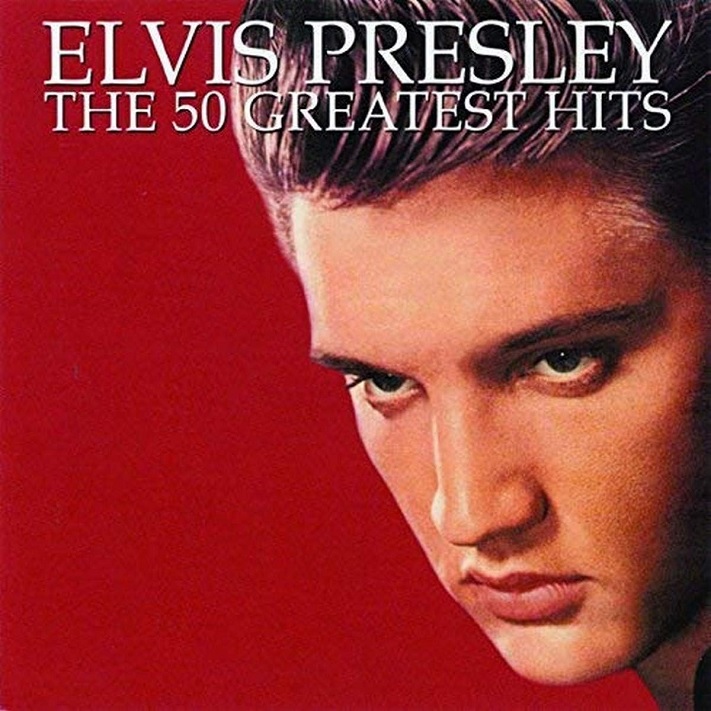
ELVIS PRESLEY
Links
Buy
Elvis Presley Vinyl - direct link @ ebay.co.uk
(Lenin is a participant in the eBay (EPN) affiliate program)
Elvis Presley Fascinating Facts
Dexys Midnight Runners Fascinating Facts
Roxy Music / Bryan Ferry Fascinating Facts
Scott Walker Fascinating Facts
Michael Brook Fascinating Facts
Penguin Cafe Orchestra Fascinating Facts
David Bowie Rarities (Shipped From UK)
Cocteau Twins Fascinating Facts
Ryuichi Sakamoto Fascinating Facts
Haruomi Hosono Fascinating Facts
Yukihiro Takahashi Fascinating Facts
Hector Zazou Fascinating Facts
Frank Auerbach Fascinating Facts
Elvis Presley
Artist
Elvis Presley
Content
All the fascinating facts
More
Bitesized
Year
1930s to Present Day
Random and bite-sized facts on all things from the mythical figure that is Elvis Presley. Totally random but totally fascinating if you're into it. Do you know Elvis Presley now?
--
"TOMORROW NIGHT" WAS RECORDED TWICE — 11 YEARS APART
Elvis originally recorded "Tomorrow Night" at Sun in September 1954 with Scotty Moore and Bill Black. In 1965, RCA took that old Elvis vocal and overdubbed an entirely new backing track featuring Chet Atkins, Grady Martin, Charlie McCoy, Buddy Harman and the Anita Kerr Singers.
--
ELVIS' FIRST RCA ALBUM MIXED TWO DIFFERENT ERAS
Elvis' first RCA album wasn't entirely new material. Alongside songs recorded for RCA in Nashville and New York, the 1956 album included five previously unreleased recordings made earlier at Sun.
--
"HEARTBREAK HOTEL" WAS RECORDED TWO DAYS AFTER ELVIS TURNED 21
RCA held Elvis' first recording session for the label on January 10, 1956, just two days after his 21st birthday. "Heartbreak Hotel" was among the songs recorded at the Nashville session.
--
"THAT'S ALL RIGHT" WAS AN ACCIDENTAL RECORDING
During the July 5, 1954 Sun session, Elvis, Scotty Moore and Bill Black were fooling around during a break when they started playing an uptempo version of Arthur Crudup's "That's All Right". Sam Phillips heard it, told them to repeat it and recorded the performance.
--
THERE WAS NO DRUMMER ON "THAT'S ALL RIGHT"
The original "That's All Right" recording was made with just Elvis on acoustic rhythm guitar, Scotty Moore on electric guitar and Bill Black on bass. There were no drums or other additional musicians.
--
"SUSPICIOUS MINDS" WAS CHANGED AFTER THE MEMPHIS SESSION
The original American Sound recording of "Suspicious Minds" didn't contain the famous horn overdub. RCA later added horns in Las Vegas, including a fade-out and return designed to reproduce the dramatic effect of Elvis' live performances.
--
ELVIS' VERSION OF "SUSPICIOUS MINDS" ALMOST WASN'T RECORDED
Producer Chips Moman brought "Suspicious Minds" to the Memphis sessions, but a dispute over publishing initially threatened to prevent Elvis from recording it. Elvis intervened and the song went ahead.
--
"IN THE GHETTO" TOOK 23 TAKES
Elvis recorded 23 takes of "In The Ghetto" during the January 1969 American Sound sessions before producer Chips Moman was satisfied. It was part of Elvis' return to recording in Memphis after a 14-year absence.
--
ELVIS PRESLEY
Links
Buy
Elvis Presley Japanese Vinyl - direct link @ ebay.co.uk
(Lenin is a participant in the eBay (EPN) affiliate program)
--
ELVIS PLAYED GUITAR ON "IN THE GHETTO"
The musicians on "In The Ghetto" included Reggie Young on guitar and sitar, but Elvis himself also played guitar on the recording. The rhythm section included Tommy Cogbill and Mike Leech on bass and Gene Chrisman on drums.
--
"BURNING LOVE" WAS RECORDED WITH ELVIS IN THE ROOM
When Elvis recorded "Burning Love" at RCA Studio C in Hollywood in 1972, he sang in the main studio room with the musicians rather than in an isolation booth. He preferred the feeling of playing together as a group and used a handheld Electro-Voice RE16 microphone.
--
DENNIS LINDE PLAYED GUITAR ON HIS OWN "BURNING LOVE"
Songwriter Dennis Linde wrote "Burning Love" and also played guitar on Elvis' recording. His guitar was added as an overdub alongside the main band.
--
ELVIS' "TOMORROW NIGHT" WAS STILL A SUN RECORDING IN 1965
When RCA released "Tomorrow Night" in 1965, the Elvis vocal was still the performance he had recorded at Sun in 1954. What changed was everything around him: RCA added a completely new instrumental and vocal backing more than a decade later.
--
"DON'T BE CRUEL" TOOK 31 TAKES
Elvis recorded "Don't Be Cruel" 31 times before he was satisfied. He was already pushing against RCA's desire for faster, more productive sessions, preferring to keep working until the performance felt right.
--
"HOUND DOG" ALSO TOOK 31 TAKES
Elvis recorded "Hound Dog" at RCA's New York studio on July 2, 1956. He eventually used take 31 — meaning two of the most famous recordings of his career were products of extraordinarily long sessions.
--
ELVIS RECORDED "ARE YOU LONESOME TONIGHT?" WITH THE LIGHTS OUT
For "Are You Lonesome Tonight?" in 1960, Elvis sang with the studio lights switched off. The song had been suggested by Colonel Parker, whose wife Marie particularly liked the old Gene Austin version.
--
THE COLONEL ALMOST NEVER SUGGESTED SONGS
"Are You Lonesome Tonight?" was an extraordinary exception: it was the first, and virtually the only, song Colonel Parker ever suggested to Elvis during a regular recording session.
--
ELVIS PRESLEY
Links
Buy
Elvis Presley Japanese Vinyl - direct link @ ebay.co.uk
(Lenin is a participant in the eBay (EPN) affiliate program)
--
ELVIS PLAYED GUITAR ON "ARE YOU LONESOME TONIGHT?"
The famous 1960 recording wasn't just Elvis singing. The session credits him on guitar alongside Hank Garland and Scotty Moore, with Floyd Cramer on piano and Boots Randolph on saxophone.
--
LEIBER & STOLLER ACTUALLY HELPED PRODUCE "JAILHOUSE ROCK"
Jerry Leiber and Mike Stoller weren't simply the songwriters. Elvis invited them into the "Jailhouse Rock" sessions, with Stoller actually playing piano and the pair helping shape the recordings. It was an unusually direct songwriter-to-performer relationship in Elvis's world.
--
"A LITTLE LESS CONVERSATION" WASN'T ORIGINALLY ELVIS'S 1968 VOCAL
The instrumental track was recorded in March 1968 for "Live a Little, Love a Little". Elvis then recorded a completely new vocal for the 1968 TV comeback project in June. The familiar record therefore combines an earlier backing track with a later Elvis vocal.
--
THE 2002 HIT WAS A REMIX OF A RECORD THAT HAD FLOPPED
The original "A Little Less Conversation" single came out in 1968 and sold fewer than 200,000 copies. More than three decades later, JXL's remix turned the same Elvis performance into a worldwide hit.
--
ELVIS'S FIRST RCA ALBUM WAS PARTLY A SUN RECORDS ALBUM
When RCA assembled Elvis's first album in 1956, they didn't use only the new RCA recordings. Five previously unreleased recordings from his Sun period were included alongside the new material.
--
ELVIS'S SUN RECORDINGS ARE IN THE LIBRARY OF CONGRESS
The Library of Congress added Elvis's 1954–55 Sun recordings to the National Recording Registry in 2002, recognising the sessions as recordings that helped create the rock & roll era.
--
ELVIS HELPED CREATE THE NEED FOR RCA STUDIO B
RCA's Nashville operation grew partly because Elvis had become such an enormous success. According to the Country Music Hall of Fame, six months after signing with RCA he was the biggest act in the company's history. He eventually recorded more than 240 songs at Studio B.
--
ELVIS'S LAST MAJOR STUDIO RECORDINGS WERE MADE IN HIS OWN DEN
In 1976, recording equipment was installed in the Jungle Room at Graceland. Elvis recorded there during sessions in February and October, turning part of his home into a functioning recording studio.
--
THE JUNGLE ROOM RECORDINGS WERE MADE AT NIGHT
The two major Jungle Room sessions ran from February 2–8 and October 28–30, 1976. By this point Elvis was no longer travelling to a conventional studio for his final substantial studio recordings — the studio had effectively been brought to him.
--
ELVIS PRESLEY
Links
Buy
Elvis Presley Japanese Vinyl - direct link @ ebay.co.uk
(Lenin is a participant in the eBay (EPN) affiliate program)
--
ELVIS RECORDED "OLD SHEP" IN ONE TAKE
"Old Shep" was deeply personal to Elvis: he had performed it as a boy in Tupelo and even sang it at a school talent show, where he came fifth. When he recorded the song for RCA in 1956, he got the master in one take — then did another four takes just in case.
--
ELVIS RECORDED A HIT WITHOUT HIS SHOES
During the April 1956 RCA session that produced "I Want You, I Need You, I Love You", Elvis took off his jacket and shoes before recording. The shoeless Elvis then went on to make one of his early RCA hits.
--
ELVIS ONCE STOPPED BY SUN AND FOUND THREE OTHER LEGENDS
On December 4, 1956, Elvis was driving past Sun Studio when he noticed several Cadillacs outside. He stopped to see who was recording — and found Jerry Lee Lewis, Carl Perkins and Johnny Cash. The resulting informal jam became the Million Dollar Quartet.
--
ELVIS WAS ALREADY AN RCA ARTIST WHEN HE WALKED BACK INTO SUN
By the time of the Million Dollar Quartet session, Elvis had already left Sun Records and signed with RCA. He wasn't there to make a record. He simply happened to stop at his old studio and ended up sitting at the piano with the others.
--
"KING CREOLE" HAD THE BIGGEST STUDIO BAND ELVIS EVER USED
For the "King Creole" soundtrack sessions in 1958, Paramount brought in 14 musicians to help create a New Orleans sound. According to Graceland, it was the largest group of musicians Elvis ever worked with in the studio.
--
ELVIS COULD RECORD UNTIL 5 IN THE MORNING
At RCA Studio B in 1958, Elvis recorded "I Got Stung" during a session that ran from 2 a.m. until 5 a.m. He had already been working that day, making the late-night session part of a remarkable run of recording activity before entering the Army.
--
ELVIS'S FIRST THREE GRAMMYS WERE ALL FOR GOSPEL
Elvis was nominated for 14 Grammys during his career and won three. None was for rock, pop or country. Every single Grammy he won was for gospel music.
--
ELVIS'S FIRST SONGS WERE GOSPEL
Before "That's All Right", before Sun Records and before rock & roll, Elvis was singing gospel. Graceland says the first songs he ever sang were gospel songs at church in Tupelo, and he continued collecting and singing gospel throughout his life.
--
ELVIS RECORDED HIS FINAL STUDIO ALBUMS IN HIS DEN
In 1976, RCA brought a mobile recording operation into Graceland and turned Elvis's Jungle Room into a professional recording studio. The sessions produced material for "From Elvis Presley Boulevard, Memphis, Tennessee" and "Moody Blue" — including "Hurt", "Moody Blue" and "Way Down".
--
ELVIS PRESLEY
Links
Buy
Elvis Presley Japanese Vinyl - direct link @ ebay.co.uk
(Lenin is a participant in the eBay (EPN) affiliate program)
--
THE RCA MOBILE STUDIO BROKE DOWN OUTSIDE GRACELAND
The equipment needed to turn Graceland's Jungle Room into a recording studio arrived in an RCA mobile studio truck. But the truck broke down just outside Memphis and had to be towed through the gates of Graceland before the sessions could begin.
--
ELVIS'S JUNGLE ROOM HAD A WATERFALL
The room where Elvis made his final substantial studio recordings wasn't a conventional studio at all. His Jungle Room had a built-in stone waterfall. For recording, the waterfall was switched off and blankets were hung around the room to help control the sound.
--
ELVIS PAID FOR HIS FIRST RECORDINGS HIMSELF
Before Sun Records signed him, Elvis paid out of his own pocket to make four songs at the Memphis Recording Service: "My Happiness" and "That's When Your Heartaches Begin" in 1953, followed by two more songs in January 1954. They were private acetates rather than commercial releases.
--
ELVIS'S NAME WAS MISSPELLED ON THE ORIGINAL "THAT'S ALL RIGHT" ACETATE
The original 10-inch acetate of "That's All Right" has Elvis's surname handwritten as "Pressley". The disc is the actual acetate first played by Memphis DJ Dewey Phillips in July 1954.
--
ELVIS'S ECHO WAS MADE WITH ANOTHER TAPE MACHINE
Sam Phillips created the distinctive echo on Elvis's early Sun recordings by running the tape through a second tape machine and feeding the delayed signal back into the recording. It was not simply an echo chamber.
--
RCA COULDN'T RECREATE THE SUN ECHO
When Elvis moved to RCA, the company initially didn't know exactly how Sam Phillips had created the sound on the Sun records. RCA tried using a large empty hallway to create the echo on "Heartbreak Hotel" — but it didn't sound the same.
--
SAM PHILLIPS DELIBERATELY TURNED ELVIS'S VOCAL DOWN
Most recordings of the period pushed the singer's voice prominently to the front. Sam Phillips did the opposite with Elvis, deliberately blending his vocal more closely with Scotty Moore's guitar and Bill Black's bass.
--
ELVIS DIDN'T ARRIVE AT SUN WITH A BAND
Elvis initially came to Sun as a singer who accompanied himself on guitar. Sam Phillips decided that he needed very little extra: Scotty Moore on lead guitar and Bill Black on bass became the tiny group that created the original Sun sound.
--
ELVIS'S LAST MAJOR STUDIO ALBUM WAS RECORDED IN 1975
Elvis's final recording session in a conventional major studio was not in 1976. It happened at RCA Studio C in Hollywood in March 1975, for the album "Today". Everything substantial he recorded afterwards was made elsewhere, including the Jungle Room sessions at Graceland.
--
ONE FIVE-NIGHT SESSION PRODUCED THREE ALBUMS
In June 1970, Elvis recorded at RCA Studio B in Nashville for five nights. The sessions generated material for three future albums and four singles, an extraordinary amount of finished material from one concentrated burst of recording.
--
ELVIS PRESLEY
Links
Buy
Elvis Presley Japanese Vinyl - direct link @ ebay.co.uk
(Lenin is a participant in the eBay (EPN) affiliate program)
--
ELVIS WAS RECORDING UNTIL 4:30 IN THE MORNING IN 1970
The June 1970 Studio B sessions were divided into late-night blocks. On some nights Elvis and the band worked from 6–9 p.m., then 10 p.m.–1 a.m., before returning for another session from 1:30–4:30 a.m.
--
THE MILLION DOLLAR QUARTET WASN'T PLANNED AT ALL
Carl Perkins had actually gone to Sun that day to record. Jerry Lee Lewis was there to play piano on Perkins's session. Elvis happened to drop in while visiting his old studio, and Johnny Cash also appeared. The famous four-man jam grew out of that completely unplanned meeting.
--
SAM PHILLIPS LEFT THE TAPE RUNNING
The Million Dollar Quartet session wasn't being made as a planned commercial recording. Sam Phillips left the tape machines running to capture the spontaneous playing, preserving what was happening in the room rather than stopping to turn it into a formal session.
--
ELVIS WAS ALREADY THE BIGGEST NAME THERE
When Elvis walked into Sun for the Million Dollar Quartet session, he wasn't the unknown newcomer anymore. He had already had five number-one singles and two number-one albums during the previous year.
--
ELVIS MADE HIS FINAL STUDIO RECORDINGS AT HOME
RCA brought its mobile recording equipment into Graceland so Elvis could record in the Jungle Room. The sessions were not simply demos or home recordings: the room was converted into a professional-calibre recording studio, with members of Elvis's touring band playing alongside him.
--
ELVIS WAS LOOKING FOR A DIFFERENT SOUND IN THE JUNGLE ROOM
By 1976, Elvis was deliberately moving away from the pressure of conventional studio sessions. The Jungle Room allowed him to record at home, outside the normal studio budget and scheduling pressures, while working with musicians he already knew from the road.
--
THE JUNGLE ROOM PRODUCED "HURT" AND "MOODY BLUE"
The same Graceland sessions that produced Elvis's late recordings also produced two of his best-known final-period tracks, "Hurt" and "Moody Blue", along with "Way Down", "Blue Eyes Crying in the Rain" and "Solitaire".
--
ELVIS AND JOHNNY CASH WERE ONLY IN THE SAME STUDIO ONCE
The December 4, 1956 Million Dollar Quartet session at Sun was the only occasion when Elvis Presley, Johnny Cash, Jerry Lee Lewis and Carl Perkins were all in the same studio at the same time.
--
A LOST ELVIS PERFORMANCE SURVIVED FOR MORE THAN 60 YEARS
A recording of Elvis performing "I Forgot to Remember to Forget" at the Louisiana Hayride on October 29, 1955 was only officially released in 2017. It had remained unheard by the public for more than six decades.
--
ELVIS'S EARLY LIVE RECORDINGS WERE ALMOST A TIME CAPSULE
The 2017 "A Boy From Tupelo" collection gathered every known Elvis live and radio recording from 1953–55 into one collection. Some had never previously been released, giving an unusually complete picture of Elvis before he left Sun Records.
--
ELVIS PRESLEY
Links
Buy
Elvis Presley Japanese Vinyl - direct link @ ebay.co.uk
(Lenin is a participant in the eBay (EPN) affiliate program)
--
ELVIS WAS STILL PLAYING "THAT'S ALL RIGHT" MONTHS AFTER RECORDING IT
Elvis recorded "That's All Right" at Sun on July 5, 1954. A surviving Louisiana Hayride performance shows him performing it again on January 15, 1955 — six months later — while the song was still part of his developing live act.
--
ONE EARLY ELVIS "HEARTS OF STONE" RECORDING WASN'T RELEASED UNTIL 1999
Elvis recorded "Hearts of Stone" during his early Louisiana Hayride period. The surviving performance was not released until the 1999 "Sunrise" collection, decades after Elvis had recorded it.
--
ELVIS RECORDED A RADIO COMMERCIAL BEFORE HE WAS A NATIONAL STAR
Among the surviving 1955 recordings is a radio commercial featuring Elvis and DJ Tom Perryman. It survives alongside his songs, giving us something remarkably mundane from the period when he was still building his career.
--
ELVIS'S EARLY RECORDINGS INCLUDE HIM ADVERTISING ON RADIO
The "A Boy From Tupelo" archive doesn't just preserve performances. It includes a surviving KSIJ radio commercial with DJ Tom Perryman from Elvis's 1955 period — a tiny piece of audio documenting what his working life sounded like between songs.
--
ELVIS RECORDED "SHAKE, RATTLE AND ROLL" FOR RADIO BEFORE RCA
On January 6, 1955, Elvis recorded "Shake, Rattle and Roll" for KDAV Radio in Lubbock, Texas. It wasn't a commercial studio master: it was a radio performance, preserved from the period when Elvis was still a Sun artist.
--
ELVIS'S EARLY "BLUE MOON OF KENTUCKY" SOUNDS EXIST OUTSIDE THE SUN MASTER
There is more than one surviving Elvis performance of "Blue Moon of Kentucky" from his early period. The official archive preserves a Louisiana Hayride performance as well as the famous Sun recording, allowing you to hear how he was performing the song live rather than relying solely on the studio master.
--
ELVIS'S FIRST RECORDINGS WEREN'T MADE FOR RELEASE
The four songs Elvis paid to record at Memphis Recording Service in 1953 and January 1954 were made as private acetates. They weren't intended to launch a professional career. They became historically important only after Elvis became Elvis.
--
ELVIS'S SECOND PRIVATE RECORDING WAS MADE BEFORE SUN SIGNED HIM
Elvis returned to Memphis Recording Service on January 4, 1954 and recorded "I'll Never Stand in Your Way" and "It Wouldn't Be the Same (Without You)". Sam Phillips subsequently had his contact details and was looking for an opportunity to hear more from him.
--
ELVIS'S FIRST RADIO APPEARANCE WASN'T ON A NATIONAL SHOW
Before television made him a national sensation, Elvis was building an audience through regional radio and live appearances. Surviving 1954–55 recordings include performances from the Louisiana Hayride and local radio stations in Texas and Alabama.
--
THE EARLY ELVIS ARCHIVE CONTAINS SONGS HE NEVER RELEASED AS RECORDS
The surviving 1953–55 material includes performances such as "Hearts of Stone", "Shake, Rattle and Roll" and "Little Mama" that existed outside Elvis's commercial Sun singles. Some remained unreleased for decades.
--
ELVIS FAILED HIS FIRST AUDITION FOR SAM PHILLIPS
Elvis's first serious audition at Sun was not a triumph. In June 1954, Sam Phillips had him try "Without You", but Elvis didn't sing it to Sam's satisfaction. Phillips then asked what else he could sing, and Elvis ran through several songs before Sam decided to try him with Scotty Moore and Bill Black.
--
ELVIS WAS ORIGINALLY BEING TESTED FOR SOMEONE ELSE'S RECORD
Sam Phillips was not initially trying to launch Elvis as a recording artist. He was looking for someone who could sing "Without You", a song Phillips hoped to release. Elvis's audition eventually became something much bigger.
--
ELVIS PRESLEY
Links
Buy
Elvis Presley Japanese Vinyl - direct link @ ebay.co.uk
(Lenin is a participant in the eBay (EPN) affiliate program)
--
ELVIS DIDN'T IMPRESS SAM PHILLIPS WITH "WITHOUT YOU"
The song that first brought Elvis into Sun's orbit wasn't "That's All Right" or a rock & roll number. It was the slow ballad "Without You" — and Sam Phillips wasn't impressed enough by Elvis's attempt to use it.
--
ELVIS'S BREAKTHROUGH CAME DURING A BREAK
On July 5, 1954, Elvis, Scotty Moore and Bill Black had been struggling through a session. During a break, Elvis suddenly began fooling around with "That's All Right", speeding it up and playing it in a completely different way. Sam Phillips immediately told them to start again while he recorded it.
--
ELVIS'S FIRST RECORD WAS RECORDED WITH ONLY THREE MUSICIANS
The original "That's All Right" acetate features just three musicians: Elvis on acoustic rhythm guitar, Scotty Moore on electric guitar and Bill Black on bass. There was no drummer and no other instrumentalist hiding somewhere in the studio.
--
ELVIS'S FIRST RECORD WAS PLAYED ON RADIO BEFORE IT WAS RELEASED
Memphis DJ Dewey Phillips played "That's All Right" on WHBQ on July 10, 1954 — nine days before the Sun single was released. The response was so immediate that the station's telephone lines lit up with listeners asking to hear it again.
--
ELVIS QUIT HIS DAY JOB TO SIGN WITH SUN
Elvis was still working for Crown Electric when his breakthrough began. On July 12, 1954, he signed with Sun Records and quit his job, turning his gamble on music into his full-time career.
--
ELVIS'S FIRST PROFESSIONAL SINGLE WAS SOLD LOCALLY BEFORE THE WORLD KNEW HIM
"That's All Right" backed with "Blue Moon of Kentucky" was released by Sun on July 19, 1954. Elvis wasn't yet a national star: the record initially made its impact in Memphis before his touring and radio appearances began spreading the sound further.
--
ELVIS'S FIRST LIVE SHOW WASN'T IN A THEATRE
The Blue Moon Boys made their live debut on July 20, 1954, on the back of a flatbed truck outside a new drugstore. Elvis's professional live career therefore began in a parking-lot-style setting rather than a conventional concert venue.
--
ELVIS'S FIRST GUITAR COST $7.90
On his 11th birthday in 1946, Elvis wanted a bicycle, but his parents couldn't afford one. Instead he received a guitar from Tupelo Hardware. Graceland records the price as $7.90.
--
ELVIS'S FIRST GUITAR WAS SUPPOSED TO BE SOMETHING ELSE
Elvis originally wanted a bicycle for his 11th birthday. Instead, his parents bought him a guitar at Tupelo Hardware. That inexpensive birthday present became the instrument he was carrying when he walked into the early Sun sessions.
--
ELVIS WAS STUDYING TO BECOME AN ELECTRICIAN
Before music took over his life, Elvis worked for Crown Electric and attended night school while studying to become an apprentice electrician. He was still doing this when his recording career began to take off.
--
ELVIS'S FIRST RCA CONTRACT COST RCA $35,000
RCA paid $35,000 to acquire Elvis's Sun contract in November 1955, plus a $5,000 bonus for Elvis himself. At the time, the $35,000 payment was an extraordinary price for a recording contract.
--
ELVIS WAS STILL UNKNOWN WHEN HE RECORDED "THAT'S ALL RIGHT"
When Elvis walked into Sun on July 5, 1954, he had no record deal and no professional recording career. By the end of the month, "That's All Right" was in record shops and Elvis had begun performing professionally.
--
ELVIS PRESLEY
Links
Buy
Elvis Presley Japanese Vinyl - direct link @ ebay.co.uk
(Lenin is a participant in the eBay (EPN) affiliate program)
--
ELVIS HAD A SAMURAI SWORD IN A DRAWER AT GRACELAND
While cataloguing the living room at Graceland, an archivist opened the top drawer of a cabinet beside the fireplace and found a samurai sword inside. It was catalogued, put back in the drawer — and is still there.
--
ELVIS'S FIRST DRIVER'S LICENCE SAID HIS HAIR WAS BROWN
Elvis's first driver's licence, issued in 1952, listed him as a student, 5'11" tall, with blue eyes and brown hair. This was before the famous black-haired Elvis look had become part of his image.
--
ELVIS PAID JUST $4 FOR HIS FIRST RECORDING
The 1953 "My Happiness" acetate that started Elvis's recording story cost him four dollars. He was supposedly making it as a present for his mother — but the Presley family didn't actually own a record player.
--
ELVIS LEFT HIS FIRST RECORDING AT A FRIEND'S HOUSE
Because the Presley family had no record player, Elvis took his new "My Happiness" acetate to friend Ed Leek's house to hear it. He then left the record there rather than taking it home.
--
ELVIS'S RETURN FROM THE ARMY GOT A RECORD SHIPPED BEFORE ORDERS
RCA was so desperate to get Elvis's first post-Army single out that 1.4 million copies of "Stuck on You" were rushed to record shops without even waiting for orders. The sleeve had already been prepared with Elvis's Army photographs.
--
ELVIS WAS PAID $125,000 FOR ONE TV APPEARANCE
When Elvis appeared on Frank Sinatra's TV special after leaving the Army in 1960, he was paid $125,000. Graceland describes it as a record sum for a variety-show appearance at the time.
--
ELVIS KEPT HIS KARATE BLACK-BELT CERTIFICATE IN HIS WALLET
Elvis received his first degree black belt in karate in July 1960. According to Graceland, he carried the certificate around in his wallet for the rest of his life.
--
ELVIS'S GRACELAND ARCHIVES STILL CONTAIN UNSEEN PHOTOS
Vernon's office once produced an unmarked envelope containing previously unseen negatives from 1957. They showed 22-year-old Elvis signing autographs through the gates of Graceland — and Graceland says there are still documents in its archives that haven't been analysed.
--
"G.I. BLUES" STAYED ON THE US ALBUM CHART FOR 111 WEEKS
The "G.I. Blues" soundtrack reached No.1 and stayed at the top for ten weeks. Even more remarkable, it remained on the US album chart for 111 weeks, making it the most successful Elvis album on the Billboard album charts.
--
ELVIS'S "ALOHA" GUITAR WAS GIVEN TO A FAN
The Gibson Ebony Dove Elvis played during "Aloha from Hawaii" wasn't kept by Elvis or Graceland. He eventually gave the guitar to a fan in the front row at a concert in Asheville, North Carolina. It had "Elvis Presley" inlaid into the fingerboard and a Kenpo Karate decal on the body.
--
ELVIS'S FIRST LAS VEGAS CONTRACT PAID $100,000 A WEEK
When Elvis returned to Las Vegas in 1969, his contract for the International Hotel guaranteed him $100,000 a week. Opening night was such a success that Colonel Parker renegotiated Elvis's contract in the hotel's coffee shop — using a tablecloth.
--
ELVIS PRESLEY
Links
Buy
Elvis Presley Japanese Vinyl - direct link @ ebay.co.uk
(Lenin is a participant in the eBay (EPN) affiliate program)
--
ELVIS'S FIRST LAS VEGAS GUITAR WASN'T HIS
For the famous 1969 Las Vegas comeback, Elvis used a custom Gibson Ebony Dove. It wasn't simply a standard guitar with his name added later — the instrument had Elvis's name inlaid into the fingerboard and a karate emblem incorporated into its design.
--
ELVIS'S EARLIEST KNOWN SIGNATURE WAS ON A LIBRARY CARD
A librarian at the school Elvis attended in Tupelo eventually realised that one of her former pupils had become famous. She searched through books Elvis had borrowed and found one of his signatures on a library card. Graceland says it has no complete Elvis Presley signature dating earlier than that card.
--
ELVIS'S "CHARRO!" WAS THE ONLY FILM WHERE HE DIDN'T SING ON CAMERA
Elvis made 31 feature films, but "Charro!" in 1969 was the odd one out. He grew a beard for the role, and although he recorded the film's theme, there were no Elvis songs performed on camera during the movie.
--
ELVIS'S "THAT'S ALL RIGHT" ACETATE WAS SPELLED "PRESSLEY"
The actual acetate that launched Elvis's career has his surname written incorrectly as "Pressley". It's a single-sided 10-inch disc, recorded with only Elvis, Scotty Moore and Bill Black — exactly as the original session happened.
--
ELVIS HAD A SEVEN-YEAR FILM CONTRACT BEFORE HE'D EVEN MADE A FILM
In 1956, the same year his first movie "Love Me Tender" appeared, Elvis signed a seven-year film contract with Paramount. By then he had already become such a major star that Hollywood was committing to years of Elvis films before anyone knew how long the movie career would last.
--
ELVIS'S FIRST LAS VEGAS ENGAGEMENT WAS ALSO HIS FIRST CONCERT SINCE 1961
When Elvis opened at the International Hotel in Las Vegas in 1969, it wasn't simply another concert engagement. It was his first live appearance since 1961, and the opening night set records for both attendance and gross ticket sales.
--
ELVIS'S ARCHIVES INCLUDE HIS ACTUAL DIRT-COVERED RIDING BOOTS
The Graceland archives have preserved a pair of Elvis's riding boots with the original Tennessee dirt still caked onto them. When a museum wanted to borrow them for an exhibition about cowboy footwear, the boots couldn't be cleaned — because the dirt was part of their history.
--
ELVIS'S FIRST LAS VEGAS SHOWS USED TWO SHOWS A DAY
After the spectacular opening of his 1969 International Hotel engagement, Elvis settled into a punishing routine of two shows a day for the rest of the engagement. It was the beginning of the Vegas system that would dominate his live career for the next eight years.
--
ELVIS BUILT A ROOM FOR HIS SLOT-CAR TRACKS
In 1966, MGM extended Elvis's movie contract for another four films, but at Graceland there was another important project underway. The house was being extended to create what became the Trophy Building, partly to give Elvis somewhere to accommodate his enormous slot-car tracks.
--
ELVIS AND PRISCILLA BUILT A GIANT SNOWMAN AT GRACELAND
On January 22, 1966, Elvis, Priscilla and their friends built a huge snowman on the front lawn of Graceland. It sounds like a small family moment, but it was actually recorded in Graceland's official chronology.
--
ELVIS PRESLEY
Links
Buy
Elvis Presley Japanese Vinyl - direct link @ ebay.co.uk
(Lenin is a participant in the eBay (EPN) affiliate program)
--
ELVIS BOUGHT A 163-ACRE RANCH BECAUSE HORSES TOOK OVER GRACELAND
Elvis's interest in horses became serious in late 1966. Within months the horses and riding had outgrown the pasture at Graceland, so on February 8, 1967, he bought a 163-acre ranch in Mississippi for $437,000.
--
ELVIS NAMED A HORSE AFTER THE MAYOR
After Memphis Mayor William Ingram and Tennessee Governor Buford Ellington proclaimed September 29, 1967 "Elvis Presley Day", Elvis named one of his horses "Mare Ingram" in the mayor's honour.
--
ELVIS BOUGHT A RANCH AFTER SPOTTING A WHITE CROSS
While looking for horses in Mississippi, Elvis spotted a 65-foot white cross overlooking a man-made lake. He went to the property, knocked on the door and ended up buying the place that day. He renamed the former Twinkletown Farm "Circle G Ranch".
--
ELVIS'S GRACELAND TROPHY ROOM WAS ONCE A SLOT-CAR ROOM
The building now known as the Trophy Building wasn't originally a trophy room at all. One of its earlier uses was as the home of Elvis's slot-car track, before it was transformed into a space for the Presley family's possessions and memorabilia.
--
ELVIS BOUGHT NEW RECORDING EQUIPMENT JUST TO MAKE MUSIC AT HOME
During 1966, while making the film "Spinout", Elvis developed a renewed interest in recording. He bought a large amount of new musical equipment and spent his free time making music at home with friends Red West and Charlie Hodge.
--
ELVIS'S SECOND GRACELAND WEDDING RECEPTION WAS IN HIS OLD SLOT-CAR ROOM
Elvis and Priscilla had a second wedding reception at Graceland on May 29, 1967 for friends, family and employees who hadn't attended their Las Vegas wedding. The reception was held in the building that had once housed Elvis's slot-car track.
--
ELVIS'S HORSE WAS NAMED "MARE INGRAM" FOR A POLITICIAN
Elvis didn't just collect horses — he occasionally turned them into part of his personal world. After being honoured by Memphis officials in 1967, he gave one of his horses the name "Mare Ingram", after Mayor William Ingram.
--
ELVIS'S GRACELAND ARCHIVES HAVE OVER 1.5 MILLION OBJECTS
The Graceland Archives contain more than 1.5 million pieces of Elvis memorabilia and documentation, but only about 10% of the collection is on public display. The rest includes photographs, clothing, documents, instruments, furniture, cars and countless personal objects.
--
ELVIS'S FIRST FILM WASN'T SUPPOSED TO BE CALLED "LOVE ME TENDER"
Elvis's first movie was originally called "The Reno Brothers". The title was changed to "Love Me Tender" after Elvis's new song became a hit. His own copy of the original script still has the old title stamped on it, with "Love Me Tender" handwritten above it.
--
ELVIS'S LIBRARY CARD WAS ALMOST LOST IN A SCHOOL LIBRARY
After Elvis became famous, a librarian at his old school in Tupelo searched through the books he had borrowed, looking for his signature. She found it on a library card — and Graceland says its archives have no complete Elvis Presley signature known to predate it.
--
ELVIS PRESLEY
Links
Buy
Elvis Presley Japanese Vinyl - direct link @ ebay.co.uk
(Lenin is a participant in the eBay (EPN) affiliate program)
--
ELVIS BOUGHT MORE THAN 200 CADILLACS
Elvis's famous Cadillac obsession went far beyond the pink car. Graceland estimates that he bought more than 200 Cadillacs during his lifetime, giving them to family, friends, strangers and members of his entourage as well as keeping cars for himself.
--
ELVIS'S LAST CADILLAC WAS A 1977 SEVILLE
The last Cadillac Elvis bought for his own personal use was a maroon-and-silver 1977 Cadillac Seville. It was also the last Cadillac known to have been driven by Elvis himself.
--
ELVIS'S GRACELAND BLUEPRINTS SOLD FOR $28,000
The original architectural blueprints for Graceland eventually surfaced as an Elvis collectible. At a Graceland auction they sold for $28,000 — an extraordinary price for something that was never intended to be memorabilia at all.
--
ELVIS KEPT A COPY OF HIS FIRST FILM SCRIPT
Elvis's personal copy of the "Love Me Tender" script survived in his collection. The original "The Reno Brothers" title is still stamped into it, while the replacement title was written onto the cover after the film was renamed.
--
ELVIS HAD A 13-PAGE CONTRACT FOR HIS 1969 VEGAS RETURN
The agreement for Elvis's return to live performing at the Las Vegas International Hotel survives in the Graceland collection. It's a 13-page typed contract covering the deal that brought him back to the stage after years away from live performance.
--
ELVIS'S "LOVE ME TENDER" SCRIPT SOLD FOR $11,500
Elvis's personal copy of the script for his first movie sold at auction for $11,500. It wasn't a later reproduction or a studio archive copy — it was the actual copy that had belonged to Elvis.
--
ELVIS'S FIRST KNOWN SIGNATURE SOLD FOR $8,000
That school library card containing one of Elvis's earliest known full signatures was eventually bought by Graceland itself. The winning bid was $8,000, bringing the little card back into the archives where Elvis's story began.
--
ELVIS'S 1969 VEGAS CONTRACT SURVIVED IN A BLUE FOLDER
The surviving agreement for Elvis's 1969 Las Vegas comeback isn't some vague record of the deal. It's a blue folder containing the original 13-page typed agreement between Elvis Presley and the Las Vegas International Hotel.
--
ELVIS RECORDED "SUSPICIOUS MINDS" IN MEMPHIS AFTER A SEVEN-YEAR GAP
"Suspicious Minds" was recorded at American Sound Studio in Memphis in January 1969. It was Elvis's first Memphis recording session since the Sun days, more than seven years after he had last recorded there.
--
"SUSPICIOUS MINDS" WAS ELVIS'S 18TH AND FINAL US No.1 SINGLE
When "Suspicious Minds" reached No.1 in November 1969, it became Elvis's 18th and final single to top the Billboard Hot 100. He would have major hits afterwards, but never another American No.1 single.
--
ELVIS RECORDED "SUSPICIOUS MINDS" AFTER HIS ENTOURAGE PUSHED HIM TOWARDS IT
The song wasn't originally brought to Elvis as some obvious comeback vehicle. Several people around him suggested that he should record Mark James's "Suspicious Minds". Elvis took their advice and recorded it at American Sound on January 22, 1969.
--
ELVIS PRESLEY
Links
Buy
Elvis Presley Japanese Vinyl - direct link @ ebay.co.uk
(Lenin is a participant in the eBay (EPN) affiliate program)
--
THE MEMPHIS HORNS WERE ON "SUSPICIOUS MINDS"
Two of Memphis's great horn players, Wayne Jackson and Andrew Love, played on Elvis's "Suspicious Minds". The pair were known as the Memphis Horns and had already played on records by Otis Redding, Aretha Franklin and other Memphis soul artists.
--
"SUSPICIOUS MINDS" CAME FROM THE SAME SESSIONS AS "IN THE GHETTO"
Elvis recorded "Suspicious Minds" and "In the Ghetto" at the same American Sound sessions in Memphis. They came from the period that produced some of the most celebrated recordings of his later career.
--
ELVIS'S "SUSPICIOUS MINDS" WASN'T A LAS VEGAS SONG AT FIRST
Elvis recorded the studio version before he returned to live performing. But only months later, "Suspicious Minds" became one of the defining songs of his new Las Vegas act, making its live debut during his 1969 International Hotel engagement.
--
ELVIS SANG "SUSPICIOUS MINDS" LIVE BEFORE IT WAS A HIT
The first live performance of "Suspicious Minds" came during Elvis's August 1969 Las Vegas engagement, before the single reached No.1. The song was therefore already part of his stage show while the record was still climbing the charts.
--
"SUSPICIOUS MINDS" WAS RECORDED DURING ELVIS'S ALL-NIGHT MEMPHIS SESSIONS
Elvis liked working at American Sound at night, so the studio had to rearrange its schedule around him. The January and February sessions became famous for their long, late-night working hours and produced "Suspicious Minds", "Don't Cry Daddy" and "Kentucky Rain".
--
THE "SUSPICIOUS MINDS" SESSION PRODUCED A LOT MORE THAN THE HIT
The surviving American Sound material includes multiple takes of "Suspicious Minds". Official FTD releases have preserved takes 1–8, including an undubbed master, giving a much clearer picture of how the finished record developed in the studio.
--
"WAY DOWN" WAS RECORDED IN ELVIS'S DEN AT 9PM
Elvis recorded "Way Down" in the Jungle Room at Graceland on October 29, 1976. The session began at 9pm, continued until midnight, then resumed from 1am until 4am and again from 5am until 8am.
--
"WAY DOWN" WAS ELVIS'S LAST SINGLE
Released on June 6, 1977, "Way Down" was the final Elvis Presley single released during his lifetime. It came from his October 1976 Jungle Room sessions and was backed with "Pledging My Love".
--
ELVIS'S "WAY DOWN" HAD AN OVERDUB SESSION MONTHS LATER
The Jungle Room recording wasn't quite the finished record. RCA brought the track back for an overdub session in Nashville on January 22, 1977, adding further instrumental material to the master.
--
"WAY DOWN" WAS RECORDED IN TAKE TWO
The original Jungle Room session produced multiple takes, but the master used for "Way Down" was take 2. That take can be heard alongside the other surviving session material on the later "Way Down in the Jungle Room" collection.
--
ELVIS HAD FIVE GUITARISTS ON "WAY DOWN"
The recording credits are unusually crowded. James Burton, John Wilkinson, Charlie Hodge and Chip Young are credited with guitars, while Elvis himself also played guitar during the session.
--
ELVIS PRESLEY
Links
Buy
Elvis Presley Japanese Vinyl - direct link @ ebay.co.uk
(Lenin is a participant in the eBay (EPN) affiliate program)
--
"WAY DOWN" HAD TWO PIANOS
The Jungle Room recording featured David Briggs on electric piano and Tony Brown on piano. Jerry Scheff played bass and Ronnie Tutt drums, with several additional musicians and backing singers completing the track.
--
"WAY DOWN" WENT TO No.1 IN BRITAIN AFTER ELVIS DIED
"Way Down" reached No.1 on the UK Singles Chart in September 1977, a few weeks after Elvis's death. It spent five weeks at the top and 13 weeks in the UK chart altogether.
--
"WAY DOWN" WAS WRITTEN BY LAYNG MARTINE JR.
"Way Down" wasn't written specifically for Elvis. The songwriter was Layng Martine Jr., who had also written songs recorded by artists including Glen Campbell, Reba McEntire and the Pointer Sisters.
--
"WAY DOWN" WAS ONE OF ELVIS'S VERY LAST STUDIO PERFORMANCES
The October 1976 Jungle Room sessions produced some of Elvis's final studio recordings. "Way Down" was recorded there alongside "Moody Blue", "It's Easy for You", "Pledging My Love" and "For the Heart".
--
ELVIS RECORDED "HEARTBREAK HOTEL" TWO DAYS AFTER TURNING 21
Elvis recorded "Heartbreak Hotel" on January 10, 1956, at RCA's Nashville studio — just two days after his 21st birthday. It was his first recording session for RCA after the label bought his Sun contract.
--
"HEARTBREAK HOTEL" WAS BASED ON A SUICIDE NOTE
Songwriters Mae Axton and Tommy Durden said the idea came from a newspaper story about a man who killed himself and left a note saying he had "walked a lonely street". That became the starting point for "Heartbreak Hotel".
--
ELVIS DIDN'T WRITE "HEARTBREAK HOTEL" ALONE
The songwriting credit reads Mae Boren Axton, Tommy Durden and Elvis Presley. Elvis wasn't the original writer of the song, but he received a songwriting credit as part of the publishing arrangement surrounding his new RCA recordings.
--
"HEARTBREAK HOTEL" WASN'T JUST ELVIS'S OLD SUN BAND
The Nashville recording brought together Scotty Moore, Bill Black and D.J. Fontana with session musicians Chet Atkins and Floyd Cramer. Atkins played guitar and Cramer played piano, giving Elvis a much larger musical setup than the original Sun recordings.
--
ELVIS HIMSELF PLAYED GUITAR ON "HEARTBREAK HOTEL"
The official RCA credits list Elvis alongside Scotty Moore and Chet Atkins on guitar. So although Moore and Atkins supplied the prominent guitar parts, Elvis was also playing during the recording.
--
"HEARTBREAK HOTEL" NEEDED A LYRIC CHANGE BEFORE RELEASE
An early version of the lyric ended with "they pray to die". The line was changed to "they could die" before the master was released, making the final record slightly less stark than the original lyric.
--
ELVIS PRESLEY
Links
Buy
Elvis Presley Japanese Vinyl - direct link @ ebay.co.uk
(Lenin is a participant in the eBay (EPN) affiliate program)
--
TAKE 7 BECAME THE "HEARTBREAK HOTEL" MASTER
The famous version wasn't simply recorded once and released. Several takes survive, and take 7 was selected as the master. Take 6 has also survived and has been officially released, allowing you to hear how close the recording was getting before the final take.
--
"HEARTBREAK HOTEL" WAS RELEASED WITHOUT BEING ON ELVIS'S FIRST ALBUM
Even though "Heartbreak Hotel" was already a huge hit, RCA left it off Elvis's debut LP. The album instead combined new RCA recordings with older Sun material, while "Heartbreak Hotel" remained a single.
--
ELVIS'S FIRST GOLD RECORD WAS "HEARTBREAK HOTEL"
"Heartbreak Hotel" became Elvis's first million-selling single and earned him his first gold record. Graceland records that it had already sold more than 300,000 copies during its first three weeks on the market.
--
"HEARTBREAK HOTEL" WAS ALSO A COUNTRY AND R&B HIT
The record wasn't confined to the pop chart. It reached No.1 on Billboard's pop and country charts while reaching No.5 on the R&B chart — an unusually broad spread for a record released by a 21-year-old newcomer.
--
ELVIS SANG "HEARTBREAK HOTEL" ON TV THE NEXT DAY AFTER ITS RELEASE
The single was released January 27, 1956. The following day Elvis made his first appearance on the Dorsey Brothers' "Stage Show", beginning a run of six appearances that helped turn the new RCA record into a national sensation.
--
"WOODEN HEART" WAS BASED ON A GERMAN FOLK SONG
Elvis's "Wooden Heart" came from "Muss i denn", a traditional German song dating back to the 19th century. It was adapted for Elvis by Fred Wise, Ben Weisman and Kay Twomey for his film "G.I. Blues".
--
ELVIS RECORDED "WOODEN HEART" IN HOLLYWOOD
Despite the German setting of "G.I. Blues", Elvis recorded "Wooden Heart" at RCA Studios in Hollywood on April 28, 1960. The session included Scotty Moore, D.J. Fontana, Dudley Brooks and Jimmie Haskell on accordion.
--
ELVIS'S "WOODEN HEART" HAD AN ACCORDION AT ITS CENTRE
Jimmie Haskell played accordion on "Wooden Heart", giving the recording its unmistakably European sound. Haskell was also a major arranger and later worked on records by the Beach Boys, Simon & Garfunkel and many other artists.
--
ELVIS'S VERSION WASN'T RELEASED AS A SINGLE FOR FOUR YEARS
"Wooden Heart" was recorded in 1960 and appeared on the "G.I. Blues" soundtrack that September. But RCA didn't release it as a single in America. It finally appeared as a UK single in 1964, backed with "Blue Christmas".
--
"WOODEN HEART" WAS A MASSIVE BRITISH HIT
When RCA finally released "Wooden Heart" in Britain, it became a No.1 hit. It spent six weeks at the top of the UK singles chart and remained in the chart for 27 weeks.
--
"WOODEN HEART" WAS NEVER A US No.1 FOR ELVIS
The strange thing is that a song that became one of Elvis's biggest British hits wasn't even released as a regular US single in 1960. Its enormous UK success came four years after Elvis had recorded it for a movie soundtrack.
--
ELVIS PRESLEY
Links
Buy
Elvis Presley Japanese Vinyl - direct link @ ebay.co.uk
(Lenin is a participant in the eBay (EPN) affiliate program)
--
ELVIS'S "WOODEN HEART" SINGLE WAS A CHRISTMAS RECORD
In America, "Wooden Heart" eventually appeared on the 1964 "Blue Christmas" single. In Britain, however, RCA made the unusual decision to release "Wooden Heart" as the A-side — and it became a No.1 hit.
--
TAKE 4 OF "WOODEN HEART" BECAME THE MASTER
The recording wasn't simply captured in one pass. Elvis and the musicians worked through several takes, and take 4 was selected as the master. An earlier take, take 1, has also been officially released, allowing the session to be heard in more detail.
--
"WOODEN HEART" HAD TWO DRUMMERS
D.J. Fontana wasn't the only drummer on the recording. Frank Bode also played drums, while the unusually large backing group included three guitarists, piano, accordion, bass, tambourine and the Jordanaires.
--
ELVIS HAD PROMISED THE JORDANAIRES YEARS BEFORE HE NEEDED THEM
In 1954, Elvis was still an unknown singer when he told the Jordanaires backstage that if he ever got to make a record, he wanted them singing behind him. Two years later, after signing with RCA, he remembered the promise.
--
THE JORDANAIRES WERE A GOSPEL QUARTET BEFORE ELVIS
The Jordanaires were formed in Springfield, Missouri, in 1948 as a gospel group. By 1949 they were appearing on the Grand Ole Opry, years before they became permanently associated with Elvis.
--
ELVIS LOVED THE JORDANAIRES BEFORE THEY RECORDED TOGETHER
Elvis already knew the Jordanaires from their appearances on the Grand Ole Opry and was particularly attracted to their gospel singing. Their four-part harmony became an important part of the sound he was looking for when he moved to RCA.
--
THE JORDANAIRES DIDN'T JUST SING BEHIND ELVIS
The Jordanaires were themselves recording artists. They made gospel and country records under their own name while simultaneously working as session singers, sometimes fitting several recording sessions into a single day.
--
NEAL MATTHEWS OF THE JORDANAIRES HELPED INVENT THE NASHVILLE NUMBER SYSTEM
Jordanaires singer Neal Matthews Jr. helped develop the Nashville Number System, the shorthand musicians use to write chord progressions as numbers rather than individual chord names. It became a standard tool in Nashville recording studios.
--
THE JORDANAIRES SANG ON "HEARTBREAK HOTEL"'S B-SIDE
The Jordanaires weren't on "Heartbreak Hotel" itself, but they were on the record's other side. Their harmonies can be heard on "I Was the One", giving Elvis's first RCA single a very different vocal sound from the A-side.
--
THE JORDANAIRES WERE ON "WOODEN HEART"
The Jordanaires supplied the backing vocals on "Wooden Heart", recorded for "G.I. Blues" in Hollywood in April 1960. The session also included an accordion, two drummers and three guitarists, giving the apparently simple song a surprisingly large musical cast.
--
ELVIS PRESLEY
Links
Buy
Elvis Presley Japanese Vinyl - direct link @ ebay.co.uk
(Lenin is a participant in the eBay (EPN) affiliate program)
--
THE JORDANAIRES WERE ON ELVIS RECORDS FOR 14 YEARS
Individual Jordanaires began recording with Elvis in 1956, and the established quartet regularly worked with him from 1958 into the early 1970s. They appeared on his records, films, television appearances and live shows.
--
THE JORDANAIRES ALSO SANG ON "CRAZY"
The same vocal group heard behind Elvis also supplied backing vocals on Patsy Cline's "Crazy". They worked with an extraordinary range of artists, including Jim Reeves, George Jones, Johnny Horton and Tammy Wynette.
--
ELVIS INSISTED THE JORDANAIRES GET CREDIT
At a time when backing musicians and singers often received little or no recognition on record labels, Elvis insisted that "The Jordanaires" be named on his records. Their name consequently became familiar to millions of Elvis fans.
--
THE JORDANAIRES WERE IN "LOVING YOU", "KING CREOLE" AND "G.I. BLUES"
Their relationship with Elvis wasn't confined to the recording studio. The Jordanaires appeared with him in several films, including "Loving You", "King Creole" and "G.I. Blues", becoming part of the visual as well as musical Elvis world.
--
THE COLONEL WASN'T ACTUALLY A COLONEL
"Colonel" Tom Parker was an honorary title, given to him in 1948 by Louisiana governor Jimmie Davis. His real name was Andreas Cornelis van Kuijk, and he was born in Breda, Netherlands.
--
PARKER DIDN'T DISCOVER ELVIS AT SUN
Parker first encountered Elvis while promoting country singer Hank Snow. Elvis was booked as an opening act on Snow's shows, and Parker gradually became involved in his career before taking control of his management.
--
THE COLONEL STARTED AT 25%
Elvis's November 1955 management contract gave Parker 25% of Elvis's gross entertainment income. That was unusually high compared with the 10–15% commonly charged by managers at the time.
--
PARKER'S FIRST ELVIS CONTRACT WAS SIGNED BY HIS PARENTS
When the first management agreement was signed on November 21, 1955, Elvis was still only 20. Vernon and Gladys Presley therefore signed the contract alongside him.
--
PARKER'S COMMISSION EVENTUALLY BECAME 50%
The original 25% arrangement did not remain the whole story. A 1967 amendment kept 25% on flat payments but divided certain royalties, profits and other income 50–50 between Elvis and Parker's company.
--
THE COLONEL COULD MAKE MONEY FROM PEOPLE WHO HATED ELVIS
Parker's merchandising operation sold "I Love Elvis" items, but also "I Hate Elvis" badges. His philosophy was simple: if people were talking about Elvis, there was potentially money to be made from it.
--
PARKER TURNED ELVIS INTO A PRODUCT BEFORE ROCK HAD REALLY BECOME AN INDUSTRY
Parker's approach went far beyond booking concerts. He controlled television appearances, films, merchandising, recording deals and publicity, helping create the idea of Elvis as a complete commercial brand rather than simply a singer.
--
ELVIS PRESLEY
Links
Buy
Elvis Presley Japanese Vinyl - direct link @ ebay.co.uk
(Lenin is a participant in the eBay (EPN) affiliate program)
--
ELVIS NEVER TOURED OUTSIDE NORTH AMERICA
Despite becoming one of the world's biggest performers, Elvis never gave a concert outside the United States and Canada. Parker's control of his career is central to the story of why the international touring opportunities never became reality.
--
PARKER WAS PAID ON ELVIS'S FILM PROFITS TOO
Parker's film arrangements could go beyond his normal management percentage. His 1960s contracts sometimes involved separate payments and profit arrangements, meaning the Colonel could have several financial interests attached to the same Elvis movie.
--
AFTER ELVIS DIED, THE COLONEL WAS STILL IN THE MONEY
Parker's financial arrangements continued to affect Elvis's estate after his death. A later investigation examined his management agreements and concluded that some of his dealings had seriously disadvantaged the Presley estate.
--
ELVIS COULDN'T GET "GUITAR MAN" RIGHT
Elvis had been trying to record Jerry Reed's "Guitar Man", but the Nashville musicians couldn't reproduce the unusual feel of Reed's original. The solution was to find Reed himself and put him on guitar.
--
JERRY REED WAS ACTUALLY OUT FISHING
When RCA needed Jerry Reed for Elvis's session on September 10, 1967, Reed was out fishing on the Cumberland River. Felton Jarvis eventually tracked him down and asked him to come to the studio.
--
REED HAD TO RETUNE HIS GUITAR FOR ELVIS
Reed didn't play "Guitar Man" in a conventional tuning. For the Elvis session he lowered the low E string and raised the B string, allowing him to produce the distinctive fingerpicked sound that Elvis wanted.
--
ELVIS'S FACE LIT UP AT THE FIRST GUITAR INTRO
Jerry Reed later remembered hitting the opening guitar figure and seeing Elvis's face light up. The sound they had been trying to find suddenly appeared in the room.
--
"GUITAR MAN" ALMOST DISAPPEARED BECAUSE OF MONEY
After Reed had played on "Guitar Man" and "Big Boss Man", he was asked to give up part of the publishing on his own composition. He became angry and walked out of the session, saying they could forget the song had ever been recorded.
--
PARKER'S PUBLISHING SYSTEM WAS PART OF THE PROBLEM
The dispute involved Freddy Bienstock and Hill & Range, the publishing company closely tied to Elvis and Colonel Parker. Reed eventually agreed to give Bienstock a share of the Elvis version, but only for that recording.
--
REED'S ORIGINAL "GUITAR MAN" HAD ONLY REACHED NO. 53
Jerry Reed's own version had been only a modest country hit, reaching No. 53 in 1967. Elvis heard it and wanted to record it anyway, turning a relatively obscure Reed song into an important part of his own late-1960s story.
--
ELVIS PRESLEY
Links
Buy
Elvis Presley Japanese Vinyl - direct link @ ebay.co.uk
(Lenin is a participant in the eBay (EPN) affiliate program)
--
THE ELVIS VERSION WAS BURIED ON A MOVIE ALBUM
RCA initially treated "Guitar Man" almost like an afterthought, putting it on the Clambake soundtrack album as a bonus track in October 1967. Only later was it issued as a single.
--
ELVIS RECORDED IT WITH A HUGE NASHVILLE LINE-UP
The session included Jerry Reed, Scotty Moore, Harold Bradley, Chip Young, Bob Moore, D.J. Fontana, Buddy Harman, Floyd Cramer, Charlie McCoy, Pete Drake, Boots Randolph, Millie Kirkham and the Jordanaires.
--
REED'S GUITAR RETURNED FOR ELVIS IN 1980
When Felton Jarvis rebuilt "Guitar Man" for a new 1980 backing track, Jerry Reed was brought back to play guitar again. This time Reed used electric guitar, giving the song a more contemporary sound.
--
ELVIS HADN'T PERFORMED LIVE FOR SEVEN YEARS
When the special was made in June 1968, Elvis had not performed before an audience since 1961. He also hadn't appeared on television since 1960. The "comeback" wasn't just publicity — he really was returning to live performance.
--
THE BLACK LEATHER SHOWS WEREN'T ONE PERFORMANCE
The famous leather-clad performances were filmed as four separate shows: two sit-down shows on June 27 and two stand-up shows on June 29. The version eventually broadcast was assembled from this material.
--
ELVIS PLAYED GUITAR ON HIS OWN LAP
The intimate sit-down shows put Elvis back with Scotty Moore and D.J. Fontana, but Elvis himself played guitar too. The sessions deliberately recreated the loose atmosphere of his early performances rather than presenting him as a conventional television pop singer.
--
D.J. FONTANA USED ELVIS'S GUITAR CASE AS A DRUM
During the June 27 sit-down sessions, D.J. Fontana didn't have his normal drum kit. The official session credits actually list "guitar case used as drums", with Fontana beating out the rhythm beside Elvis and Scotty Moore.
--
THE OPENING WAS BUILT FROM "TROUBLE" AND "GUITAR MAN"
The show's opening wasn't simply Elvis singing a familiar hit. "Trouble" was fused with "Guitar Man", with Elvis appearing in black leather and delivering one of the most aggressive television openings of his career.
--
"MEMORIES" WAS WRITTEN SPECIFICALLY FOR ELVIS
Mac Davis didn't write "Memories" as an old song that Elvis happened to choose. It was written specifically for the television special, giving the programme a completely new Elvis recording alongside the old hits.
--
"IF I CAN DREAM" WAS WRITTEN FOR THE SHOW TOO
The closing song was another specially written piece. W. Earl Brown wrote "If I Can Dream" specifically for Elvis and the programme, rather than giving him an established hit to finish with.
--
ELVIS PRESLEY
Links
Buy
Elvis Presley Japanese Vinyl - direct link @ ebay.co.uk
(Lenin is a participant in the eBay (EPN) affiliate program)
--
"IF I CAN DREAM" TOOK FOUR TAKES
The surviving session documentation lists a first take followed by takes 2, 3 and 4. The fourth take was used for the television performance, making the famous finale a carefully selected studio production rather than a single unrehearsed performance.
--
THERE WAS A WHOLE OTHER ELVIS SPECIAL ON THE TAPES
The surviving material includes rehearsals and unused performances that never appeared in the original broadcast, including "Tiger Man", "Danny Boy", "Blue Moon of Kentucky", "When My Blue Moon Turns to Gold Again" and "Santa Claus Is Back in Town".
--
THE STUDIO MUSICIANS WERE A WHO'S WHO OF LA SESSION PLAYERS
The production numbers used musicians including Hal Blaine, Larry Knechtel, Tommy Tedesco, Al Casey, Mike Deasy, Don Randi, Tommy Morgan and Charles Berghofer. It was a very different musical world from the small trio that surrounded Elvis in the sit-down performances.
--
THE SPECIAL WAS FILMED IN JUNE BUT DIDN'T AIR UNTIL DECEMBER
The major filming took place between June 20 and June 30, 1968, but NBC didn't broadcast the finished programme until December 3. That gave the production team months to assemble and edit the performances.
--
THE ORIGINAL TITLE WASN'T "COMEBACK SPECIAL"
NBC originally called the programme "Singer Presents...ELVIS". The famous "Comeback Special" name became attached to it later, even though Elvis's return to television was already being treated as a major event.
--
ELVIS RECORDED "IT'S ONLY LOVE" IN ONE OF HIS GREAT NASHVILLE SESSIONS
Elvis recorded "It's Only Love" at RCA Studio B in Nashville on May 20, 1971, during the huge sessions that also produced "I'm Leavin'", "It's Still Here" and "We Can Make the Morning".
--
THE SONG WAS WRITTEN BY THE MAN BEHIND "SUSPICIOUS MINDS"
"It's Only Love" was written by Mark James and Steve Tyrell. James had already written "Suspicious Minds" for Elvis, making this another Elvis recording from the pen of one of the writers behind his 1969 comeback.
--
ELVIS NEEDED TEN TAKES
The master was take 10. There were false starts, a rehearsal and several complete attempts before Elvis arrived at the take that RCA used.
--
THE SESSION ALSO PRODUCED AN ELVIS BOB DYLAN JAM
While working at Studio B around the same sessions, Elvis and the musicians informally recorded "I Shall Be Released", Bob Dylan's song from 1967. It wasn't a planned Elvis single — it was a studio jam.
--
ELVIS PRESLEY
Links
Buy
Elvis Presley Japanese Vinyl - direct link @ ebay.co.uk
(Lenin is a participant in the eBay (EPN) affiliate program)
--
ELVIS HAD JAMES BURTON AND CHIP YOUNG ON GUITARS
The backing track featured James Burton and Chip Young on guitar, Norbert Putnam on bass, Jerry Carrigan and Kenneth Buttrey on drums, David Briggs and Joe Moscheo on piano, and Charlie McCoy on organ, harmonica and percussion.
--
THE IMPERIALS SANG BEHIND ELVIS
The backing vocals included The Imperials, alongside Millie Kirkham, Ginger Holladay and Temple Riser. The same Nashville sessions were producing completely different material from gospel to pop and Christmas songs.
--
IT WASN'T A BIG HIT FOR ELVIS
RCA released "It's Only Love" as a single in September 1971, backed with "The Sound of Your Cry". In America it reached No. 51 on the Billboard Hot 100.
--
NINE YEARS LATER, IT SUDDENLY BECAME A UK HIT
In 1980, RCA reissued "It's Only Love" in Britain with "Beyond the Reef". This time it reached No. 3 on the UK Singles Chart — almost nine years after Elvis originally recorded it.
--
THE UK HIT WAS POSTHUMOUS
Elvis had been dead for three years when "It's Only Love" reached No. 3 in Britain in August 1980. A relatively unsuccessful 1971 single had suddenly become one of his biggest UK chart records.
--
JOHN LENNON STOLE A LINE FROM ELVIS
Elvis recorded Arthur Gunter's "Baby Let's Play House" for Sun in 1955. John Lennon later borrowed one of its most striking lines for The Beatles' "Run for Your Life" on Rubber Soul: "I'd rather see you dead, little girl, than to be with another man."
--
THE BEATLES HAD BEEN TRYING TO MEET ELVIS FOR A YEAR
The Beatles wanted to meet Elvis during their first American tour in 1964, but it didn't happen. Brian Epstein and Colonel Parker eventually arranged the meeting during the Beatles' second US tour, on August 27, 1965.
--
THERE ARE NO PHOTOGRAPHS OF ELVIS AND THE BEATLES TOGETHER
The meeting was deliberately kept away from the press, with no photographs or recordings supposed to be made. Despite the enormous historical importance of the evening, no authenticated photograph of Elvis with all four Beatles at the meeting has emerged.
--
ELVIS WAS PLAYING BASS WHEN THEY ARRIVED
When the Beatles arrived at Elvis's Bel Air home, he was sitting watching television and playing a Fender bass. The sight apparently surprised Paul McCartney, who was himself the Beatles' bass player.
--
PAUL ACTUALLY SHOWED ELVIS SOME BASS TECHNIQUES
Paul McCartney later remembered Elvis being interested in the bass and recalled showing him a few things. The evening eventually turned into an informal music session rather than the formal superstar meeting everyone had expected.
--
ELVIS PRESLEY
Links
Buy
Elvis Presley Japanese Vinyl - direct link @ ebay.co.uk
(Lenin is a participant in the eBay (EPN) affiliate program)
--
ELVIS'S HOUSE WAS SURROUNDED BY FANS
Although the meeting was supposed to be private, word got out. Thousands of fans and reporters gathered outside the Bel Air house as the Beatles arrived, turning the supposedly secret meeting into a huge event before anyone had even entered the room.
--
ELVIS WAS THE ONE WHO BROKE THE AWKWARD SILENCE
The Beatles were reportedly so overwhelmed that they initially sat staring at Elvis. After the silence became uncomfortable, Elvis joked that if they were going to sit there staring at him all night, he might as well go to bed. That finally broke the tension.
--
THE BEATLES DIDN'T MEET ELVIS AT GRACELAND
One of the most famous meetings in rock history actually happened thousands of miles from Memphis. Elvis was living at 565 Perugia Way in Bel Air, Los Angeles, while the Beatles were in California for their 1965 tour.
--
ELVIS AND THE BEATLES ONLY MET ONCE
Despite their enormous importance to each other's musical histories, Elvis and the four Beatles had only one face-to-face meeting. It lasted several hours and ended with music, pool and conversation at Elvis's house.
--
ELVIS HAD ALREADY SENT THE BEATLES A MESSAGE
When The Beatles made their first appearance on The Ed Sullivan Show in February 1964, Sullivan read out a congratulatory telegram from Elvis and Colonel Parker. So Elvis had acknowledged the Beatles publicly before ever meeting them.
--
ELVIS GREW UP HEARING BLACK BLUES AND WHITE GOSPEL
In Tupelo, Elvis was exposed to black blues as well as the gospel music of his Assembly of God church. When his family moved to Memphis in 1948, those influences became even more concentrated around him.
--
MEMPHIS PUT BEALE STREET WITHIN REACH
As a teenager living at Lauderdale Courts, Elvis could walk into central Memphis and hear the black blues musicians of Beale Street. He also bought clothes there, making the street part of his everyday teenage world rather than somewhere he encountered only as a performer.
--
HE WENT TO ALL-NIGHT GOSPEL SINGS
Elvis regularly attended all-night gospel sings in Memphis, hearing both white and black gospel performers. These weren't occasional church services — they could continue through the night and became one of the most important musical experiences of his teenage years.
--
ELVIS COULD HEAR TWO VERY DIFFERENT MEMPHIS SOUNDS IN ONE EVENING
From Lauderdale Courts, Elvis could hear the white gospel of groups such as the Blackwood Brothers at Ellis Auditorium and the black blues of Beale Street nearby. Memphis effectively put two musical cultures within walking distance of each other.
--
DEWEY PHILLIPS MADE MEMPHIS SOUND LIKE ONE RADIO STATION
Dewey Phillips's WHBQ show could jump from Hank Williams to Sister Rosetta Tharpe, Big Joe Turner and other very different artists. For a young Elvis, radio didn't have to respect the musical boundaries that separated white country music from black rhythm and blues.
--
ELVIS PRESLEY
Links
Buy
Elvis Presley Japanese Vinyl - direct link @ ebay.co.uk
(Lenin is a participant in the eBay (EPN) affiliate program)
--
ELVIS WAS A POOR WHITE KID IN A SEGREGATED CITY
Elvis's teenage Memphis life was shaped by poverty as well as music. The Presley family lived in public housing and low-rent homes, while Elvis worked various jobs to help support the household before graduating from Humes High School in 1953.
--
HIS CLOTHES CAME FROM BEALE STREET
Elvis didn't just absorb Beale Street's music. As a teenager he bought clothes there, contributing to the distinctive appearance that would soon separate him from the conservative young men around him.
--
ELVIS'S CHURCH WAS PART OF HIS MUSICAL EDUCATION
The Presley family attended an Assembly of God church, where Elvis absorbed the emotional singing and physical intensity of Southern Pentecostal worship. That energy later became part of the stage style that shocked 1950s television audiences.
--
HE WAS ALREADY A MUSICAL MISFIT BEFORE HE WAS FAMOUS
At Humes High School, Elvis was known as a good-natured outsider. He wore his hair longer than most boys, kept pronounced sideburns and carried his guitar, while his musical tastes crossed the boundaries between country, gospel and rhythm and blues.
--
MEMPHIS DIDN'T JUST GIVE ELVIS A RECORDING STUDIO
By the time Elvis walked into Sam Phillips's Memphis Recording Service in 1953, the city had already given him years of musical exposure. Sun Records didn't create his influences from nothing — it gave a place to combine sounds he'd already been hearing around Memphis.
--
BOWIE AND ELVIS SHARED THE SAME BIRTHDAY
Elvis Presley was born on January 8, 1935. Twelve years later, on exactly the same date, David Bowie was born in London. Bowie later said that sharing Elvis's birthday felt significant to him because Elvis was a major hero of his.
--
BOWIE WROTE "GOLDEN YEARS" WITH ELVIS IN MIND
In 1975, Bowie was approached through the RCA connection about possibly writing for Elvis. Bowie said Elvis had heard his demos and that Colonel Parker thought he should write songs for him. "Golden Years" emerged from that period, although accounts differ over whether Elvis actually received the song.
--
BOWIE WANTED TO WORK WITH ELVIS
Bowie later recalled that there had been talk of him working with Elvis in a production and songwriting capacity. He said he would have loved to work with him, describing himself as someone who had adored Elvis.
--
ELVIS SENT BOWIE A NOTE
According to Bowie, Elvis eventually sent him a short note wishing him well and telling him to have a great tour. Bowie kept that note for the rest of his life.
--
ELVIS MAY HAVE WANTED BOWIE TO PRODUCE HIS NEXT ALBUM
In 1997, Bowie reportedly told country singer Dwight Yoakam that Elvis had contacted him about producing his next record, around six months before Elvis died. Yoakam later recounted the story publicly, saying the request was connected with Elvis having heard "Golden Years". This remains a reported recollection rather than a documented Elvis management agreement.
--
THE TWO RCA STARS NEVER ACTUALLY WORKED TOGETHER
Elvis and Bowie were both RCA artists when the possibility of them working together arose in the mid-1970s. Despite the discussions, they never made a record together. Bowie died in 2016 having never got the chance to work with the singer he had admired since childhood.
--
BOWIE'S ELVIS CONNECTION EVEN REACHED "BLACKSTAR"
Elvis recorded a song called "Black Star" in 1960, although it remained unreleased for decades. After Bowie died, the Elvis recording was repeatedly discussed as a possible connection to Bowie's final album "Blackstar". The similarity is intriguing, but there is no solid evidence that Elvis's song inspired Bowie's title.
--
Search Keywords
Elvis Presley
The King
Icon
ELVIS PRESLEY
Links
Buy
Elvis Presley Vinyl - direct link @ ebay.co.uk
(Lenin is a participant in the eBay (EPN) affiliate program)
Elvis Presley Fascinating Facts
Depeche Mode Fascinating Facts
Dexys Midnight Runners Fascinating Facts
Roxy Music / Bryan Ferry Fascinating Facts
Scott Walker Fascinating Facts
Michael Brook Fascinating Facts
Penguin Cafe Orchestra Fascinating Facts
David Bowie Rarities (Shipped From UK)
Cocteau Twins Fascinating Facts
Roxy Music / Bryan Ferry Fascinating Facts
Ryuichi Sakamoto Fascinating Facts
Haruomi Hosono Fascinating Facts
Yukihiro Takahashi Fascinating Facts
Hector Zazou Fascinating Facts
Frank Auerbach Fascinating Facts