Brian Eno
Artist
Brian Eno
Content
All the fascinating facts
More
Bitesized
Year
1960s to Present Day
Random and bite-sized facts on all things Brian Eno. Totally random but totally fascinating if you're into it. Do you know Brian Eno now?
--
Brian Eno deliberately made his voice go slightly wrong on “Golden Hours”. He wanted the vocals to sound like the Portsmouth Sinfonia — the orchestra he’d joined, where highly skilled and completely inexperienced musicians played together. So Eno recorded his backing vocals without headphones. The engineer simply cued him when to start. The result: deliberately imperfect pitch and timing.
--
Brian Eno grew up in the Suffolk countryside and says his most dramatic experiences as a child were often simply going for walks by the river, listening to music or looking at paintings. Long before he became associated with technology and electronic music, nature and visual art were among the things that fascinated him most.
--
Brian Eno was raised Catholic but became an atheist as a teenager. He has joked that one reason was practical: once he stopped believing, he could go on dates with girls without feeling he was breaking the rules of his faith.
--
Eno once seriously considered becoming a painter rather than a musician. He studied fine art for five years and says that art school was “absolutely invaluable”. He didn't abandon visual art when he entered music, though — he eventually became a major artist in that field too.
--
Brian Eno's father, grandfather, great-grandfather and two uncles were all postmen. His mother once joked that, having bought his parents a house with his music money, perhaps he should finally “settle down and get a job” — at the Post Office.
--
At art school, Brian Eno and his friend Tom Phillips once collected discarded pianos, stripped them down and arranged them in a hall. Then they played them by throwing tennis balls at them. It was called “piano tennis” — an early glimpse of the idea that making music didn't require playing an instrument conventionally.
--
Eno admits he has always been much better at thinking about gardening than actually doing it. Asked whether he kept a garden, he replied that he did garden, but wasn't very good at it — comparing his gardening to his cricket: “enormous confidence and very little skill.”
--
Brian Eno's first real experience of making a record in a commercial studio was the first Roxy Music album. Before that, his only studio experience had been recording Cornelius Cardew's The Great Learning with the Scratch Orchestra — and Eno says he didn't even go into the control room.
--
When Roxy Music first played live, Brian Eno wasn't even on stage. He stood at the mixing desk at the back, playing pre-recorded tapes and operating the synthesizer. The early Roxy sound was being created partly from the stage — and partly from the person at the back of the room.
--
Brian Eno didn't join Roxy Music as a conventional keyboard player. Bryan Ferry needed someone to operate the synthesizer and Andy Mackay knew Eno, who already had tape recorders and knew how to manipulate sound. Eno effectively arrived as the band's electronic experimenter — then became one of its most recognisable members.
--
The first Roxy Music album was recorded remarkably quickly. Bryan Ferry later recalled that much of it was captured in the first or second take. Eno was meanwhile treating the guitar and saxophone with electronic effects, helping turn Ferry's songs into something much stranger than straightforward rock.
--
Eno's role in Roxy Music wasn't simply “the synthesizer player”. On the first album he is credited with VCS3 synthesizer, tape effects and backing vocals. His electronic manipulation became part of the band's identity — creating washes, textures and sounds rather than simply playing another conventional instrument.
--
Brian Eno and Bryan Ferry only made two Roxy Music albums together — Roxy Music and For Your Pleasure. Years later, Ferry said Eno was “the strongest person” for him to bounce ideas off and admitted: “I wish we'd collaborated longer.” Their partnership lasted barely two years, but those two albums were enough to leave a remarkable mark.
--
Brian Eno began “Warszawa” almost by himself. During the making of Low, David Bowie had to leave the studio for two days because of a legal case. Eno refused to waste the studio time and started building a piece on his own. By the time Bowie returned, Eno had finished the instrumentation. Bowie listened and simply said: “Get me a mike.”
--
Before E.G. Records became a record label, it was essentially a management company. Its clients included King Crimson, Roxy Music, T. Rex and Emerson, Lake & Palmer. Then, under new ownership, E.G. expanded into much stranger territory — releasing music by Brian Eno, Robert Fripp, Harold Budd, Jon Hassell and Penguin Cafe Orchestra.
--
Brian Eno’s Land Records sounds like exactly the sort of label you’d expect him to invent. Except he didn’t. When asked about it in 1989, Eno said the creation of Land in Britain and Opal elsewhere was actually Anthea Norman-Taylor’s idea. A small detail, but it changes the story of one of Eno’s most intriguing ventures.
--
The first Land Records release was made by Brian Eno’s younger brother. LAND 01 was Roger Eno’s *Between Tides*, released in 1988. It was a remarkably quiet way to introduce a new label — and Russell Mills created the artwork. The album also appeared internationally through Opal, neatly illustrating Eno’s two-label system.
--
Brian Eno’s record-label world had a curious split. Land Records was the UK label; Opal handled the rest of the world. But Land wasn’t simply another “ambient” label. Its catalogue ranged from Roger Eno and Harold Budd to Hugo Largo, John Cale and Zvuki Mu. Eno was creating a home for music that didn’t fit neatly into one genre.
--
Brian Eno said that when Talking Heads made Remain in Light, “nothing had been written at all”. The album was generated in the studio from jams, with the musicians building pieces by isolating sections and looping them. Eno became a co-writer too — a much deeper role than simply producing the record.
--
Talking Heads effectively became their own samplers while making Remain in Light. They recorded long rhythmic sections, learned to play them repeatedly, then combined and rearranged the loops into songs. David Byrne later described the process simply: “We were human samplers.” This was 1980 — years before digital sampling became commonplace.
--
“Once in a Lifetime” came from a jam rather than a finished song. The band built the track around a repeating rhythm, while Brian Eno and David Byrne worked on the vocal and arrangement. Eno later said he heard the rhythm differently from the band — he felt the “one” was on the empty first beat, while the others heard it more conventionally.
--
The working title for Remain in Light was Melody Attack — taken from a Japanese game show. Talking Heads were recording in the Bahamas when they adopted the name, long before the album eventually became Remain in Light.
--
Eno's approach to Remain in Light was deliberately different from the previous Talking Heads albums he produced. He said the first had been mostly finished songs, Fear of Music had been assembled from pieces the band developed in their loft, but Remain in Light began with virtually nothing written. The studio itself became the songwriting room.
--
Brian Eno didn’t just produce U2’s *The Joshua Tree*. He played keyboards, programmed the DX7 and even sang backing vocals. But there’s another detail: Eno and Daniel Lanois had already produced *The Unforgettable Fire*, so U2 brought the pair back for the album that followed. The Eno fingerprints are all over *The Joshua Tree*.
--
Around 30 songs emerged during the sessions for U2’s *The Joshua Tree*. Only 11 made the album. Brian Eno was actually urging the band to stop adding new ideas because they risked missing their deadline. So *The Joshua Tree* wasn't simply everything U2 created with Eno and Daniel Lanois. A lot was left behind.
--
Brian Eno took a financial gamble on Devo before they even had a record deal. When he agreed to produce their debut, Eno reportedly paid for the band's flights and studio time himself, confident he'd get the money back once they secured a label. They recorded in Germany with Conny Plank. The album eventually reached No.12 in Britain.
--
Before Brian Eno produced Devo's first album, David Bowie was supposed to do it. Bowie had even announced that he would produce them in Tokyo. But his filming schedule for *Just a Gigolo* got in the way. Eno stepped in instead — and Bowie still turned up at the Cologne sessions at weekends.
--
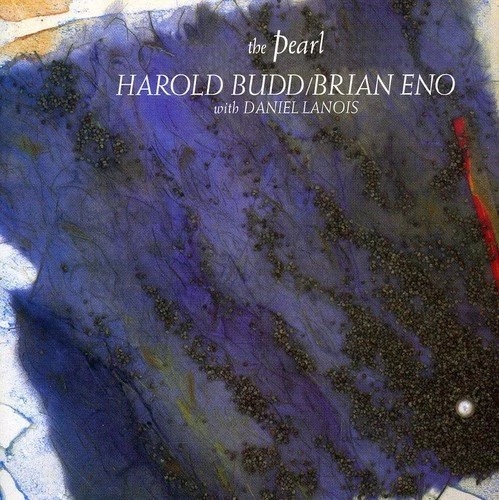
Harold Budd and Brian Eno made The Pearl in Hamilton, Ontario, in 1984 — with Daniel Lanois producing alongside Eno. The three of them shared a house during the sessions and worked seven days a week. But the actual recording took only about two weeks. They then spent 8–12 months deciding what to keep and shaping the album.
--
“Lost in the Humming Air” began with Harold Budd improvising against a humming sound made by Brian Eno on a Yamaha CS-80 synthesizer. Budd's piano and Eno's humming were recorded together in a single take. It's one of the strangest origins for such an extraordinarily delicate piece of music.
--
On The Pearl, Brian Eno wasn't simply sitting behind the mixing desk. He spent hours working alone on the recordings, changing speeds and making decisions about which pieces belonged together. Harold Budd supplied the piano improvisations; Eno and Daniel Lanois helped turn those performances into the strange, floating sound of the finished album.
--
Harold Budd once described The Pearl as more “focused” than his earlier collaboration with Eno, Ambient 2: The Plateaux of Mirror. The two records sound related, but Budd himself saw a difference: The Pearl was the more concentrated of the two.
--
Daniel Lanois is easy to overlook on The Pearl. The album is usually thought of as an Eno/Budd collaboration, but Lanois is credited as co-producer. He was part of the three-person team that shaped the record in Hamilton, Ontario — the same Lanois who had just worked with Eno on Apollo.
--
When Brian Eno made Apollo: Atmospheres and Soundtracks, he wasn't trying to make the Moon landing sound heroic. He remembered watching Apollo 11 in 1969 and feeling that the strangeness of the event had been overwhelmed by poor TV pictures, journalists and dramatic presentation. He wanted the music to let the sheer weirdness of being on the Moon come through.
--
Brian Eno discovered a strange detail about the Apollo astronauts: many of them took country & western music with them into space. Eno loved the contradiction — astronauts travelling to another world while listening to music associated with an older American frontier. That became the idea behind Apollo: “frontier space music”.
--
Apollo: Atmospheres and Soundtracks was released in 1983 — six years before the documentary it was originally made for. The film began as Apollo, but was eventually reworked, retitled For All Mankind and released in 1989. By then, parts of Eno's original soundtrack had been replaced.
--
The three people behind Apollo were Brian Eno, Daniel Lanois and Brian's younger brother Roger Eno. Roger's involvement is easy to overlook — but Apollo was actually his first recording opportunity. He was only 18 when the original sessions took place.
--
There's something wonderfully unexpected about Apollo: some of its most earthbound sounds came from Daniel Lanois's pedal steel. Eno wanted “frontier space music”, inspired partly by the country records astronauts carried with them. So the sound of the American frontier ended up floating around the Moon.
--
Brian Eno – “Deep Blue Day”. One of the most atmospheric and weightless ambient tracks ever made. But listen closely and there’s something unexpectedly earthy beneath it: Daniel Lanois playing pedal steel. The track was built around a heavily slowed-down Suzuki Omnichord, then Lanois added a country-style steel guitar. Space music with a touch of the American frontier.
--
There’s a strange intimacy behind Brian Eno’s Apollo.
During the sessions, Daniel Lanois was living in Eno’s house. They would work on a track during the day, make a “film mix” — an excuse to push the music further, slowing it down or making more radical blends, take it home at night and listen again. Then they’d return the next morning and decide what survived.
“Deep Blue Day” emerged from that process.
--
When David Bowie began working with Brian Eno in Berlin, he knew Eno could make the studio behave differently. Bowie later said he wanted to work with Eno because of his “disorienting” ways of putting instruments together. Low became their first collaboration — and Eno's experimental approach helped push Bowie somewhere neither had been before.
--
Brian Eno brought his Oblique Strategies cards into David Bowie's Berlin sessions. On Heroes, the cards weren't just a gimmick: Eno and Bowie would draw instructions to disrupt their normal way of working. One strategy Eno drew was “Try to make everything as similar as possible”; Bowie drew “Emphasize differences”.
--
Brian Eno and David Bowie didn't actually call Low, Heroes and Lodger a “trilogy”. They called them a triptych. The distinction matters: Lodger was recorded largely in Switzerland and New York, rather than Berlin. The three albums were connected creatively, but Berlin wasn't literally where all three were made.
--
During the making of Heroes, Brian Eno and David Bowie apparently spent so much time joking around as Peter Cook and Dudley Moore characters that Eno later recalled them discussing synthesizer parts while staying in character. It sounds ridiculous — but they were making one of Bowie's most adventurous records at the same time.
--
Brian Eno went to see James rehearsing in Manchester before they recorded Laid. He was struck by their improvisations and told them he thought those jams were just as important to their music as the finished songs. His idea became Wah Wah — an entire album built largely from those spontaneous sessions.
--
Wah Wah was recorded alongside Laid, but almost as a secret second project. James would work on the songs while a separate studio was available for improvising. Eno or Markus Dravs would then select a promising section, edit it and make just one mix — deliberately preserving the accidental quality of the jam.
--
James recorded so much improvised material during the Laid sessions that it eventually became a 23-track album. Wah Wah runs for more than an hour and was released in 1994 — effectively an experimental companion to the much more structured Laid.
--
There's an amusing Eno touch on Wah Wah: one of the tracks is called “Basic Brian”. It isn't a tribute song — it's one of the improvised pieces from the sessions, with Eno's presence becoming part of the band's experimental vocabulary.
--
In 1975, while still a student at the Royal College of Art, Russell Mills wrote to Brian Eno via his management company. He wasn't looking for a job or a commission. He simply wanted to meet and exchange ideas. That chance letter became the beginning of one of Eno's longest creative relationships.
--
Russell Mills first became fascinated by Brian Eno after seeing Roxy Music. What grabbed him wasn't simply the music — it was Eno's experimental approach. Mills later said he recognised in Eno a “kindred spirit”. They first met in 1975, when Mills was a student at the Royal College of Art.
--
Russell Mills didn't initially set out to become Brian Eno's designer. As a Royal College of Art student, he began making visual interpretations of Eno's lyrics. Those works eventually became More Dark Than Shark — a book combining Eno's lyrics with Mills's artwork, published by Faber & Faber in 1986.
--
Mills later worked on Eno's album covers, installations, stage designs and other projects.
--
When you bought Brian Eno’s Before and After Science in 1977, you didn’t just get an album. The original pressings came with four art prints by Peter Schmidt, tucked inside the sleeve. Eno even called it “Fourteen Pictures” — ten pieces of music plus four works of art. Imagine getting that with a record today.
--
**BRIAN ENO / DAVID BYRNE — My Life in the Bush of Ghosts. David Byrne doesn't actually sing on *My Life in the Bush of Ghosts*.** The album is packed with voices, but they're borrowed ones: radio presenters, preachers, singers and an exorcist. Byrne is all over the music, yet his own singing voice is absent. A David Byrne record where David Byrne doesn't sing.
--
BRIAN ENO / DAVID BYRNE — My Life in the Bush of Ghosts. The album was finished before the legal problems were. They had built much of the record around voices taken from broadcasts and existing recordings. Clearing those samples took so long that the album's release was delayed. They had stumbled into a problem the music industry was only beginning to understand.
--
BRIAN ENO / DAVID BYRNE — My Life in the Bush of Ghosts. AN exorcism became part of a dance track. “The Jezebel Spirit” uses a recording of an actual exorcist over a relentless rhythm. They had originally wanted to use evangelist Kathryn Kuhlman, but permission was refused. The substitute turned out to be one of the album's most extraordinary voices.
--
BRIAN ENO / DAVID BYRNE — one of the album's most striking voices belonged to a Lebanese singer who didn't know she'd been sampled. Dunya Younes' singing appears on “Regiment” and “The Carrier”. The samples had been cleared with the record label, but Younes herself apparently didn't discover that her voice was on the album until 2017 — 36 years after its release.
--
BRIAN ENO / DAVID BYRNE — My Life in the Bush of Ghosts. Neither had actually read the book behind the title. My Life in the Bush of Ghosts takes its name from Amos Tutuola's novel, but Byrne and Eno hadn't read it when they made the record. They knew Tutuola's work and liked the title's strange, slightly sinister quality. The name came before the book.
--
BRIAN ENO / DAVID BYRNE — My Life in the Bush of Ghosts. “America Is Waiting” contains a real radio broadcast. The voice comes from Ray Taliaferro of San Francisco's KGO radio, recorded in April 1980. Instead of writing words for the song, they took somebody else's broadcast and built music around it. The man wasn't hired to make a record. He was simply on the radio.
--
BRIAN ENO / DAVID BYRNE — My Life in the Bush of Ghosts. Eno saw the sampled voice differently from those who came before him. Eno had been fascinated by Holger Czukay's experiments with Dictaphones and shortwave radio. But he said the crucial difference was that he decided to make the sampled voice the lead vocal. On Bush of Ghosts, the voice wasn't decoration. It became the singer.
--
BRIAN ENO / DAVID BYRNE — My Life in the Bush of Ghosts. The album's voices came from places that had nothing to do with each other. A Lebanese mountain singer, Algerian Qur'anic recitation, an American radio host, a New Orleans preacher, a South Carolina gospel group and an exorcist all ended up on the same record. The remarkable thing wasn't just finding these sounds. It was making them belong together.
--
**BRIAN ENO — he became a synthesizer player partly because nobody could tell him he was doing it wrong.** Eno wasn't a traditionally trained instrumentalist. When he encountered the VCS3 synthesizer, he realised there were no established rules for playing it — so, in his words, nobody could tell him he couldn't play it. The instrument's role was still waiting to be invented.
--
BRIAN ENO — his Oblique Strategies began before the cards existed. At art school, Eno wrote little instructions to himself when he became stuck painting. Later, during Roxy Music sessions, he turned those ideas into cards to disrupt the band's thinking. What became one of music's most famous creative tools started as a way of getting himself unstuck.
--
BRIAN ENO — he deliberately tried to stop himself making decisions. For one experiment, Eno wanted a synthesizer to make sounds at irregular intervals. Rather than choosing the moments himself, he put obstacles around the studio and walked different routes through them, triggering the synthesizer whenever he happened to pass it. The point was to get his own taste out of the way.
--
BRIAN ENO — Robert Fripp once recorded something Eno hadn't meant to make. During the sessions that became No Pussyfooting, Eno accidentally played something at half speed. When he heard it back, he thought it sounded like some of the best music he'd made. It helped convince him that sometimes the most interesting music happens when the musician isn't completely in control.
--
BRIAN ENO — he once made music by deliberately getting lost in his own studio. Eno wanted an arbitrary way of deciding when sounds should enter a piece. Instead of trusting his instincts, he created an obstacle course and allowed his movements through the room to determine when he triggered the synthesizer. The studio became part instrument, part random-number generator.
--
BRIAN ENO — he doesn't think of discarded ideas as discarded. In a 1982 interview, Eno said he might throw something away and then physically build it into another piece years later. He said some ideas eventually used on On Land had been sitting around since his earliest musical experiments. For Eno, an unused idea isn't necessarily a failed one. It may simply be waiting.
--
BRIAN ENO — Music for Airports began with an accident of circumstance. After being hit by a taxi and recovering in hospital, Eno was listening to a quiet harp record that someone had brought him. The music was almost drowned out by the surrounding sounds. Instead of turning it up, he started thinking about music that could exist in the background without demanding attention.
--
BRIAN ENO — Music for Airports was designed for a place where nobody had asked for an album. Eno noticed that airports were places where music was routinely played, yet almost none of it had been specifically designed for the experience of being in an airport. So he made music for that situation. He wasn't just making an album — he was designing a new use for music.
--
BRIAN ENO — “Neroli” was designed to help him think. Eno described it as music for sitting down for half an hour or two hours while writing or trying to work something out. He wasn't trying to create music that demanded concentration. He wanted something that could put his mind into the right state for concentration.
--
BRIAN ENO — he once played clarinet in an orchestra where people weren't necessarily good at their instruments. The Portsmouth Sinfonia deliberately included musicians with little or no conventional expertise on their instruments. Eno played clarinet and produced the group's first two albums. Their performances turned musical imperfection into part of the composition itself.
Search Keywords
Brian Eno
Ambient
Roxy Music