The Biography

The word unique is overused in music, but in Kraftwerk's case it is absolutely true. They are without doubt the most important and influential band to emerge from the 1970s, bridging the gap between composer Karlheinz Stockhausen and today's electronic music landscape.
Their influence is immeasurable. Without Kraftwerk, modern music simply would not sound the same. From hip-hop to techno, from synthpop to industrial, their fingerprints are everywhere.
Ralf Hütter (born 20 August 1946, Krefeld, Germany) and Florian Schneider-Esleben (7 April 1947 - 21 April 2020, Düsseldorf, Germany) met while studying improvised music in Düsseldorf. Drawing on influences from Karlheinz Stockhausen and Tangerine Dream, they created minimalist music using synthesizers, drum machines and tape recorders.
Having previously recorded an album in 1970 with Organisation, Hütter and Schneider formed Kraftwerk and recorded their debut. After releasing several experimental albums, they were joined by Wolfgang Flür and Klaus Roeder.
Autobahn marked their breakthrough, establishing them as purveyors of hi-tech, computerized music. The title track reached the Top 10 in both US and UK charts.
In 1975, Karl Bartos joined, completing the classic lineup. Radio-Activity, Trans Europe Express and The Man-Machine were pioneering works that influenced Human League, Gary Numan, Depeche Mode and OMD.
Essential Albums
Autobahn (1974) Trans-Europe Express (1977) The Man-Machine (1978) Computer World (1981)Kraftwerk spent three years building their Kling Klang studios in the late 1970s. The Model gave them a UK number one hit in 1982.
Their influence on hip-hop was profound. Afrika Bambaataa and Arthur Baker's 1982 single used samples from their work, establishing them as godfathers of electro.
In the late 1980s and early 1990s, lineup changes occurred. Flür departed, replaced by Fritz Hilpert. Bartos left in 1991. Henning Schmitz joined to complete the new formation.
The Mix (1991) collected reworked classics. After years of silence, they returned in 1997. In 2003, Tour de France Soundtracks arrived, their first new album since 1986.
In 2005, Minimum-Maximum became their first official live album, accompanied by their first commercial video release.
In recent years, Kraftwerk have performed groundbreaking 3D multimedia concerts at major museums worldwide, including MoMA and Tate Modern, combining music with immersive visual projections.
Florian Schneider left in 2008 and passed away on 21 April 2020. Ralf Hütter continues leading Kraftwerk with Fritz Hilpert and Henning Schmitz.
Band Members
Ralf Hütter
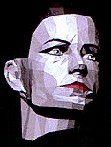
Born: 20 August 1946, Krefeld, Germany
Role: Vocals, keyboards, synthesizers
Status: Current member (1970-present)
Visionary leader and co-founder. An avid cyclist who was seriously injured in a 1983 accident. Continues to guide Kraftwerk's artistic direction.
Florian Schneider
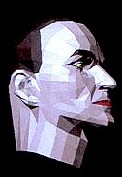
Born: 7 April 1947, Düsseldorf, Germany
Died: 21 April 2020
Role: Vocals, woodwinds, synthesizers, vocoder
Status: Co-founder (1970-2008)
Co-founder whose innovative vocoder use defined the band's sound. Son of architect Paul Schneider-Esleben.
Karl Bartos
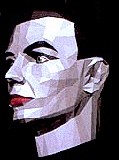
Born: 31 May 1952, Berchtesgaden, Germany
Role: Electronic percussion, keyboards
Status: Former member (1975-1991)
Part of the classic lineup. Later collaborated with OMD and Electronic, formed Elektric Music.
Wolfgang Flür
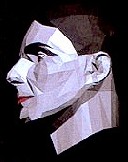
Born: 17 July 1947
Role: Electronic percussion
Status: Former member (1973-1987)
Classic lineup member. Formed Yamo after leaving. Published autobiography in 2000.
Fritz Hilpert
Born: 31 May 1956, Germany
Role: Electronic percussion, technical director
Status: Current member (1987-present)
Sound engineer who became integral to Kraftwerk's technical innovations and live performances.
Henning Schmitz
Born: 26 December 1953, Germany
Role: Electronic percussion, technical operations
Status: Current member (1991-present)
Sound engineer from 1978, officially credited on Electric Café. Essential to live technical setup.
Emil Schult
Born: 10 October 1946, Dessau, Germany
Role: Visual artist, lyricist
Painter, poet and musician. Long-time collaborator who co-wrote lyrics and created sleeve designs since 1973.