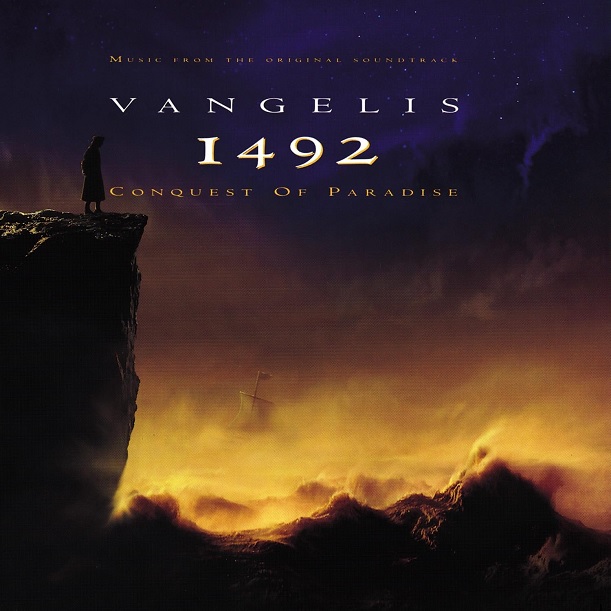
VANGELIS
Links
Buy
Vangelis Vinyl - direct link @ ebay.co.uk
(Lenin is a participant in the eBay (EPN) affiliate program)
Jean-Michel Jarre Fascinating Facts
Adam and the Ants Fascinating Facts
Porcupine Tree Fascinating FactsDanny Thompson Fascinating Facts
Peter Gabriel Fascinating Facts
Holger Czukay Fascinating Facts
Anton Corbijn Fascinating Facts
Marc Bolan and T. Rex Fascinating Facts
Sting & The Police Fascinating Facts
Dexys Midnight Runners Fascinating Facts
Roxy Music / Bryan Ferry Fascinating Facts
Elvis Presley Fascinating Facts
Scott Walker Fascinating Facts
Michael Brook Fascinating Facts
Penguin Cafe Orchestra Fascinating Facts
David Bowie Rarities (Shipped From UK)
Cocteau Twins Fascinating Facts
Ryuichi Sakamoto Fascinating Facts
Haruomi Hosono Fascinating Facts
Yukihiro Takahashi Fascinating Facts
Hector Zazou Fascinating Facts
Frank Auerbach Fascinating Facts
Vangelis
Artist
Vangelis
Content
All the fascinating facts
More
Bitesized
Year
1970s to Present Day
Random and bite-sized facts on all things on the mythical electronic figure that was Vangelis. Totally random but totally fascinating if you're into it. Do you know Vangelis now?
--
VANGELIS BUILT HIS STUDIO WHILE RECORDING HIS FIRST ALBUM
When Vangelis began recording Heaven and Hell in London, Nemo Studios was still being built. He worked around the builders and unfinished concrete rather than wait for the studio to be completed.
--
VANGELIS BOUGHT HIS FIRST SYNTHESIZER IN LONDON
His first synthesizer was a Korg 700, a monophonic instrument. In a 1984 interview, Vangelis said he still owned it and had never thrown any of his keyboards away.
--
HE THOUGHT THE YAMAHA CS-80 WAS THE BEST SYNTHESIZER EVER DESIGNED
Vangelis singled out the Yamaha CS-80 as the most important synthesizer of his career. He particularly loved its keyboard, which he felt made it a real performance instrument rather than just a source of sounds.
--
NEMO STUDIOS USED SECOND-HAND RECORDING EQUIPMENT
Vangelis bought Nemo's mixing desk and multitrack tape machine second-hand from Command Studios in London. The equipment was customised, but it wasn't a brand-new, state-of-the-art studio setup.
--
VANGELIS COULD RECORD A QUIET PIANO AGAINST A WALL OF SOUND
His dramatic shifts from quiet piano to huge synthesizer passages caused problems with the noisy multitrack tape machine at Nemo. After a loud passage, tape hiss could be left exposed across the tracks.
--
VANGELIS DIDN'T LIKE COMPUTERS GETTING BETWEEN HIM AND THE MUSIC
In a 1984 interview, Vangelis argued that programming a computer could interrupt the immediate connection between a musician and an instrument. He preferred to sit down at a keyboard and play without having to tell a machine what to do first.
--
HE WROTE FAR MORE MUSIC THAN HE RELEASED
Vangelis said he had written many times more music for each album than actually appeared on it. He chose what to release according to his own instincts, rather than writing specifically to guarantee commercial success.
--
VANGELIS SAW THE MIXING DESK AS AN INSTRUMENT
He described the mixing desk as the conductor of his instruments. For Vangelis, recording and mixing weren't simply technical jobs done after composing; they were part of the musical performance itself.
--
VANGELIS
Links
Buy
Vangelis Japanese Vinyl - direct link @ ebay.co.uk
(Lenin is a participant in the eBay (EPN) affiliate program)
--
THE FILM'S PERIOD SETTING DIDN'T MEAN PERIOD MUSIC
The story takes place in the 1920s, but Vangelis deliberately avoided a traditional period soundtrack. Director Hugh Hudson wanted a contemporary sound to give the historical film a sense of modernity.
--
THE BEACH RUNNING SCENE ALMOST HAD A DIFFERENT SOUNDTRACK
Hugh Hudson initially considered using “L’Enfant”, from Vangelis’s 1978 album “Opéra Sauvage”, for the famous slow-motion beach-running sequence. Vangelis eventually wrote the music that became the film’s iconic main theme instead.
--
THE SOUNDTRACK WAS A PERSONAL TRIBUTE
Vangelis dedicated the “Chariots of Fire” soundtrack to his father, Ulysses Papathanassiou, who had been a keen runner. Behind one of the most recognisable pieces of sports music ever written was a personal connection to his own family.
--
THE MAIN THEME WAS ORIGINALLY CALLED “TITLES”
On the original soundtrack album, the piece now universally known as “Chariots of Fire” was simply titled “Titles”. It accompanied the film’s opening sequence and became so famous that its original name was largely forgotten.
--
VANGELIS TOPPED THE US SINGLES CHART
The “Chariots of Fire” theme reached number one on the US Billboard Hot 100 in 1982. It was an unusual chart-topper: a synthesiser-led instrumental written for a British film about athletes competing at the 1924 Olympics.
--
THE ALBUM WASN'T A STRAIGHT COPY OF THE FILM SCORE
Vangelis reworked material for the soundtrack album rather than simply presenting the music exactly as heard in the film. The album version of the main theme is an extended piece in its own right, helping it work as a standalone musical composition.
--
THE FILM'S TITLE COMES FROM WILLIAM BLAKE
“Chariots of Fire” takes its title from the words of the hymn “Jerusalem”, based on a poem by William Blake and set to music by Hubert Parry. The hymn appears at the end of the film, bringing the story back to a very different musical tradition from Vangelis’s electronic score.
--
VANGELIS
Links
Buy
Vangelis Japanese Vinyl - direct link @ ebay.co.uk
(Lenin is a participant in the eBay (EPN) affiliate program)
--
JON ANDERSON ALMOST BECAME A VANGELIS BANDMATE
When Rick Wakeman left Yes in 1974, Vangelis was considered as his replacement. It never happened, but the connection with Jon Anderson that came from that period eventually led to their own musical partnership.
--
THEY HAD ALREADY WORKED TOGETHER BEFORE JON & VANGELIS
Jon Anderson first appeared on one of Vangelis's albums in 1975, singing on “Heaven and Hell”. Anderson and Vangelis continued working together on other projects before they released their first album as Jon & Vangelis.
--
“I'LL FIND MY WAY HOME” WASN'T ON THE ORIGINAL ALBUM
One of their best-known songs was not actually on the first edition of “The Friends of Mr Cairo”. “I'll Find My Way Home” was added to a later edition of the album and became their biggest UK hit, reaching number six in 1981.
--
“THE FRIENDS OF MR CAIRO” WAS INSPIRED BY OLD HOLLYWOOD
The title track was built around Vangelis and Anderson's fascination with classic Hollywood cinema. Its title refers to Joel Cairo, the character played by Peter Lorre in “The Maltese Falcon”, and the recording deliberately plays with the sounds and atmosphere of old detective movies.
--
“STATE OF INDEPENDENCE” WAS LATER A HIT FOR DONNA SUMMER
Jon Anderson and Vangelis originally recorded “State of Independence” for “The Friends of Mr Cairo”. Donna Summer recorded her own version soon afterwards, releasing it as a single in 1982.
--
THEIR FIRST ALBUM CAME TOGETHER QUICKLY
“Short Stories”, released in 1980, grew out of informal recording sessions between Anderson and Vangelis. Rather than working like a conventional band, the two developed the songs around Anderson's vocals and Vangelis's electronic instrumentation.
--
VANGELIS HAD ALREADY WRITTEN MUSIC FOR ANDERSON
Before “Short Stories”, Vangelis had provided music for Jon Anderson's solo work. Their partnership was therefore not simply a singer being brought in to perform on Vangelis compositions; the two had already developed a musical relationship through several projects.
--
VANGELIS
Links
Buy
Vangelis Japanese Vinyl - direct link @ ebay.co.uk
(Lenin is a participant in the eBay (EPN) affiliate program)
--
VANGELIS WAS APPROACHED AFTER RIDLEY SCOTT SAW HIM AS A NATURAL FIT
Vangelis was invited to see a private screening of “Blade Runner” at Pinewood Studios in 1981. After discussions with Ridley Scott, he agreed to provide the score. It wasn't their first collaboration: Scott had previously used Vangelis for a Chanel No. 5 commercial.
--
THE SCORE WAS RECORDED AT VANGELIS'S OWN LONDON STUDIO
Vangelis recorded the “Blade Runner” music at Nemo Studios, his privately owned London recording studio. The studio contained more than a million pounds worth of equipment and instruments, giving him an unusually large amount of freedom while working on the film.
--
VANGELIS USED A MIX OF SYNTHESIZERS
The “Blade Runner” sessions weren't built around a single synthesizer. Among the equipment at Nemo were Roland instruments including the Jupiter-4, ProMars CompuPhonic and several Roland sequencers. Vangelis combined these with his other keyboards and studio equipment to create the film's distinctive sound.
--
THE OFFICIAL SOUNDTRACK DIDN'T APPEAR FOR YEARS
Although the film was released in 1982, Vangelis's official “Blade Runner” soundtrack album didn't appear until 1994. For more than a decade, the music existed mainly as part of the film itself, while an orchestral recording by the New American Orchestra had been released in 1982 instead.
--
VANGELIS DIDN'T MAKE A CONVENTIONAL FILM SCORE
Rather than simply filling scenes with background music, Vangelis treated the sounds of “Blade Runner” as part of its futuristic world. His synthesizers could sound like machinery, atmosphere, voices or conventional musical instruments, allowing the score to blur the boundary between music and the film's sound design.
--
“TEARS IN RAIN” WAS RECORDED AT NEMO
The music associated with Roy Batty's final scene was recorded at Nemo Studios in London in 1982. On the soundtrack it became known as “Tears in Rain”, taking its name from the famous speech Rutger Hauer delivers as Batty dies.
--
RUTGER HAUER'S VOICE IS PART OF THE TRACK
The soundtrack version of “Tears in Rain” includes Rutger Hauer's voice. Vangelis incorporated the film dialogue into the musical recording rather than treating the score and spoken words as completely separate elements.
--
THE SOUNDTRACK ALBUM WASN'T THE COMPLETE FILM SCORE
When the official soundtrack finally appeared in 1994, it still didn't contain all of the music heard in the film. Some pieces were omitted and other material was included in forms that differed from what audiences had heard on screen. Later releases added more previously unavailable music.
--
VANGELIS AND SCOTT HAD WORKED TOGETHER BEFORE
“Blade Runner” wasn't the first time Ridley Scott had used Vangelis's music. In 1979, Scott commissioned him to rework a piece for a Chanel No. 5 advertising film called “Share the Fantasy”. Their earlier collaboration helped establish the connection that eventually led to “Blade Runner”.
--
THE 1982 ORCHESTRAL ALBUM WASN'T VANGELIS'S OWN RECORDING
Because Vangelis's soundtrack wasn't officially released at the time, an orchestral album appeared in 1982 under the title “Blade Runner: Orchestral Adaptation of Music Composed for the Motion Picture by Vangelis”. It was performed by the New American Orchestra rather than by Vangelis.
VANGELIS
Links
Buy
Vangelis Japanese Vinyl - direct link @ ebay.co.uk
(Lenin is a participant in the eBay (EPN) affiliate program)
--
NEMO'S ROOF ACTUALLY VIBRATED WITH THE MUSIC
Vangelis's studio had a surprisingly physical problem with low frequencies. The roof was thin enough to act like a huge wooden loudspeaker, causing bass rumble in neighbouring buildings when he worked late at night. The problem was eventually solved by adding weight to the ceiling and concrete paving slabs on the roof.
--
HE USED DBX INSTEAD OF THE MORE COMMON DOLBY
When Vangelis upgraded the recording system at Nemo Studios, he chose dbx noise reduction for his 16-track recordings. It was less common than Dolby in professional studios, but Vangelis liked the particular character it gave his recordings.
--
HIS STUDIO HAD A WALL COVERED IN AWARDS
Nemo Studios had a sloping wall that caused acoustic problems, but Vangelis refused to straighten it as the change would have sacrificed valuable space. Instead, the wall eventually became a place to display his gold and silver discs until it was almost completely covered.
--
HE KEPT LOTS OF DIFFERENT PROJECTS ON THE GO AT ONCE
There were always large numbers of tapes around Nemo Studios because Vangelis frequently worked on several projects at the same time. New blank tapes were kept ready because he could suddenly decide to record a completely new composition.
--
THE CS-80 COULD ACTUALLY DAMAGE THE STUDIO MONITORS
Vangelis discovered that the CS-80's pitch ribbon could produce frequencies below the normal range of human hearing. The resulting subsonic signals sometimes pushed the studio's equipment beyond its limits and damaged the cones in the Tannoy monitors.
--
HE WOULDN'T WAIT FOR COMPUTER TECHNOLOGY
Nemo never used a system that required tapes to be prepared with synchronisation codes before Vangelis could start composing. The process would have taken around 25 minutes before a tape was ready, and according to the studio's history, Vangelis simply didn't have the patience to wait.
--
NEMO COULD DOUBLE AS A CINEMA
The larger live room at Nemo wasn't only used for recording. It also became a lounge and film-screening room, with a projector used to watch films and rough cuts. This was particularly useful when Vangelis was working on film music.
--
HE TOOK A PORTABLE STUDIO INTO HOTEL ROOMS
From the mid-1980s Vangelis sometimes worked away from London using two Akai MG1212 12-track recorders. The machines used cassette tape and could be linked together to provide 24 tracks, allowing him to compose in hotel suites before transferring the work back to conventional studio tape.
--
HE REFUSED TO BRICK UP A PROBLEM WALL
Soundproofing consultants advised Vangelis to make one of Nemo's sloping walls straight by bricking it up. He rejected the idea because it would lose valuable space and spoil the look of the room. The wall stayed exactly where it was.
--
VANGELIS DIDN'T WANT TO KNOW HOW HIS SYNTHESIZERS WORKED
In a 1984 interview, Vangelis said he would rather understand how music worked than understand how his equipment worked. He compared it to driving a car: knowing how to drive it was more useful to him than knowing what made it go.
--
VANGELIS
Links
Buy
Vangelis Japanese Vinyl - direct link @ ebay.co.uk
(Lenin is a participant in the eBay (EPN) affiliate program)
--
VANGELIS COULD RECORD A FILM SCORE WITHOUT SMPTE
At Nemo Studios, synchronising music to film was often done by hand. Vangelis and the engineer would start the video and tape recorder together, sometimes using a four-count recorded on the piano as the cue. There was no modern computerised lock between the music and picture.
--
HE SOMETIMES COMPOSED WHILE PLAYING THE DRUM MACHINE
Vangelis would program a quick drum pattern and then play the keyboards live while reaching over to operate the drum machine himself. The performances were recorded in real time rather than being built up through conventional MIDI sequencing.
--
HE HAD TWO DIFFERENT SYNTHESISER SETUPS
After Nemo was renovated in 1983, Vangelis maintained separate synthesiser setups in the control room and live room. They contained different combinations of instruments, allowing him to move between the two areas depending on what he was recording.
--
THE STUDIO WASN'T ACTUALLY FULLY SOUNDPROOF
Nemo's control room and live room were not completely isolated from each other. This could create problems when recording vocals or acoustic instruments, and even outside noises such as police sirens or a ringing telephone had to be watched for.
--
VANGELIS DIDN'T LIKE RECORDING VOCALISTS IN ANOTHER ROOM
A glass wall had originally been planned between Nemo's control room and live room, but Vangelis disliked the idea because he wanted to interact directly with musicians while they were improvising. The glass wall was eventually removed during the making of “China”.
--
HE COULD WORK ON MUSIC IN A HOTEL ROOM
From 1984 onwards, Vangelis used two Akai MG1212 12-track recorders when working away from Nemo. The cassette-based machines could be linked to provide 24 tracks, allowing him to compose in a hotel suite and later transfer the work to conventional studio tape.
--
VANGELIS KEPT USING AN OLD DIGITAL REVERB
Even after newer digital reverbs appeared, Vangelis continued to favour the Lexicon 224 at Nemo Studios. The unit was noisier than some of its successors, but he preferred its sound and kept using it.
--
A STAIRWELL BECAME AN UNUSUAL RECORDING SPACE
The well of the stairway leading to Nemo Studios provided a natural echo. Vangelis used the unusual acoustic space for percussion experiments, taking advantage of the building itself rather than relying entirely on electronic effects.
--
HE COULD MAKE AN HOUR OF MUSIC IN A DAY
When Vangelis worked on the music for Frédéric Rossif's nature films, he could sometimes produce the music required for an hour of television in about a day. Because the music didn't need to be synchronised precisely to the picture, the process was much more direct.
--
THE NEMO STUDIO STARTED WITH SECOND-HAND EQUIPMENT
When Nemo opened in 1975, its main mixing desk and multitrack tape machine were both bought second-hand from Command Studios near London's Green Park. Vangelis built his famous studio around equipment that had already been used professionally elsewhere.
--
THE FIRST NEMO RECORDER COULD HANDLE 24 TRACKS
The original tape machine was a customised version of the Scully 280. It could be configured for 2, 4, 8, 16 or 24 tracks, and had three separate tape transports. It gave Vangelis considerably more flexibility than a conventional machine of the period.
--
VANGELIS USED A VOCODER ON SOME VOCALS
When working with singers, Vangelis sometimes processed their voices through a Roland VP-330 VocoderPlus synthesiser. The effect gave the vocals a floating electronic quality that became part of the sound of some of his vocal collaborations.
--
VANGELIS
Links
Buy
Vangelis Japanese Vinyl - direct link @ ebay.co.uk
(Lenin is a participant in the eBay (EPN) affiliate program)
--
THE CS-80 WEIGHED 90 KILOS
Vangelis's favourite Yamaha CS-80 synthesizers were enormous and heavy. Each one weighed around 90 kilos, and at Nemo Studios they sometimes had to be crane-lifted through the building's large window because the staircase was too narrow to get them inside.
--
NEMO HAD NO AIR CONDITIONING FOR ITS FIRST DECADE
For the first ten years of Nemo Studios there was no air conditioning in the control room. It was hardly an ideal situation for a room packed with electronic equipment, particularly during long recording sessions.
--
VANGELIS COULD CONTROL THE FILM PLAYBACK HIMSELF
When working on film music at Nemo, another television could be brought into the control room so Vangelis and the engineer could both see the picture. Vangelis could also use a remote control to operate the video playback himself.
--
HE RECORDED FILM CUES WITH A FOUR-COUNT
Synchronising music to film at Nemo was often done manually. Vangelis would sometimes record a four-count on the piano or another instrument to mark the exact point where the music needed to begin. The count was then used as a cue when the music was transferred to the film.
--
VANGELIS COULD PLAY THE DRUM MACHINE WHILE PLAYING KEYBOARDS
His studio setup allowed him to program a quick drum pattern and then play the keyboard parts live while reaching over to operate the drum machine. The performance was captured directly on tape rather than being reconstructed later through MIDI sequencing.
--
HE KEPT HIS INSTRUMENTS IN FIXED POSITIONS
Vangelis often assigned particular sounds and instruments to particular tracks and mixer channels. This meant that when he returned to a piece later, he knew exactly where the CS-80, piano, strings or percussion would be, effectively creating his own form of manual automation.
--
THE STUDIO'S TAPE MACHINE WAS NOISY
The original Scully multitrack recorder at Nemo had a problem with tape hiss. Vangelis's music could move from a very quiet piano passage to a huge synthesised crescendo, leaving the noise of the tape machine exposed when the music suddenly became quiet again.
--
HE SOMETIMES RECORDED AT HALF SPEED
Because some of Vangelis's compositions were so long, the tape could be run at 15 inches per second instead of the normal 30 to reduce the risk of running out of tape. The lower speed also increased the technical problems with noise, making noise reduction particularly important.
--
NEMO USED A STRANGE WAY OF SYNCING DRUM MACHINES
Before MIDI became standard, Nemo developed a way of recording a gate signal onto tape so analogue sequencers and drum machines could stay in sync. It allowed Vangelis to build complex sequences using the technology available at the time.
--
VANGELIS DIDN'T USE MIDI THE WAY MOST PEOPLE DID
Even after MIDI arrived, Vangelis's approach remained unusually hands-on. His custom MIDI system allowed him to layer several synthesizers and control them from master keyboards, while foot pedals could bring different sounds into the performance as he played.
--
HE WANTED THE SOUND TO EXIST THE MOMENT HE COMPOSED IT
Vangelis described his approach as having no real separation between composing, performing and recording. He wanted to hear the finished sound at the moment the musical idea appeared, rather than writing something down and working out the sound later.
--
“OPÉRA SAUVAGE” DIDN'T NEED SYNCHRONISING TO THE FILM
When Vangelis made the music for Frédéric Rossif's “Opéra Sauvage”, the film editor simply fitted the music to the pictures. Because the music didn't have to be synchronised to individual events in the film, Vangelis could work much more freely.
--
VANGELIS
Links
Buy
Vangelis Japanese Vinyl - direct link @ ebay.co.uk
(Lenin is a participant in the eBay (EPN) affiliate program)
--
VANGELIS'S FIRST SYNTHESIZER WAS A KORG 700
Vangelis said his first synthesizer was a Korg 700 monophonic. Before that, his main electric instrument had been a Hammond B3 organ, which he said opened up a completely new range of sounds for him.
--
HE PLAYED HIS INSTRUMENTS VERY HARD
Vangelis once described the way he played his instruments as driving them “very hard”. He wasn't talking about volume alone: he treated the physical response of the keyboards as an important part of getting the sound he wanted.
--
NEMO WAS BUILT FROM THREE CLASSROOMS
The building that became Nemo Studios had originally been a school. Vangelis converted three classrooms on the top floor into his recording studio, creating the space where much of his best-known music was made.
--
THE CS-80 AND MIXING DESK HARDLY MOVED
Although the equipment at Nemo was constantly rearranged, the Yamaha CS-80 and the mixing desk generally remained in the same positions after 1978. Vangelis's studio setup evolved around them rather than constantly starting again from scratch.
--
HE TOOK A MINI NEMO ON THE ROAD
When Vangelis spent periods working in Paris, New York and Los Angeles, he took two Akai MG1212 recorders with him. The cassette-based machines could be linked together to provide 24 tracks, allowing him to compose in hotel suites and later transfer the recordings to conventional studio tape.
--
HE COULD CONTROL SIX SYNTHESIZERS FROM TWO KEYBOARDS
Nemo had custom-built MIDI routers that allowed two synthesizers to act as master keyboards. Each master could control three other synthesizers, allowing Vangelis to layer several instruments while playing live.
--
HE USED FOOT PEDALS TO BRING SOUNDS IN AND OUT
Vangelis used volume pedals while playing to bring different synthesizer sounds into the performance. Instead of recording a part and automating the changes afterwards, he could physically control the layers as he played.
--
JON ANDERSON WOULD “SCAT” THE MELODIES
When Jon Anderson and Vangelis were developing songs, Vangelis would play the musical idea while Anderson improvised a “scat” vocal beside him. This guide vocal was used to capture the melody and shape of a song before Anderson recorded the final vocal.
--
THE NEMO STUDIO HAD A PINK PANTHER
Among the more unusual objects documented at Nemo Studios was a large stuffed Pink Panther. The studio also had beach chairs that Vangelis had acquired during a trip to the United States.
--
HE LOVED PLAYING DRUMS BUT RARELY RELEASED THE RESULTS
Vangelis enjoyed playing the drum kit at Nemo Studios, even though drums weren't a major part of his released music. The studio's history notes that he would happily experiment with the kit despite rarely featuring it prominently on his records.
--
THE STUDIO USED VHS TO WATCH FILMS
Film and television material arriving at Nemo wasn't always supplied on professional formats. The studio sometimes received films on VHS, alongside three-quarter-inch video, Beta and other formats, which could then be viewed in the studio while Vangelis worked on the music.
--
HE COULD MAKE A SOUND WITHOUT ADDING ANOTHER INSTRUMENT
Vangelis often chained effects units together rather than simply selecting a preset sound. Echo, reverb, distortion and equalisation could be placed one after another, allowing a basic keyboard sound to become something much more unusual.
--
VANGELIS
Links
Buy
Vangelis Japanese Vinyl - direct link @ ebay.co.uk
(Lenin is a participant in the eBay (EPN) affiliate program)
--
Search Keywords
Vangelis
Electronic
Icon
VANGELIS
Links
Buy
Vangelis Vinyl - direct link @ ebay.co.uk
(Lenin is a participant in the eBay (EPN) affiliate program)
Jean-Michel Jarre Fascinating Facts
Adam and the Ants Fascinating Facts
Porcupine Tree Fascinating FactsDanny Thompson Fascinating Facts
Marc Bolan and T. Rex Fascinating Facts
Peter Gabriel Fascinating Facts
Holger Czukay Fascinating Facts
Anton Corbijn Fascinating Facts
Sting & The Police Fascinating Facts
Dexys Midnight Runners Fascinating Facts
Roxy Music / Bryan Ferry Fascinating Facts
Elvis Presley Fascinating Facts
Scott Walker Fascinating Facts
Michael Brook Fascinating Facts
Penguin Cafe Orchestra Fascinating Facts
David Bowie Rarities (Shipped From UK)
Cocteau Twins Fascinating Facts
Roxy Music / Bryan Ferry Fascinating Facts
Ryuichi Sakamoto Fascinating Facts
Haruomi Hosono Fascinating Facts
Yukihiro Takahashi Fascinating Facts
Hector Zazou Fascinating Facts
Frank Auerbach Fascinating Facts