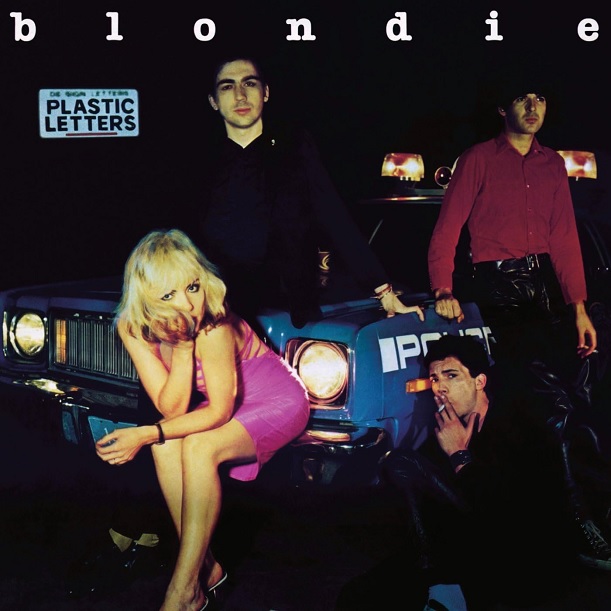
BLONDIE
Links
Buy
Blondie Vinyl - direct link @ ebay.co.uk
(Lenin is a participant in the eBay (EPN) affiliate program)
Led Zeppelin Fascinating Facts
Human League Fascinating Facts
Visage / Steve Strange Fascinating Facts
Tears For Fears Fascinating Facts
Queen / Freddie Mercury Fascinating Facts
Danny Thompson Fascinating Facts
Talking Heads Fascinating Facts
Porcupine Tree Fascinating Facts
Adam and the Ants Fascinating Facts
Queen / Freddie Mercury Fascinating FactsMarc Bolan and T. Rex Fascinating Facts
Sting & The Police Fascinating Facts
Jean-Michel Jarre Fascinating Facts
Peter Gabriel Fascinating Facts
Holger Czukay Fascinating Facts
Anton Corbijn Fascinating Facts
Dexys Midnight Runners Fascinating Facts
Roxy Music / Bryan Ferry Fascinating Facts
Siouxsie and the Banshees Fascinating Facts
Elvis Presley Fascinating Facts
Scott Walker Fascinating Facts
Michael Brook Fascinating Facts
Penguin Cafe Orchestra Fascinating Facts
David Bowie Rarities (Shipped From UK)
Cocteau Twins Fascinating Facts
Ryuichi Sakamoto Fascinating Facts
Haruomi Hosono Fascinating Facts
Yukihiro Takahashi Fascinating Facts
Hector Zazou Fascinating Facts
Frank Auerbach Fascinating Facts
Blondie
Artist
Blondie
Content
All the fascinating facts
More
Bitesized
Year
1970s to Present Day
Random and bite-sized facts on all things on the mythical band Blondie. Totally random but totally fascinating if you're into it. Do you know Blondie now?
--
Mike Chapman Treated “Parallel Lines” Like an Album Full of Potential Singles
Producer Mike Chapman approached “Parallel Lines” with the aim of making every track as strong as a potential single. Drummer Clem Burke later recalled that Chapman spent considerable time on the arrangements and helped the band shape the songs in the studio. It was a different approach from the more selective production on Blondie’s first album, where certain tracks received extra attention while others were recorded more directly.
--
“Dreaming” Was Almost Too Easy for Clem Burke
Clem Burke recalled being surprised by how quickly “Dreaming” came together during the “Eat to the Beat” sessions. He remembered playing through the song and assuming he should add more, only for Mike Chapman to say they already had what they needed. Chapman’s relaxed response encouraged a more spontaneous performance, rather than the carefully worked-out arrangements he had pursued on “Parallel Lines”.
--
Blondie Recorded “Autoamerican” Outside New York for the First Time
For “Autoamerican”, Blondie left New York and recorded at United Western Recorders in Los Angeles. Chris Stein and Clem Burke later described the change of location as an important part of the experience. The studio had a notable musical history, including connections with the Beach Boys, and the Californian setting helped distinguish the album from the band’s earlier New York recordings.
--
The Band Deliberately Tried to Escape the “Blondie Sound”
By 1980, Chris Stein felt the group risked becoming trapped by their own success, with other bands imitating the formula of heavy guitars and a female lead singer. He explained in a contemporary interview that Blondie wanted to move beyond that mould. “Autoamerican” was their answer: an album that ranged from reggae to rap, orchestral passages and pop, rather than simply repeating the sound of “Parallel Lines”.
--
The B-Girls Helped Out During “Autoamerican”
During the recording of “Autoamerican”, the B-Girls, a New York punk band, were in Los Angeles to play at the Whisky a Go Go. They dropped into the studio and contributed backing vocals. It was a small example of the way Blondie’s downtown New York connections continued to intersect with their increasingly ambitious studio productions, even after the band had become international stars.
--
“Call Me” Began with a Giorgio Moroder Demo
Giorgio Moroder originally approached Debbie Harry with a musical demo for the soundtrack to “American Gigolo”. Harry later explained that the film inspired her to write the first verse, which became the starting point for the rest of the lyric. The finished recording brought Blondie into Moroder’s world of sleek electronic disco, while Harry’s vocal gave the track a harder, more dramatic edge.
--
“Eat to the Beat” Was Recorded Remarkably Quickly
Blondie recorded “Eat to the Beat” in around three weeks, making it the quickest album they made with Mike Chapman. Clem Burke remembered Chapman encouraging spontaneity during the sessions. The album followed the huge success of “Parallel Lines”, but rather than spending months trying to reproduce that record, the band made a more energetic, rock-oriented album that still ranged across several styles.
--
Jimmy Destri Wanted “Heart of Glass” on “Parallel Lines”
Keyboard player Jimmy Destri recalled that the record company wanted Blondie to make a strong pop album when they began work on “Parallel Lines”. The band, however, were determined to include “Heart of Glass”. Destri later compared that disagreement with the reaction to “Autoamerican”: the label wanted another conventional pop record, while Blondie were keen to try something different. Both experiments produced major hits.
--
“Rapture” Was Part of a Deliberate Musical Gamble
Jimmy Destri recalled that the record company was baffled when Blondie made “Autoamerican”, particularly by the inclusion of “Rapture”. The song mixed the band’s pop instincts with a rap section, a combination that was still unusual in mainstream rock and pop. Destri later noted the irony that the album’s unconventional approach helped produce major American chart success with both “Rapture” and “The Tide Is High”.
--
“Parallel Lines” Was Finished in Just Six Weeks
Despite having been given a much longer period to make “Parallel Lines”, Blondie completed the album in approximately six weeks. Mike Chapman concentrated heavily on arrangements and vocal performances, helping turn the band’s songs into tightly constructed pop recordings. The contrast with their later, more experimental records shows how quickly Blondie moved from refining a hit-making formula to actively challenging it.
--
BLONDIE
Links
Buy
Blondie Japanese Vinyl - direct link @ ebay.co.uk
(Lenin is a participant in the eBay (EPN) affiliate program)
--
Debbie Harry Sang in a Folk-Rock Group Before Blondie
Before becoming the voice of Blondie, Harry was a member of Wind in the Willows, a folk-rock group that released an album in 1968. The experience gave her an earlier start in the recording business, years before New York’s punk scene brought her international attention. She later described her return to music in the 1970s as another attempt to make a life as an artist, rather than a sudden discovery of a talent she had never pursued before.
--
She Worked as a Playboy Bunny Before Becoming Famous
During her early years in New York, Harry worked as a Playboy Bunny at the Playboy Club. It was one of several jobs she took while trying to establish herself, long before Blondie became successful. The experience also formed part of the complicated relationship between her public image and her own identity: Harry understood the power of glamour and sexuality, but she also used her appearance in ways that challenged conventional expectations of female pop stars.
--
Marilyn Monroe Was an Early Influence
Harry grew up fascinated by Marilyn Monroe, as well as by the glamour and mythology of Hollywood. In interviews about her memoir *Face It*, she described being drawn to the idea of becoming an artist and to the freedom she associated with films, comedy, jazz and the Beat movement. The blonde image that later became inseparable from her public persona therefore had roots in an older tradition of screen glamour, which she transformed through punk attitude and irony.
--
Her First Punk Performances Frightened Her
Harry recalled that her first appearances at CBGB in New York were frightening. She realised that she couldn't simply stand onstage and hope the audience would respond: she had to make the audience react. That experience helped shape the direct, confrontational presence she developed as Blondie's frontwoman. Her performances could appear cool and self-assured, but she later acknowledged that the confidence was something she had to summon.
--
She and Chris Stein Shared an Interest in More Than Music
Harry and Blondie co-founder Chris Stein were drawn to a wider world of art, film, science fiction and pop culture. Harry has recalled the importance of comedy, Beat writing and the films she watched growing up, while Stein's photography documented the New York scene around them. These interests helped give Blondie a visual and cultural identity that extended beyond its records, connecting the band to the city's art scene as well as its punk clubs.
--
Harry Helped Create Her Own Stage Clothes from Second-Hand Finds
Rather than relying entirely on expensive designer outfits, Harry searched New York's thrift shops for unusual clothes, including old prom dresses. She would alter or distress garments to make them work onstage. Her look was partly an exercise in reinvention: ordinary or discarded clothing could become something striking when combined with the right attitude. The result helped make her one of the defining visual figures of the late-1970s punk era.
--
She Never Saw Herself as Only a Singer
Harry's ambitions extended to acting and visual culture as well as music. She appeared in films including David Cronenberg's *Videodrome* and John Waters' *Hairspray*, and she has spoken about her early desire to become an artist. Her interests in cinema and character also influenced Blondie's music, which often drew on film imagery, fantasy and stylised storytelling rather than straightforward autobiography alone.
--
She Was Older Than Many of Her Punk Contemporaries
Harry was 31 when Blondie's self-titled debut album appeared in 1976. That was older than the age many people associated with the emerging punk movement, and the fact was sometimes used by the press to frame her career as unusual. Harry later joked about the attention given to her age, while maintaining that she had been optimistic about her chances. Her career was not a teenage overnight success; it followed years of jobs, earlier musical attempts and life in New York.
--
She Has Described Her Voice in Unusual Terms
In an interview with *Pitchfork*, Harry was asked whether she thought of her voice as a horn instrument rather than a conventional rock voice. She didn't claim that description for herself, but the question reflected something distinctive about her singing: she often treats a vocal line as a rhythmic, expressive part of the arrangement, not simply a melody delivered over the top. Her phrasing could move between cool detachment, conversational delivery and a much more forceful attack.
--
Her Memoir Acknowledges How Unreliable Memory Can Be
When Harry published her memoir *Face It* in 2019, she was candid about the difficulty of reconstructing the past. She and Stein sometimes remembered the same events differently, and she acknowledged that memories can become romanticised over time. Rather than presenting every recollection as a perfect record, the book reflects on how a life is remembered and reshaped, especially when the person living it has spent decades being turned into a public image.
--
BLONDIE
Links
Buy
Blondie Japanese Vinyl - direct link @ ebay.co.uk
(Lenin is a participant in the eBay (EPN) affiliate program)
--
Chris Stein Was Taking Photographs Long Before Blondie Became Famous
Stein began experimenting with cameras as a child, but became more serious about photography in his late teens. A friend, Dennis McGuire, was an important influence; McGuire had worked around the world of Diane Arbus and Andy Warhol. Stein continued photographing while playing with Blondie, creating a personal visual record of the people, streets and clubs surrounding the New York music scene.
--
He Studied at the School of Visual Arts
Before Blondie’s success, Stein attended New York’s School of Visual Arts. His interest in images and composition was therefore not simply a sideline that appeared after he became a musician. He was already thinking visually, and his photographs of Debbie Harry and the downtown scene became another way of documenting the culture in which the band developed.
--
He Often Had to Choose Between Taking a Photograph and Watching the Show
Stein did not photograph every concert he attended. He explained that he would often have to decide whether to bring his camera or simply watch the performance. Unlike today’s habit of recording everything, he wanted to experience the event itself as well as capture it. That selectiveness is part of what makes his surviving photographs feel like personal snapshots of a scene rather than a comprehensive photographic archive.
--
He Filmed Blondie and Other Bands on Early Video Equipment
Alongside still photography, Stein carried bulky video equipment around the New York music scene. In an interview with AllMusic, he recalled using old Sony reel-to-reel video machines and later dragging VHS recorders around. He also has footage of Devo backstage. The equipment was cumbersome by modern standards, but it allowed him to capture moving images of a scene that was rarely being documented in this way by its own participants.
--
His Photographs Captured Andy Warhol’s New York
Stein photographed figures including Andy Warhol, the Ramones and William Burroughs while moving through New York’s downtown art and music worlds. Looking back, he described Warhol as someone who seemed to connect almost everybody, directly or indirectly. Stein later admitted that he wished he had taken more photographs of Warhol, a reminder that he was documenting people he knew rather than working from a carefully planned list of future cultural icons.
--
William Burroughs Became a Friend and Mentor
Stein developed a friendship with writer William S. Burroughs and later described him as a mentor. After a long illness kept Stein in Manhattan for several years, one of his first trips afterwards was to stay with Burroughs in Kansas. Stein recalled that visitors would sometimes go shooting with Burroughs, who would sign the targets afterwards as souvenirs. It was an unlikely episode in the life of a guitarist associated with New York punk.
--
His Relationship with Debbie Harry Was Also a Creative Partnership
Stein and Harry began working together before Blondie was formed, and he photographed her from their early days as a couple. Their creative relationship developed alongside their personal one: Stein brought a photographer’s eye to the band’s visual world, while Harry became its most recognisable image. In later interviews, both have described how they remain close and continue to share an easy understanding after decades of working together.
--
The Name “Blondie” Came from a Stranger’s Shout
Stein recalled that he and Harry had been searching for a name for the band when Harry came home with a new short, blonde haircut. Some time later, a person leaning out of a truck called after her, “Hey, Blondie!” The name stuck because it seemed to capture the striking image Harry was developing. It was a chance street encounter that supplied the band with a name which eventually became internationally recognisable.
--
Stein’s Photographs Became a Form of Personal Time Travel
Stein has said that one of the attractions of photography is its ability to transport people back into a particular moment. He did not necessarily set out to document history when he photographed Blondie and their friends; he was simply drawn to the images around him. Decades later, those photographs have become records of a vanished New York, preserving people and places that Stein himself could not always identify without help from viewers.
--
He Was Living in Tribeca on 11 September 2001
Stein lived in New York’s Tribeca neighbourhood when the September 11 attacks took place. He recalled hearing an unusually loud plane and then a muffled boom before people began calling him to switch on the television. He went outside and saw the damage to the World Trade Center. The photographs from that day became the closing images in his book *Point of View*, creating a stark ending to a collection largely concerned with the city’s earlier artistic and musical life.
--
He Describes Himself as More Bohemian Than Punk
Although Stein became one of the defining musicians of New York’s punk era, he has said that he would describe himself more as a bohemian than a punk. His interests ranged across photography, literature, art and music, and he was as interested in observing the world around him as in making records. That broader outlook helps explain why his archive documents not just Blondie but a much wider cultural network.
--
BLONDIE
Links
Buy
Blondie Japanese Vinyl - direct link @ ebay.co.uk
(Lenin is a participant in the eBay (EPN) affiliate program)
--
Clem Burke Played “Dreaming” in One Take
The frantic drumming on Blondie’s “Dreaming” has become one of Clem Burke’s most celebrated performances, but he said the original part was simply his first run-through of the song. He later admitted that he had considered recording it again because he worried the drumming might be too unconventional for a hit single. The band kept the original performance, preserving its restless energy. Joey Ramone was reportedly a particular fan of the track.
--
Ringo Starr Helped Shape His Drumming Style
Burke played left-handed on a right-handed drum kit, a configuration he shared with Ringo Starr. He admired the Beatles drummer’s approach and drew inspiration from the way Starr supported a song without simply filling every available space. Burke’s own style became more explosive, but his playing retained that strong sense of song structure beneath the fills and accents.
--
His First Drumming Experience Included a Drum and Bugle Corps
Before becoming Blondie’s drummer, Burke played in the Saint Andrew’s Bridgmen Drum and Bugle Corps in New Jersey. He later explained that the marching and endurance involved gave him some of his earliest musical foundations. He also had a family connection to drumming: his father had played drums, and other relatives had been involved in a society band.
--
He Played to a Drum Machine on “Heart of Glass”
Although Burke is known for his live, energetic style, “Heart of Glass” was built around a drum-machine rhythm. He explained that this didn’t mean every Blondie recording used a rigid click track: he generally preferred to play naturally and allow the rhythm to breathe. The contrast between the machine’s regular pulse and his own feel helped the song combine disco precision with a live band’s sound.
--
He Studied the Work of Session Drummers Earl Palmer and Hal Blaine
Burke was strongly influenced by Earl Palmer and Hal Blaine, two highly prolific American session drummers whose playing featured on countless hit records. He later became friends with Palmer and admired the way those musicians could serve a song while giving it a distinctive rhythmic identity. Their work helped shape Burke’s understanding of how a drummer could be both technically accomplished and instinctive.
--
He Became the Ramones’ “Elvis Ramone”
In 1987, Burke briefly stepped in as drummer for the Ramones, using the name Elvis Ramone. He played two shows with the group at Providence, Rhode Island, and Trenton, New Jersey, filling in after Richie Ramone had left. The stint was short, but it connected two bands whose music had emerged from the same New York punk era.
--
He Played with Eurythmics During the 1980s
When Blondie split in 1982, Burke continued working as a drummer rather than stepping away from music. He played with Eurythmics during the decade and appeared on three of their albums, including “Revenge”. The work gave him experience with a different production approach, built around electronic textures and synthesizers rather than Blondie’s mixture of punk, rock and pop.
--
He Used Electronic Drums to Reduce Stage Volume
In a 2003 interview on Blondie’s official website, Burke explained that his live drums had been sampled and incorporated into a customised computer system. Although the kit looked acoustic, the technology helped lower the volume onstage, making it easier for Debbie Harry to hear herself. Burke said the system also gave him a consistent sound, although he had to adjust when returning to conventional acoustic drums for other performances.
--
He Was Still Looking for Unusual Blondie Songs to Perform
Burke said he wanted Blondie to play more of the band’s less familiar album tracks rather than relying on the biggest hits. In his 2003 official-site interview, he suggested the group could create an alternative set featuring songs from “Plastic Letters” and Jimmy Destri’s “Angels on a Balcony” from “Autoamerican”. He felt there was enough overlooked material in the catalogue to make an entirely different concert programme.
--
Scientific Research Examined the Physical Demands of His Drumming
Burke took part in a long-running research project with British sports scientists examining the physical demands of drumming. Researchers measured factors including his heart rate and oxygen use while he performed. The work helped highlight that playing drums at concert intensity can be physically demanding, requiring stamina and preparation in much the same way as other high-energy performance activities.
--
BLONDIE
Links
Buy
Blondie Japanese Vinyl - direct link @ ebay.co.uk
(Lenin is a participant in the eBay (EPN) affiliate program)
--
Jimmy Destri Wrote “Atomic” by Drawing on Spaghetti Westerns
Jimmy Destri said “Atomic” grew out of the spaghetti western films he had watched, with a mixture of musical influences pieced together into one song. Rather than following a conventional verse-and-chorus pop structure, it built atmosphere through its guitar sound, synths and Debbie Harry’s cool, dramatic vocal. Destri later described the track as a song assembled from a whole collection of influences, rather than one clear starting point.
--
He Usually Started Writing Songs with Music
Destri said that he generally began writing with the music rather than the lyrics. Sometimes a song arrived quickly; he recalled that “Maria” came together in about 15 minutes, while “Atomic” took much longer to assemble. His method could be instinctive, but he paid close attention to the words, too. He credited his father, an advertising copywriter, with teaching him how a few carefully chosen words could communicate a lot.
--
“Maria” Was Inspired by Teenage Desire
Destri explained that “Maria” was inspired by the way teenage boys look at girls, prompting him to remember his own shy adolescence. He connected the song’s religious imagery to the idea of putting someone on a pedestal, rather than making a religious statement. The song became Blondie’s major comeback single in 1999, reaching number one in the UK, 20 years after the band’s first wave of success.
--
Destri Played a Major Role in the Sound of “Heart of Glass”
Although “Heart of Glass” is often discussed as a turning point for Blondie, Destri was central to its electronic direction. He brought in a drum machine and synthesiser, helping the band move towards the precise, repetitive feel of electronic dance music. Chris Stein later recalled that Destri initially wanted the song to sound like a Kraftwerk track. The process of synchronising the machines and live playing was done manually, making the recording a demanding studio exercise.
--
He Wrote “Picture This” and “Atomic” as Well as “Maria”
Destri was not simply Blondie’s keyboard player. His songwriting credits include “Picture This”, “Atomic” and “Maria”, songs from three different stages of the band’s career. The songs show how his writing could move from the bright, concise pop of the late 1970s to the futuristic tension of “Atomic” and the polished comeback sound of “Maria”. His keyboard parts were only one part of his contribution to the group’s identity.
--
He Composed on Guitar as Well as Keyboards
Despite being known as Blondie’s keyboard player, Destri said he usually composed on guitar. He also liked writing at the piano, which he described as an instrument that could provide the foundation for almost any musical idea. His writing process was therefore not limited to the synthesiser sounds heard onstage; the songs could begin on a very different instrument from the one most closely associated with him.
--
He Chose Synthesizers for Their Specific Sounds
In a 1978 interview, Destri explained why he used a Polymoog and a Roland synthesiser. He liked the Polymoog for its string sounds, particularly because he could remove the echo and get a cleaner tone reminiscent of the strings on older Beatles recordings. He preferred the Roland for live solo parts because it was easier to operate onstage. His choices were based on the sounds he wanted, rather than simply using the most fashionable equipment available.
--
He Kept Control of Blondie’s Music After the Split
When Blondie split in 1982, Destri said he and the other members retained control of their catalogue rather than selling away their rights when money was tight. He later recalled that the arrival of the CD market helped the band continue receiving royalties from records already in circulation. That decision meant the group’s commercial life continued during the years when they were no longer making albums together.
--
He Took a Different Career Path After Blondie’s Split
After Blondie broke up, Destri moved into property renovation and worked with old buildings. When the band re-formed, he was able to return to music, but he later went through a serious period of addiction and sought treatment in 2003. He subsequently trained and worked in addiction counselling, drawing on his own experience to help others. It was a striking change of direction for a musician whose songs had been part of Blondie’s biggest successes.--
BLONDIE
Links
Buy
Blondie Japanese Vinyl - direct link @ ebay.co.uk
(Lenin is a participant in the eBay (EPN) affiliate program)
--
He Bought a Guitar but Ended Up with a Bass
Nigel Harrison’s route to becoming Blondie’s bassist began with a mail-order mistake. As a teenager, he ordered a six-string guitar, but when the parcel finally arrived, it contained a Vox Clubman bass instead. Since he was the only person among his friends with a bass, he began learning the instrument and gradually made it his own. What looked like a mix-up ended up shaping his musical career.
--
He Used to Travel to London Just to Visit Music Shops
Growing up in Buckinghamshire, Harrison would sometimes skip school or work and catch a train to London to explore the music shops around Shaftesbury Avenue. In a 1980 interview, he remembered seeing Jimi Hendrix enter a shop and select several guitars. For a young musician, these trips offered a glimpse of the wider world of rock music beyond his home town.
--
His First Major Band Was Silverhead
Before joining Blondie, Harrison played with Silverhead, the British glam-rock band fronted by Michael Des Barres. The group released two studio albums in the early 1970s and toured internationally, including as support for Deep Purple. Harrison later said he remained grateful to Des Barres for choosing him as bassist when the group was being formed. Their musical association continued long after Silverhead broke up.
--
He Left Ray Manzarek’s Band to Join Blondie
After Silverhead, Harrison joined Nite City, a band led by former Doors keyboardist Ray Manzarek. When the opportunity to join Blondie came along in 1977, Harrison found the decision difficult because Manzarek had treated him well. He later said he felt guilty about leaving, although Manzarek was supportive of his move. The decision placed him in a band that was about to break through internationally.
--
He Was Touring with Blondie Before Recording “Parallel Lines”
Harrison joined Blondie after the band had recorded “Plastic Letters”, and he spent roughly six months touring with them before recording began on “Parallel Lines”. By the time the sessions started, the musicians had already spent considerable time playing together on the road. The album became Blondie’s breakthrough, with Harrison contributing bass and co-writing songs during a crucial period in the band’s development.
--
Mike Chapman’s Recording Style Frustrated Him
During the “Parallel Lines” sessions, producer Mike Chapman wanted Harrison to simplify some of his bass parts. Harrison recalled playing different walking lines through the chord changes in “11:59”, only for Chapman to stop the take and ask for another attempt. Harrison preferred the spontaneity of his playing, while Chapman wanted a particular part that served the arrangement. Their clashes reflected the demanding process of turning Blondie into a tightly focused pop band in the studio.
--
He Co-Wrote “One Way or Another” with Debbie Harry
Harrison shared songwriting credit with Debbie Harry on “One Way or Another”, one of Blondie’s most recognisable songs from “Parallel Lines”. He also co-wrote “Union City Blue” and “War Child”. His contribution therefore went beyond supplying the bass lines: he helped create some of the material that defined Blondie’s late-1970s and early-1980s sound.
--
He Was Blondie’s Only English Member
During Blondie’s classic late-1970s line-up, Harrison was the only English member of the group. In interviews, he spoke about growing up with British music magazines and making trips to London to follow the music scene. His background gave the New York band a slightly different perspective, while his earlier experience with British glam rock had already exposed him to the theatrical side of rock performance.
--
After Blondie, He Joined Chequered Past
Following Blondie’s split in 1982, Harrison teamed up again with Michael Des Barres in Chequered Past. The group also included Sex Pistols guitarist Steve Jones and Blondie drummer Clem Burke. Their self-titled album appeared in 1984, bringing together musicians from the British glam, punk and American new-wave scenes. The project was short-lived, but it reunited Harrison with people from different stages of his career.
--
He Later Worked in the Record Industry Behind the Scenes
Harrison’s career after Blondie included work in music supervision and the record business. He worked in A&R at major labels including Interscope and Capitol, listening to artists and helping identify potential releases. He also worked on music for the 1988 film “Tapeheads”. His later career therefore included both creative work and the business side of the industry that had shaped Blondie’s rise.
--
BLONDIE
Links
Buy
Blondie Japanese Vinyl - direct link @ ebay.co.uk
(Lenin is a participant in the eBay (EPN) affiliate program)
--
Frank Infante Joined Blondie as a Bass Player
Frank Infante was already part of New York’s music scene when Blondie’s original bassist, Gary Valentine, left during the period leading up to “Plastic Letters”. Drummer Clem Burke knew Infante from playing in other bands and asked him to help out. Infante ended up recording both bass and guitar parts on the album, before switching to guitar full-time when Nigel Harrison joined the group.
--
He Was Already Friends with Clem Burke
Infante and Burke had crossed paths in several bands around New Jersey before Blondie became successful. Infante recalled that he liked Debbie Harry and Chris Stein as people before he became a full member of the group. He gradually began sitting in with Blondie at gigs, and his recruitment was informal rather than the result of a conventional audition process.
--
His Guitar Work Helped Shape “One Way or Another”
Infante identified his 1968 Gibson Les Paul Goldtop, played through a Marshall amplifier, as the likely source of the gritty guitar sound on “One Way or Another”. He preferred plugging straight into his amplifier, using effects sparingly. The result was a rough, direct tone that helped give the song its restless, almost aggressive energy.
--
He Borrowed Bruce Springsteen’s Guitar for “Atomic”
While Blondie were recording “Atomic”, Bruce Springsteen was working in a nearby studio. Infante asked to borrow Springsteen’s Gretsch Country Gentleman and used it for the song’s distinctive, twangy guitar sound. Infante played the main riff alongside Chris Stein and handled the whammy-bar part near the end. It was an unexpected connection between two major New Jersey and New York rock acts.
--
His “Rapture” Solo Took Just Two Takes
Infante was not initially involved in the “Rapture” session. Producer Mike Chapman played him the track and indicated where the solo should go. Infante borrowed a six-string B.C. Rich Warlock guitar, plugged it into a Marshall amplifier and recorded the part. He remembered completing it in just two takes, explaining that spontaneous playing could lose its impact if it was worked over too many times.
--
Giorgio Moroder Noticed His Guitar Changed “Call Me”
Infante recalled that “Call Me” initially had a drum-machine pulse, but his guitar part changed the character of the recording. He played his Les Paul Goldtop, and producer Giorgio Moroder reportedly reacted with surprise at how different the song sounded afterwards. Infante remembered the performance as instinctive rather than something he had rehearsed in advance.
--
He Played on Blondie’s “Plastic Letters” Before Becoming the Second Guitarist
Infante’s contribution to “Plastic Letters” is sometimes overlooked because he was not yet a full-time guitarist in the band. He played bass and guitar on the record, while the group’s line-up and roles were still changing. Once Harrison joined, Infante moved to guitar, giving Blondie two guitarists with contrasting styles. Infante later said that the division of parts was worked out practically during rehearsals, rather than through a formal arrangement between him and Stein.
--
Robert Fripp Was Familiar Enough to Drop In and Play
King Crimson guitarist Robert Fripp played on Blondie’s “Fade Away and Radiate”. Infante remembered Fripp as someone the band knew, so inviting him into the studio felt natural rather than like a major celebrity guest appearance. Fripp also joined Blondie onstage on a few occasions. Infante felt the guitarist fitted in because Blondie were willing to move beyond straightforward punk and rock arrangements.
--
He Played on Joan Jett’s “Bad Reputation”
Infante’s guitar playing attracted Joan Jett’s attention while Blondie were in London. Jett was recording “Bad Reputation”, and her manager contacted Infante to ask him to contribute. It gave him an opportunity to work with another artist whose music combined punk attitude with direct, guitar-driven rock. He had known Jett before her solo career took off.
--
He Still Disputes Who Played Some of Blondie’s Guitar Parts
In later interviews, Infante has pushed back against descriptions that attribute his recorded guitar parts to Chris Stein. He specifically pointed to “Heart of Glass”, saying that some online explanations incorrectly identify Stein’s part when it was actually Infante’s. His comments reflect the difficulty of tracing individual contributions on Blondie’s recordings, especially when the band’s studio roles changed over time.
--
BLONDIE
Links
Buy
Blondie Japanese Vinyl - direct link @ ebay.co.uk
(Lenin is a participant in the eBay (EPN) affiliate program)
--
Gary Valentine joined Blondie before he had learned to play bass
Valentine was a friend of drummer Clem Burke, who recommended him after original bassist Fred Smith decided to leave for Television. Valentine had some piano experience but had never played bass. At his audition, he recited poetry and played a song on a piano in the rehearsal room.
--
His first name in Blondie was a deliberate choice
Gary Lachman adopted the stage name Gary Valentine because he thought it suited the image of a young pop star. He later returned to using his birth name and became known as an author as well as a musician.
--
He wrote Blondie’s first single
Valentine co-wrote “X-Offender” with Debbie Harry. The song became Blondie’s debut single in 1976 and helped introduce the band’s combination of punk energy and catchy pop songwriting.
--
“(I’m Always Touched by Your) Presence, Dear” came from his personal life
Valentine wrote the song, which appeared on *Plastic Letters*, drawing on his interest in telepathy and the idea of feeling connected to someone who is absent. Its unusual subject matter gave an early Blondie pop song a distinctly mystical edge.
--
He left just as Blondie’s breakthrough was approaching
Valentine left the group in 1977, before *Parallel Lines* turned Blondie into an international success. He went on to form the band The Know in Los Angeles and released solo material.
--
His interests extended beyond songwriting
After Blondie, Valentine developed a lasting interest in occultism, mysticism and esoteric philosophy. Under his birth name, Gary Lachman, he later wrote numerous books exploring these subjects.
--
He shared a home with Debbie Harry and Chris Stein
During Blondie’s early New York period, Lachman lived in a loft with Harry and Stein. He later recalled that the strange objects and atmosphere around their living and rehearsal space helped spark his curiosity about the occult.
--
His departure did not end his connection to Blondie’s catalogue
Valentine’s songwriting continued to be associated with the band long after he left. “X-Offender” and “(I’m Always Touched by Your) Presence, Dear” remain part of the story of Blondie’s early sound and songwriting identity.
--
BLONDIE
Links
Buy
Blondie Japanese Vinyl - direct link @ ebay.co.uk
(Lenin is a participant in the eBay (EPN) affiliate program)
--
Blondie began with a cabaret connection
Before Debbie Harry and Chris Stein formed Blondie, they performed together in the Stilettos, a New York group with a more theatrical, cabaret-influenced approach. Leaving that act to form Blondie marked a move towards a more focused band identity, although the theatrical instincts never completely disappeared.
--
The band’s name has a specific visual origin
Chris Stein recalled that an image in *Esquire* magazine helped inspire the look associated with the name Blondie. The photograph showed a woman whose cheekbones reminded him of Debbie Harry. This account complicates the familiar story that the name came solely from strangers calling out to Harry because of her hair.
--
Their early home was also their working headquarters
In 1975, the band moved into a Bowery loft close to CBGB. It gave them a place to live, rehearse, write songs and organise bookings, bringing the practical side of the group’s life into the same space as its creative work.
--
Jean-Michel Basquiat was part of their early circle
Before Basquiat became internationally famous, Debbie Harry and Chris Stein knew him in New York’s downtown art scene. They bought one of his early canvas paintings for a few hundred dollars, a reminder of how closely Blondie’s beginnings were connected to the city’s visual-art world.
--
“Heart of Glass” was not placed where a hit would normally go
On *Parallel Lines*, “Heart of Glass” appears as track ten rather than opening the album. Clem Burke later explained that the band had placed it there even though albums were sometimes sequenced to put likely hits near the beginning for DJs. The track’s eventual success was not reflected in its position on the record.
--
“Eat to the Beat” had an album-length video project
When *Eat to the Beat* appeared in 1979, it was accompanied by a video programme covering the album’s songs. This was years before MTV launched in 1981, making the project an early example of a band treating an entire album as a visual work rather than simply making promotional clips for individual singles.
--
The band’s success in Britain came before its biggest American breakthrough
Blondie had already developed a substantial following in Britain and other parts of Europe while still struggling to achieve comparable success in the United States. The British chart performance of “Denis” in 1978 was an important part of that earlier breakthrough, before “Heart of Glass” brought them major American success.
--
Their most experimental records came after they had become pop stars
After the success of *Parallel Lines* and *Eat to the Beat*, Blondie could have repeated the same formula. Instead, *Autoamerican* brought together styles including reggae, rap, jazz and orchestral pop. Jimmy Destri later recalled that the record company had expected another straightforward pop album, but the band chose to pursue a broader musical direction.
--
The original band’s history was more complicated than a single line-up suggests
Blondie went through several personnel changes in its early years. Fred Smith left to join Television, Gary Valentine came in on bass, and Jimmy Destri joined later. The familiar six-member line-up associated with *Parallel Lines* was the result of a gradual process rather than the group’s original configuration.
--
Search Keywords
Blondie
Debbie Harry
Icons
BLONDIE
Links
Buy
Blondie Vinyl - direct link @ ebay.co.uk
(Lenin is a participant in the eBay (EPN) affiliate program)
Led Zeppelin Fascinating Facts
Human League Fascinating Facts
Visage / Steve Strange Fascinating Facts
Tears For Fears Fascinating Facts
Siouxsie and the Banshees Fascinating Facts
Queen / Freddie Mercury Fascinating Facts
Danny Thompson Fascinating Facts
Talking Heads Fascinating Facts
Porcupine Tree Fascinating Facts
Adam and the Ants Fascinating Facts
Visage / Steve Strange Fascinating FactsTears For Fears Fascinating Facts
Queen / Freddie Mercury Fascinating Facts
Marc Bolan and T. Rex Fascinating Facts
Sting & The Police Fascinating Facts
Jean-Michel Jarre Fascinating Facts
Peter Gabriel Fascinating Facts
Holger Czukay Fascinating Facts
Anton Corbijn Fascinating Facts
Dexys Midnight Runners Fascinating Facts
Roxy Music / Bryan Ferry Fascinating Facts
Elvis Presley Fascinating Facts
Scott Walker Fascinating Facts
Michael Brook Fascinating Facts
Penguin Cafe Orchestra Fascinating Facts
David Bowie Rarities (Shipped From UK)
Cocteau Twins Fascinating Facts
Roxy Music / Bryan Ferry Fascinating Facts
Ryuichi Sakamoto Fascinating Facts
Haruomi Hosono Fascinating Facts
Yukihiro Takahashi Fascinating Facts
Hector Zazou Fascinating Facts
Frank Auerbach Fascinating Facts