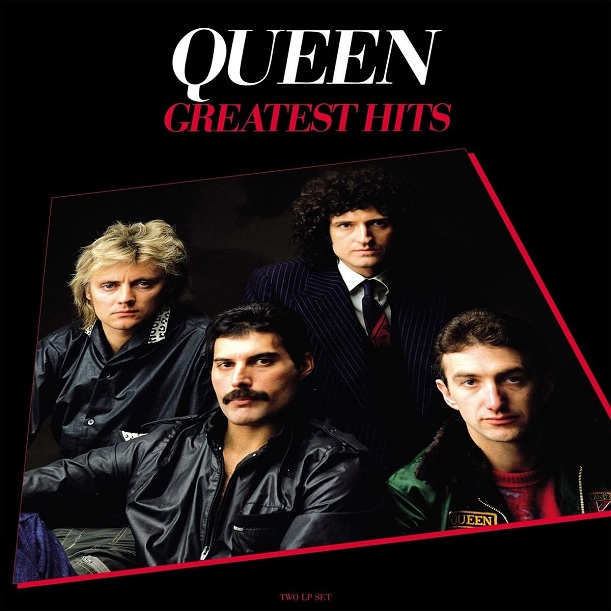
QUEEN
Links
Buy
Queen Vinyl - direct link @ ebay.co.uk
(Lenin is a participant in the eBay (EPN) affiliate program)
Queen / Freddie Mercury Fascinating Facts
Danny Thompson Fascinating Facts
Talking Heads Fascinating Facts
Porcupine Tree Fascinating Facts
Adam and the Ants Fascinating Facts
Nick Drake Fascinating FactsLed Zeppelin Fascinating Facts
Visage / Steve Strange Fascinating Facts
Tears For Fears Fascinating Facts
Queen / Freddie Mercury Fascinating Facts
Marc Bolan and T. Rex Fascinating Facts
Sting & The Police Fascinating Facts
Jean-Michel Jarre Fascinating Facts
Peter Gabriel Fascinating Facts
Holger Czukay Fascinating Facts
Anton Corbijn Fascinating Facts
Dexys Midnight Runners Fascinating Facts
Roxy Music / Bryan Ferry Fascinating Facts
Elvis Presley Fascinating Facts
Scott Walker Fascinating Facts
Michael Brook Fascinating Facts
Penguin Cafe Orchestra Fascinating Facts
David Bowie Rarities (Shipped From UK)
Cocteau Twins Fascinating Facts
Ryuichi Sakamoto Fascinating Facts
Haruomi Hosono Fascinating Facts
Yukihiro Takahashi Fascinating Facts
Hector Zazou Fascinating Facts
Frank Auerbach Fascinating Facts
Queen
Artist
Queen
Content
All the fascinating facts
More
Bitesized
Year
1970s to Present Day
Random and bite-sized facts on all things on the mythical band Queen. Totally random but totally fascinating if you're into it. Do you know Queen now?
--
JAPAN EMBRACED QUEEN BEFORE “BOHEMIAN RHAPSODY”
When Queen first toured Japan in April 1975, “Bohemian Rhapsody” had not yet become the British No. 1 that transformed their career later that year. Yet the band was greeted by huge crowds of Japanese fans, many of them young women. Music journalist Kaoruko Togo later recalled that Queen received an extraordinary welcome in Japan while they were still struggling for acceptance from parts of the British music press.
--
THOUSANDS OF FANS WAITED AT HANEDA AIRPORT
Queen arrived at Tokyo's Haneda Airport on 17 April 1975. The number of fans waiting varies between accounts, with reports citing more than 1,000 and some estimates reaching 3,000. The crowd became so intense that airport staff guided the band towards a back exit near customs. Fans were waiting at the car park too, making their escape to the hotel difficult.
--
QUEEN WON A JAPANESE READERS' POLL EIGHT YEARS RUNNING
Queen's popularity in Japan lasted well beyond the excitement of their first visit. According to former Music Life editor Kaoruko Togo, the band held first place in the magazine's readers' poll for “Best Group” for eight consecutive years, through 1982. Their popularity began with their image and stage presence, but their sustained success reflected a deepening audience for their music.
--
THE JAPANESE FAN CLUB BEGAN IN 1975
Queen's success in Japan quickly developed its own fan infrastructure. Warner Pioneer established the official Japanese Queen fan club in October 1975, publishing magazines specifically for Japanese readers. These publications included tour reports, fan gatherings, messages from the band and, later, technical information about their musical equipment. The Japanese fan club operated separately from its British counterpart.
--
“TEO TORRIATTE” WAS A MESSAGE TO JAPANESE FANS
Queen included Japanese lyrics in “Teo Torriatte (Let Us Cling Together)” on their 1976 album A Day at the Races. Brian May wrote the song as a gesture towards the band's Japanese audience. Music journalist Kaoruko Togo recalled that Freddie Mercury wrote out the lyrics by hand and asked the band's interpreter to translate them into Japanese. Queen later performed the song in Japan to audiences who sang the Japanese chorus back to them.
--
FREDDIE MERCURY COLLECTED JAPANESE CRAFTS
Freddie Mercury's interest in Japan extended beyond touring. He collected traditional Japanese crafts during his visits and returned to Kyoto several times. On a private trip in 1986, he visited the Kurita Museum of ceramics in Tochigi Prefecture. The museum later displayed photographs of the visit, becoming a place of interest for Queen fans.
--
BRIAN MAY'S FIRST JAPAN TOUR INCLUDED A LOVE OF LANTERNS
During Queen's 1975 Japanese tour, Brian May began taking an interest in traditional Japanese lanterns. A specialist archive of the tour records that this interest continued in later years, including his fondness for the giant lantern at the entrance to Nakamise-dori near Sensō-ji in Asakusa, Tokyo.
--
QUEEN
Links
Buy
Queen Japanese Vinyl - direct link @ ebay.co.uk
(Lenin is a participant in the eBay (EPN) affiliate program)
--
“BOHEMIAN RHAPSODY” NEARLY WORE OUT ITS RECORDING TAPE
Queen recorded so many layers of vocals for “Bohemian Rhapsody” that the tape’s magnetic coating began to wear away. Brian May recalled that the band repeatedly combined recorded tracks to free up space for more overdubs. Each pass risked losing a little more sound quality.
--
THE TAPE BECAME ALMOST TRANSPARENT
May said the vocals began to lose their high frequencies, so the band held the tape up to the light and could see through it. With very little magnetic oxide left, they quickly made a copy before continuing. The recording process was particularly demanding because the studio used 24-track tape, which meant repeatedly combining existing tracks to make room for new ones.
--
QUEEN
Links
Buy
Queen Japanese Vinyl - direct link @ ebay.co.uk
(Lenin is a participant in the eBay (EPN) affiliate program)
--
FREDDIE MERCURY CHOSE THE NAME QUEEN
Freddie persuaded Brian May and Roger Taylor to leave the name Smile behind and become Queen. May later admitted that he had reservations about the choice. Another name considered by the group was “The Grand Dance”. Freddie wanted something that sounded regal and majestic, with glamour and theatricality built into its identity.
--
FREDDIE HAD THE FRAMEWORK OF “BOHEMIAN RHAPSODY” IN HIS HEAD
Brian May recalled that Freddie arrived with the song’s structure already worked out. Rather than bringing in a conventional demo, he used small pieces of paper marked with musical notes and sections. The band built the arrangement together in the studio, adding layers until the ambitious structure took shape.
--
THE “BOHEMIAN RHAPSODY” TAPES BECAME ALMOST TRANSPARENT
Queen recorded so many layers of vocals for “Bohemian Rhapsody” that repeated overdubbing wore away the magnetic coating on the tape. Brian May recalled that the band could eventually see through it when they held it up to the light. The elaborate “Scaramouche” and “Bismillah” passages were among the sections that required extensive vocal layering.
--
QUEEN HAD ALREADY EXPLORED COMPLEX ARRANGEMENTS BEFORE “BOHEMIAN RHAPSODY”
Brian May said the elaborate construction of “Bohemian Rhapsody” did not come entirely out of nowhere. He pointed to “My Fairy King”, from Queen’s 1973 debut album, as an earlier example of Freddie combining different musical ideas into a complex arrangement. By the time the band tackled “Bohemian Rhapsody”, they had experience building songs from separate sections.
--
FREDDIE STUDIED GRAPHIC DESIGN
Before Queen became his full-time career, Freddie studied graphic design at Ealing College of Art in London. His artistic background later informed the band’s visual identity: he created the famous Queen crest, incorporating the zodiac signs of the four members around a large letter Q and a crown.
--
FREDDIE TOOK PIANO LESSONS AS A SCHOOLBOY
While attending St Peter’s School in Panchgani, India, Freddie received formal piano lessons and developed his musical skills. His childhood there was an important part of his musical background, long before he became known for Queen’s elaborate arrangements and his flamboyant stage performances.
--
FREDDIE KEPT WORKING IN THE STUDIO WHEN HE WAS GRAVELY ILL
Brian May recalled that Freddie continued recording vocals during Queen’s final sessions together, even when he was too weak to stand comfortably. May said Freddie would prop himself against the studio desk and keep singing. The band later assembled the recordings made during this period for the posthumous album “Made in Heaven”.
--
“MOTHER LOVE” WAS LEFT UNFINISHED
Freddie recorded vocals for “Mother Love”, a song written by Brian May and Freddie for “Made in Heaven”. According to May, Freddie reached a point where he could not continue recording. May completed the final vocal passage himself. The track became one of the most poignant examples of the unfinished work Freddie left behind.
--
FREDDIE WAS THE BAND’S GREAT DIPLOMAT
Despite his public image as a flamboyant frontman, Brian May described Freddie as someone who often helped resolve disagreements within Queen. In a 2011 interview, May said he had never had a cross word with Freddie and recalled that Freddie was usually able to smooth things over when tensions arose between band members.
--
QUEEN’S NAME WAS CONNECTED TO FREEDOM AND THEATRICALITY
When Brian May discussed the band's name, he explained that Queen's members understood the word's different connotations. He recalled that dressing up and being flamboyant were part of their early identity, but saw it as an expression of freedom rather than simply a musical image. Freddie described the band's intended concept as regal, majestic and glamorous.
--
QUEEN
Links
Buy
Queen Japanese Vinyl - direct link @ ebay.co.uk
(Lenin is a participant in the eBay (EPN) affiliate program)
--
BRIAN MAY BUILT HIS FAMOUS GUITAR WITH HIS FATHER
Brian May and his father Harold began building his electric guitar in 1963, working in a home workshop with hand tools. The project took around two years, using whatever materials they could find. The instrument became known as the Red Special and went on to feature on Queen's albums and at their concerts around the world.
--
THE NECK OF THE RED SPECIAL CAME FROM AN OLD FIREPLACE
The wood used for the guitar's neck came from an old fireplace mantel that a family friend was about to throw away. Rather than buy an expensive guitar, May and his father turned discarded household material into the foundation of an instrument whose distinctive sound became central to Queen's music.
--
ITS FRET MARKERS WERE MADE FROM MOTHER-OF-PEARL BUTTONS
May and his father improvised with materials they already had available. The fret markers on the Red Special were shaped from mother-of-pearl buttons taken from his mother's button collection. The guitar was not built from a conventional kit: its individual details were worked out and made by hand.
--
THE RED SPECIAL'S TREMOLO ARM USED A KNITTING NEEDLE
One of the guitar's most unusual homemade details was its tremolo arm. May recalled that it incorporated a bicycle saddlebag holder, topped with the tip of one of his mother's knitting needles. This improvised mechanism helped give him the control over pitch and vibrato that he wanted from the instrument.
--
BRIAN MAY USES A SIXPENCE INSTEAD OF A NORMAL PLECTRUM
May is famous for playing with a British sixpence coin rather than a conventional guitar pick. He has explained that the coin's ridged edge gives him a particular feel against the strings. The technique became part of his playing style, helping him produce the sharp attacks and expressive bends heard throughout Queen's recordings.
--
THE RED SPECIAL WAS DESIGNED AROUND THE SOUND MAY WANTED
May wanted an instrument that could produce controlled feedback, inspired in part by the sounds he heard from Jimi Hendrix. He and his father designed the guitar around his own requirements rather than copying a commercial model. Its unusual construction and the way May played it became a major part of Queen's musical identity.
--
BRIAN MAY STUDIED PHYSICS AND ASTRONOMY BEFORE COMMITTING TO QUEEN
May studied physics and mathematics at Imperial College London and went on to pursue astrophysics research. He was several years into his doctoral work when Queen's musical opportunities began to demand a full-time commitment. Touring with Mott the Hoople in 1973 helped force the decision between an academic career and life in the band.
--
HE EVENTUALLY COMPLETED HIS ASTROPHYSICS DOCTORATE
May returned to his research decades after putting it aside for Queen. His doctoral thesis concerned zodiacal dust, the tiny particles in the Solar System that scatter sunlight and contribute to the faint glow visible in the night sky. He completed his PhD at Imperial College London in 2007, combining his scientific career with his continuing musical work.
--
BRIAN MAY WROTE “WE WILL ROCK YOU”
May wrote “We Will Rock You”, released on Queen's 1977 album “News of the World”. Its famous stomp-stomp-clap rhythm was designed to turn an audience into part of the performance. Instead of relying on a conventional drum-driven arrangement, the song builds its impact around a simple beat that crowds can reproduce together.
--
“WHO WANTS TO LIVE FOREVER” CAME FROM A FILM
May wrote “Who Wants to Live Forever” for the 1986 film “Highlander”, after seeing the story's treatment of love, mortality and the passage of time. The song became one of Queen's most expansive ballads, with May and Freddie Mercury sharing lead vocals on the recording. Its orchestral arrangement was central to the track's dramatic effect.
--
QUEEN
Links
Buy
Queen Japanese Vinyl - direct link @ ebay.co.uk
(Lenin is a participant in the eBay (EPN) affiliate program)
--
ROGER TAYLOR WAS A LEAD SINGER BEFORE QUEEN
Before Queen became successful, Roger Taylor sang lead vocals with his earlier band, The Reaction. He continued to take lead vocals on Queen recordings, including “Modern Times Rock ’n’ Roll” from the band's 1973 debut album. His voice had a rougher, more aggressive edge than Freddie Mercury's, giving Queen another distinctive vocal sound.
--
“TENEMENT FUNSTER” SHOWED ROGER'S REBELLIOUS SIDE
Roger wrote and sang “Tenement Funster” for Queen's 1974 album “Sheer Heart Attack”. Its young narrator rejects conventional expectations and dreams of escaping his surroundings in an open car. The song was an early example of Taylor using Queen to express a more direct, streetwise attitude than the band's more theatrical material.
--
“I'M IN LOVE WITH MY CAR” WAS THE B-SIDE OF “BOHEMIAN RHAPSODY”
Roger wrote and sang “I'm in Love with My Car”, which became the B-side of “Bohemian Rhapsody” in 1975. The song's subject reflected his enthusiasm for cars and driving. The band's manager, John Reid, reportedly took the song seriously enough to ask for the volume to be turned up when he heard it, while Freddie Mercury championed its place on the single.
--
“RADIO GA GA” BEGAN WITH A CHILD'S MISPRONUNCIATION
Roger's son Felix inspired the title of “Radio Ga Ga” when he referred to radio as “radio ca-ca”. Taylor developed the phrase into a song about radio's place in popular culture as television and music videos became increasingly influential. Queen released it in 1984, and its audience clapping became one of the band's most recognisable concert moments.
--
ROGER'S FIRST SOLO ALBUM WAS MADE ALMOST ENTIRELY BY HIMSELF
Roger released “Fun in Space” in 1981, the first solo album by a member of Queen. He wrote, arranged, produced and performed the music on all ten tracks. Engineer David Richards contributed additional keyboard parts. The record allowed Taylor to explore musical ideas that he felt did not fit Queen's collective sound.
--
“SHEER HEART ATTACK” WAS WRITTEN BEFORE THE ALBUM OF THAT NAME
Roger wrote the song “Sheer Heart Attack” during the period when Queen were making their 1974 album of the same name, but it was not finished in time to be included. The band eventually recorded it for “News of the World” in 1977. The track is a fast, abrasive burst of punk-influenced energy, quite different from the album's best-known anthems.
--
ROGER FORMED HIS OWN BAND, THE CROSS
In the late 1980s, Roger formed The Cross while Queen were taking a break from touring. Rather than simply releasing another solo album, he put together a group in which he could perform as lead singer and play guitar. The Cross released their debut album, “Shove It”, in 1988 and toured in Britain and Europe.
--
FREDDIE MERCURY SANG ON THE CROSS'S “HEAVEN FOR EVERYONE”
“Heaven for Everyone” first appeared on The Cross's 1988 album “Shove It”, with Roger singing the lead vocal on the original version. Freddie Mercury sang on a later Queen recording, released on “Made in Heaven” in 1995. The two versions reveal how the same composition could take on a different character with a different lead singer.
--
ROGER WROTE “A KIND OF MAGIC” FOR A FILM
Roger wrote “A Kind of Magic” for the 1986 film “Highlander”. The song was developed further by Queen, with Freddie Mercury and the other members contributing to the finished recording. The title echoed a phrase spoken in the film, and the track became one of the band's major hits of the 1980s.
--
ROGER'S DRUMMING WAS ONLY ONE PART OF HIS CONTRIBUTION
Roger's Queen songs include “Radio Ga Ga”, “A Kind of Magic”, “These Are the Days of Our Lives” and “I'm in Love with My Car”. He also contributed backing vocals and occasionally lead vocals, giving the band a second recognisable male voice. His songwriting often brought a harder rock edge or a more direct pop sensibility to Queen's records.
--
QUEEN
Links
Buy
Queen Japanese Vinyl - direct link @ ebay.co.uk
(Lenin is a participant in the eBay (EPN) affiliate program)
--
JOHN DEACON BUILT THE AMPLIFIER THAT HELPED CREATE QUEEN'S GUITAR SOUND
John Deacon's electronics knowledge helped him build a small amplifier that became known as the Deacy Amp. Brian May used it with his homemade Red Special guitar to produce some of Queen's distinctive layered guitar sounds. The amplifier was made from salvaged electronic components, including parts from an old radio, rather than being a conventional commercial guitar amp.
--
HE STUDIED ELECTRONICS BEFORE JOINING QUEEN
Deacon studied electronics at Chelsea College in London before becoming Queen's bassist in 1971. His technical background was useful beyond the stage: he was interested in equipment, wiring and how electronic devices worked. That practical knowledge helped him contribute to the band's sound in ways that went beyond playing bass.
--
“MISFIRE” WAS HIS FIRST SONG ON A QUEEN ALBUM
Deacon's first solo songwriting contribution to a Queen album was “Misfire”, which appeared on “Sheer Heart Attack” in 1974. The short, playful track showed a lighter side of his writing, several years before he produced some of the band's biggest international hits.
--
“YOU'RE MY BEST FRIEND” FEATURES A WURLITZER ELECTRIC PIANO
Deacon wrote “You're My Best Friend” for his wife, Veronica, and played the Wurlitzer electric piano on the recording. Its bright, slightly buzzy sound is a defining feature of the track. It was an unusual instrument for a rock band's love song and helped give the 1975 recording its distinctive character.
--
“ANOTHER ONE BITES THE DUST” PUTS HIS BASS LINE FRONT AND CENTRE
Deacon wrote “Another One Bites the Dust”, released on “The Game” in 1980. The track is built around his tightly repeated bass riff, with a stripped-back arrangement that contrasts with Queen's more elaborate productions. Its danceable funk sound helped the band reach audiences beyond their established rock following.
--
THE SONG'S FUNK SOUND REFLECTED DEACON'S INTEREST IN SOUL MUSIC
“Another One Bites the Dust” marked a move towards a more economical, groove-based Queen sound. Deacon was interested in funk and soul, and the track's bass-driven arrangement places rhythm ahead of the band's usual stacked harmonies and guitar orchestration. The result became one of Queen's biggest American hits.
--
“SPREAD YOUR WINGS” TELLS A STORY ABOUT SAMMY
Deacon wrote “Spread Your Wings” for Queen's 1977 album “News of the World”. Instead of using an abstract or theatrical lyric, he wrote about Sammy, a bar worker who dreams of getting away and making something of his life. Freddie Mercury sings the song as a narrative, following Sammy's hopes despite the discouragement he receives.
--
“SPREAD YOUR WINGS” HAS NO QUEEN BACKING VOCALS
The studio recording of “Spread Your Wings” is unusual in Queen's catalogue because Freddie Mercury's lead vocal is not supported by the band's customary backing-vocal harmonies. The arrangement leaves his voice exposed, allowing the story and the song's rising melody to carry the emotional weight.
--
DEACON WROTE “I WANT TO BREAK FREE”
“I Want to Break Free”, released in 1984, was written by Deacon. The lyrics describe a person who wants to escape a relationship and start again. The song later became inseparable from its famous video, in which all four members of Queen appear in comic domestic drag inspired by the British television soap opera “Coronation Street”.
--
QUEEN
Links
Buy
Queen Japanese Vinyl - direct link @ ebay.co.uk
(Lenin is a participant in the eBay (EPN) affiliate program)
--
QUEEN RECORDED THEIR DEBUT ALBUM WHEN OTHER ARTISTS WEREN'T USING THE STUDIO
Queen made much of their first album at Trident Studios in London during late-night and overnight sessions, when the studio was available between bookings by better-established artists. The arrangement gave the young band access to professional equipment, but it also meant working around other people's schedules rather than enjoying normal studio hours.
--
“KEEP YOURSELF ALIVE” WAS RECORDED SEVERAL TIMES
Queen struggled to get the sound they wanted for “Keep Yourself Alive”, the opening track on their debut album. Brian May later recalled that several attempts failed to satisfy the band. Engineer Mike Stone eventually helped them achieve a version they were happy with, beginning a working relationship that continued across several Queen albums.
--
QUEEN RECORDED FOUR SONGS FOR JOHN PEEL'S RADIO SHOW
In 1973, Queen recorded a session for BBC Radio 1's John Peel programme. The four songs were “My Fairy King”, “Keep Yourself Alive”, “Doing All Right” and “Liar”. Radio sessions were recorded under tight time limits, so the band had to recreate arrangements that had taken far longer to develop in the studio.
--
QUEEN AND DAVID BOWIE JAMMED ON CREAM SONGS BEFORE “UNDER PRESSURE”
During the 1981 sessions in Switzerland that led to “Under Pressure”, Queen and David Bowie also played songs by Cream. Roger Taylor later recalled that they performed “NSU” and “I Feel Free” for fun before turning their attention to writing something of their own. Those informal recordings are a fascinating glimpse of how the collaboration began.
--
THE BAND'S MEMBERS HAD A SAY IN BUSINESS DECISIONS
Roger Taylor described Queen as a democratic band in a 1984 interview with Modern Drummer magazine. He said decisions were generally made by voting, but added that a member could still object strongly enough to stop something they were unwilling to do. The system helped the four musicians preserve their individual voices within the group.
--
BRIAN MAY RE-RECORDED HIS “WE ARE THE CHAMPIONS” SOLO AT THE LAST MINUTE
May initially thought his guitar solo on “We Are the Champions” was acceptable. After taking a rough mix home and listening to it again, he decided it lacked the emotional force the song needed. He returned to redo it, including a passage where he tried to make the guitar line echo the intensity of Freddie Mercury's singing.
--
THE FOUR MEMBERS ALL WROTE MAJOR QUEEN HITS
Queen's songwriting wasn't concentrated in one member. Freddie Mercury wrote “Bohemian Rhapsody”, Brian May wrote “We Will Rock You”, Roger Taylor wrote “Radio Ga Ga”, and John Deacon wrote “Another One Bites the Dust”. Each member's writing brought a different approach to the band's sound, from theatrical composition to audience participation and funk-inspired grooves.
--
THE BAND TURNED FREDDIE MERCURY'S SOLO MATERIAL INTO QUEEN SONGS
Queen's 1995 album “Made in Heaven” was assembled after Freddie's death using vocals and piano recordings he had made near the end of his life, alongside previously released material. The band also reworked songs associated with Mercury's solo career, including “Made in Heaven” and “I Was Born to Love You”, giving them new arrangements as Queen recordings.
--
QUEEN MADE THEIR OWN CHORAL SOUND THROUGH OVERDUBBING
Queen's famous vocal harmonies were not produced by a large choir. Freddie Mercury, Brian May and Roger Taylor recorded multiple vocal parts, which were layered together to create the impression of many singers. The technique was pushed to an extreme on “Bohemian Rhapsody”, where repeated overdubs made the recording tape almost transparent.
--
QUEEN'S BIGGEST SONGS OFTEN BEGAN WITH VERY DIFFERENT IDEAS
The band could take a song from a simple starting point and build it into something much more elaborate. “Under Pressure” emerged from an informal jam with David Bowie, while “We Will Rock You” was designed around a crowd-friendly stomp and clap. These contrasting approaches show how Queen could work both spontaneously and with careful attention to the effect a song would have on an audience.
--
QUEEN
Links
Buy
Queen Japanese Vinyl - direct link @ ebay.co.uk
(Lenin is a participant in the eBay (EPN) affiliate program)
--
“UNDER PRESSURE” BEGAN WITH AN UNEXPECTED VISIT
In 1981, David Bowie was living near Queen's Mountain Studios in Montreux, Switzerland. When studio engineer David Richards contacted him, Bowie came over to see what the band were doing. What began as an informal get-together developed into a recording session that produced “Under Pressure”. Nobody had planned a major collaboration in advance.
--
QUEEN AND BOWIE PLAYED CREAM SONGS TOGETHER
Before concentrating on their own composition, Queen and Bowie jammed on songs they knew. Roger Taylor later recalled playing “NSU” and “I Feel Free” by Cream. Taylor described the performances as being done just for fun. Recordings from the sessions have been discussed by the musicians, although the Cream performances have not been officially released as complete tracks.
--
JOHN DEACON'S BASS RIFF NEARLY GOT LOST
The famous bass figure in “Under Pressure” emerged during the spontaneous session. Brian May recalled that John Deacon came up with the repeating pattern. After the musicians took a break to eat, Deacon struggled to remember it, but Roger Taylor and May helped bring the idea back. The riff became the foundation of the finished song.
--
BOWIE TOOK CHARGE OF THE LYRICS
Brian May recalled that the early version of the song was provisionally called “People on Streets”. When the musicians reconvened, Bowie said he knew what he wanted the song to be about and developed the lyrics around the idea of pressure. May later praised Bowie's contribution, saying the band stepped back and allowed him to shape the song's message.
--
FREDDIE MERCURY AND BOWIE CLASHED OVER THE MIX
The collaboration was not entirely harmonious. Brian May recalled that Freddie Mercury and Bowie had different ideas about how “Under Pressure” should sound in its final mix. May chose not to attend the mixing session in New York, while Roger Taylor remained involved. The released recording was, in May's view, a compromise between competing ideas.
--
BOWIE ALSO RECORDED VOCALS FOR ANOTHER QUEEN TRACK
During the same period, Bowie contributed vocals to “Cool Cat”, a Queen song written by Freddie Mercury and John Deacon. His contribution was ultimately removed from the released version, which appeared on Queen's 1982 album “Hot Space”. The unused vocal is one of the lesser-known links between Bowie and Queen's studio work.
--
NOT EVERYTHING THEY RECORDED HAS BEEN RELEASED
Brian May and Roger Taylor have both indicated that the sessions with Bowie produced other material beyond “Under Pressure”. May said in 2017 that some of what they did together had never come to light, while Taylor later recalled the Cream covers. The existence of additional recordings has fuelled interest in the band's archives, but it does not mean that every piece is complete or suitable for release.
--
ROGER TAYLOR WAS A LONGTIME BOWIE FAN
Roger Taylor was already a Bowie admirer before the “Under Pressure” sessions. Brian May later recalled that Taylor was particularly enthusiastic about Bowie and helped ensure the collaboration was completed. Taylor's admiration made the meeting especially exciting, although the music itself developed through contributions from all the musicians in the room.
--
BOWIE RETURNED FOR THE FREDDIE MERCURY TRIBUTE CONCERT
After Freddie Mercury died in 1991, Bowie joined the artists assembled for the Freddie Mercury Tribute Concert at Wembley Stadium on 20 April 1992. He performed “Heroes” and joined Annie Lennox for “Under Pressure”. His appearance connected the song's history with the tribute to Mercury, whose performance had been central to the original recording.
--
BRIAN MAY REMEMBERED BOWIE WITH GREAT AFFECTION
In a tribute published after Bowie's death in January 2016, Brian May described him as fearless, difficult to categorise and one of Britain's great musical creators. May also recalled seeing Bowie socially around Montreux in later years. Their collaboration had involved disagreements, but May's public recollections made clear that he deeply respected Bowie's imagination and artistry.
--
QUEEN
Links
Buy
Queen Japanese Vinyl - direct link @ ebay.co.uk
(Lenin is a participant in the eBay (EPN) affiliate program)
--
QUEEN WERE GIVEN SPECIAL TREATMENT WHEN THEY ARRIVED IN ARGENTINA
When Queen arrived in Buenos Aires for their first South American tour in February 1981, their music was reportedly playing over the airport public-address system. According to the band's official live archive, they were also allowed to bypass lengthy arrival procedures on the express orders of Argentina's president. It was an extraordinary welcome for a rock band arriving in a country where stadium concerts were becoming major events.
--
QUEEN PLAYED TO MORE THAN 130,000 PEOPLE IN SÃO PAULO
During their 1981 South American tour, Queen played two enormous shows at Morumbi Stadium in São Paulo, Brazil. Contemporary reports put the first night's attendance at more than 131,000, with over 120,000 at the second. The scale of those crowds helped make the tour one of the most remarkable episodes in the band's live history.
--
QUEEN'S ARGENTINE CONCERTS TOOK PLACE DURING MILITARY RULE
Queen's first concerts in Argentina took place in February and March 1981, during the country's military dictatorship. The band played football stadiums to enormous crowds, at a time when political repression was part of everyday life. The contrast between the atmosphere of a Queen concert and the country's wider political situation is an important part of the history surrounding the tour.
--
A QUEEN CONCERT IN ARGENTINA WAS BROADCAST TO MILLIONS
Queen's second concert at Vélez Sarsfield Stadium in Buenos Aires in 1981 was broadcast on Argentine television. Accounts of the event estimate that more than 30 million people watched. The television coverage gave the band a reach far beyond the stadium audience and captured the scale of Queen's popularity in the country.
--
QUEEN'S SOUTH AMERICAN TOUR ALSO INCLUDED VENEZUELA AND MEXICO
The band's South American touring story did not end with Argentina and Brazil. Queen returned to the region in September 1981, with concerts scheduled in Venezuela and Mexico. Two Venezuelan shows, planned for 29 and 30 September, were cancelled following the death of former president Rómulo Betancourt and the period of national mourning that followed.
--
QUEEN'S EARLY EUROPEAN PROMOTION INCLUDED FRANCE
After their debut album appeared in 1973, Queen undertook promotional touring on the European continent, including France, Belgium and the Netherlands. At this point they were still building an audience outside Britain, before the success of “Killer Queen” and “Bohemian Rhapsody” made them international stars. These early trips helped establish the connections that would support their later European tours.
--
“WE ARE THE CHAMPIONS” WAS A HIT IN FRANCE AS WELL AS AMERICA
Released as a double A-side with “We Will Rock You” in 1977, “We Are the Champions” became a major international success. Universal Music France records that the single reached number one in both France and the United States. Its later use at sporting events has made the song familiar to generations of fans who may never have heard the original album.
--
QUEEN'S FIRST CONCERT WAS PLAYED UNDER A NAME THEY HAD ONLY JUST ADOPTED
Queen's first performance under that name took place at the City Hall in Truro, Cornwall, on 27 June 1970. The lineup included Freddie Mercury, Brian May, Roger Taylor and bassist Mike Grose. The group was still far from the settled four-piece lineup that would make its name around the world: John Deacon did not join until 1971.
--
JOHN DEACON WAS THE THIRD BASSIST TO PLAY WITH QUEEN
Queen went through several bass players before John Deacon joined in 1971. Mike Grose played the first three concerts, followed by Barry Mitchell and then Doug Bogie for a short period. Deacon's arrival finally gave the band the stable four-member lineup that would remain together for more than twenty years.
--
QUEEN'S EARLY GIGS INCLUDED SONGS THAT NEVER MADE IT ONTO AN ALBUM
In their early live sets, Queen played “Hangman”, a song associated with Freddie Mercury's earlier musical work. It was never officially released by the band, although recordings from early concerts have circulated among collectors. Its existence offers a glimpse of the material Queen experimented with before their studio catalogue became established.
--
QUEEN
Links
Buy
Queen Japanese Vinyl - direct link @ ebay.co.uk
(Lenin is a participant in the eBay (EPN) affiliate program)
--
QUEEN'S RECORDING STUDIO WAS INSIDE A CASINO
Queen bought Mountain Studios in Montreux, Switzerland, in 1979. The studio was inside the town's casino, a building with a dramatic history: the original casino had burned down in 1971 during a Frank Zappa concert. That fire inspired Deep Purple's “Smoke on the Water”. Queen later recorded several albums in the replacement building.
--
FREDDIE MERCURY INITIALLY WANTED TO THROW THE STUDIO INTO THE LAKE
When Queen acquired Mountain Studios, Freddie Mercury reportedly joked about what they should do with it: “Throw it in the lake.” The band eventually made the studio a creative base, and Freddie grew attached to Montreux. He later lived nearby and spent considerable time recording there during Queen's final years with him.
--
QUEEN'S FIRST MONTREUX REHEARSAL TOOK PLACE IN A BALLET SCHOOL
When Queen arrived in Montreux in 1978 to work on “Jazz”, their first rehearsal took place in a ballet school that was closed for the summer. The band were allowed to use the space on the understanding that they were simply four musicians having a little practice. Photographer Peter Hince documented the unusual rehearsal location.
--
THE TOUR DE FRANCE HELPED INSPIRE “BICYCLE RACE”
Queen were in Montreux in 1978 when the Tour de France passed through the town. The sight of the race helped inspire Freddie Mercury to write “Bicycle Race”, which appeared on the album “Jazz”. The song's cycling imagery extended into its promotion, making bicycles central to one of Queen's most talked-about videos.
--
THE “BICYCLE RACE” VIDEO CAUSED A PROBLEM FOR THE BICYCLE HIRE COMPANY
For the “Bicycle Race” video, Queen arranged a race involving dozens of naked women riding bicycles at Wimbledon Greyhound Stadium in London. The company that supplied the bicycles was reportedly unhappy when it discovered what had happened during filming and demanded compensation for the saddles. The shoot became one of the band's most notorious promotional stunts.
--
QUEEN'S BUDAPEST CONCERT INCLUDED A HUNGARIAN FOLK SONG
At their 1986 concert in Budapest, Freddie Mercury and Brian May performed “Tavaszi szél vizet áraszt”, a traditional Hungarian folk song. The unexpected choice made the performance especially meaningful to the local audience. Freddie sang the Hungarian words despite not speaking the language fluently, turning a stadium concert into a memorable moment of cultural exchange.
--
FREDDIE WROTE THE HUNGARIAN LYRICS PHONETICALLY ON HIS HAND
During the Budapest performance of “Tavaszi szél vizet áraszt”, Freddie discreetly referred to lyrics written phonetically on the palm of his hand. The detail can be spotted in footage of the concert. It was a practical solution to the challenge of singing unfamiliar words in front of tens of thousands of Hungarian fans.
--
THE BUDAPEST CONCERT WAS FILMED WITH 17 CAMERAS
Queen's Budapest concert on 27 July 1986 was filmed on 35mm film using 17 cameras. The production reportedly used around 25 miles of film, making it a substantial undertaking for a rock concert behind the Iron Curtain. The footage later became the concert film “Queen Live in Budapest”, preserving one of the most significant performances of the band's final touring era with Freddie.
--
TENS OF THOUSANDS LISTENED TO QUEEN OUTSIDE BUDAPEST'S STADIUM
The 1986 Budapest concert sold all 80,000 tickets, but the audience extended well beyond the stadium. Estimates suggest that a further 45,000 people gathered outside to listen. Fans travelled from countries including Poland and the Soviet Union, making the event much larger than the official ticket count alone suggests.
--
QUEEN WENT ON STAGE AT LIVE AID WITHOUT A SOUND CHECK
At Live Aid on 13 July 1985, Queen had only about 20 minutes on stage and no conventional sound check at Wembley Stadium. The band planned a tightly packed set of shortened songs to fit the time limit. Their performance included “Bohemian Rhapsody”, “Radio Ga Ga”, “Hammer to Fall”, “Crazy Little Thing Called Love” and “We Are the Champions”.
--
Search Keywords
Queen
Freddie Mercury
Icons
QUEEN
Links
Buy
Queen Vinyl - direct link @ ebay.co.uk
(Lenin is a participant in the eBay (EPN) affiliate program)
Queen / Freddie Mercury Fascinating Facts
Danny Thompson Fascinating Facts
Talking Heads Fascinating Facts
Porcupine Tree Fascinating Facts
Adam and the Ants Fascinating Facts
Visage / Steve Strange Fascinating FactsTears For Fears Fascinating Facts
Queen / Freddie Mercury Fascinating Facts
Marc Bolan and T. Rex Fascinating Facts
Sting & The Police Fascinating Facts
Jean-Michel Jarre Fascinating Facts
Led Zeppelin Fascinating Facts
Peter Gabriel Fascinating Facts
Holger Czukay Fascinating Facts
Anton Corbijn Fascinating Facts
Dexys Midnight Runners Fascinating Facts
Roxy Music / Bryan Ferry Fascinating Facts
Elvis Presley Fascinating Facts
Scott Walker Fascinating Facts
Michael Brook Fascinating Facts
Penguin Cafe Orchestra Fascinating Facts
David Bowie Rarities (Shipped From UK)
Cocteau Twins Fascinating Facts
Roxy Music / Bryan Ferry Fascinating Facts
Ryuichi Sakamoto Fascinating Facts
Haruomi Hosono Fascinating Facts
Yukihiro Takahashi Fascinating Facts
Hector Zazou Fascinating Facts
Frank Auerbach Fascinating Facts