ECHO & THE BUNNYMEN
Links
Buy
Echo & The Bunnymen Vinyl - direct link @ ebay.co.uk
(Lenin is a participant in the eBay (EPN) affiliate program)
Echo & The Bunnymen Fascinating Facts
Kathleen Ferrier Fascinating Facts
Siouxsie and the Banshees Fascinating Facts
Led Zeppelin Fascinating Facts
Human League Fascinating Facts
Visage / Steve Strange Fascinating Facts
Tears For Fears Fascinating Facts
Queen / Freddie Mercury Fascinating Facts
Danny Thompson Fascinating Facts
Talking Heads Fascinating Facts
Porcupine Tree Fascinating Facts
Adam and the Ants Fascinating Facts
Queen / Freddie Mercury Fascinating FactsMarc Bolan and T. Rex Fascinating Facts
Sting & The Police Fascinating Facts
Jean-Michel Jarre Fascinating Facts
Peter Gabriel Fascinating Facts
Holger Czukay Fascinating Facts
Anton Corbijn Fascinating Facts
Dexys Midnight Runners Fascinating Facts
Roxy Music / Bryan Ferry Fascinating Facts
Elvis Presley Fascinating Facts
Scott Walker Fascinating Facts
Michael Brook Fascinating Facts
Penguin Cafe Orchestra Fascinating Facts
David Bowie Rarities (Shipped From UK)
Cocteau Twins Fascinating Facts
Ryuichi Sakamoto Fascinating Facts
Haruomi Hosono Fascinating Facts
Yukihiro Takahashi Fascinating Facts
Hector Zazou Fascinating Facts
Frank Auerbach Fascinating Facts
Echo & The Bunnymen
Artist
Echo & The Bunnymen
Content
All the fascinating facts
More
Bitesized
Year
1970s to Present Day
Random and bite-sized facts on all things on the mythical band Echo & The Bunnymen. Totally random but totally fascinating if you're into it. Do you know Echo & The Bunnymen now?
--
Echo & the Bunnymen's first gig featured just one song
The band made their live debut at Liverpool's Eric's Club in November 1978, supporting the Teardrop Explodes. They played an extended version of "Monkeys", then known as "I Bagsy Yours". The performance reportedly lasted around 20 minutes, giving the group an unusually long introduction to its audience.
--
The mysterious Echo wasn't actually a member of the band
When Echo & the Bunnymen first emerged, their rhythm section included a drum machine rather than a drummer. This led to speculation that the machine itself was called Echo, but the band have denied that explanation. The name's origins have attracted plenty of discussion over the years, partly because the group never settled on one universally accepted account.
--
Will Sergeant was making private recordings before the band existed
Before Echo & the Bunnymen took shape, guitarist Will Sergeant was experimenting with sounds and recording his own musical ideas at home. Rather than concentrating on learning other people's songs, he was interested in creating his own material. Those early experiments helped establish the atmospheric, guitar-led approach that became central to the Bunnymen's sound.
--
The band's beginnings were closely connected to the Teardrop Explodes
Ian McCulloch had previously been involved with Julian Cope in the early Liverpool group A Shallow Madness. When McCulloch departed, the remaining musicians developed into the Teardrop Explodes, while he went on to form Echo & the Bunnymen with Sergeant and bassist Les Pattinson. The two bands emerged from the same small musical community, rather than from entirely separate scenes.
--
Their first single appeared on an independent Liverpool label
"The Pictures on My Wall" was released in May 1979 through Zoo Records, the independent label associated with Bill Drummond and David Balfe. Its B-side was "Read It in Books", a song also recorded by the Teardrop Explodes. Although the track has been associated with McCulloch and Cope, McCulloch subsequently disputed Cope's involvement in writing it.
--
The band recorded several sessions for John Peel before becoming established
Echo & the Bunnymen recorded their first session for BBC Radio 1 DJ John Peel in August 1979, while they were still using a drum machine. They went on to record six Peel sessions between 1979 and 1983. These broadcasts provided an opportunity to document the band's developing sound outside the constraints of its studio releases.
--
Pete de Freitas was brought in after the band had already started recording and releasing music
Trinidad-born drummer Pete de Freitas joined the group after its original drum-machine phase. His arrival changed the character of the band's rhythm section before the release of their debut album, "Crocodiles", in 1980. He was also an unusual addition to a group whose original members had developed their identity within Liverpool's local music scene.
--
Their debut album was made remarkably quickly
"Crocodiles" was recorded at Rockfield Studios in Wales and completed in approximately three weeks. Rather than being produced by an established outside rock producer, it was overseen by manager Bill Drummond and David Balfe, who was also associated with the Teardrop Explodes. The album's relatively short recording period helped give the debut its direct, urgent character.
--
The band's early Liverpool scene produced several future music-industry figures
Eric's Club was more than a venue for emerging bands. It was a meeting place for musicians and people who would later become influential in the British independent music business, including Julian Cope, Pete Wylie, Bill Drummond and David Balfe. The connections formed around the club linked Echo & the Bunnymen to a wider network of Liverpool musicians, independent labels and future record-company executives.
--
"The Killing Moon" required a major change to its drum recording
The original recording of "The Killing Moon" was made at Crescent Studios in Bath, but the band were dissatisfied with the backing track. They subsequently reworked the song at Amazon Studios in Kirkby, near Liverpool. Pete de Freitas replaced his original drum performance, playing with brushes rather than sticks in a single take. The change became an important part of the song's distinctive atmosphere.
--
ECHO & THE BUNNYMEN
Links
Buy
Echo & The Bunnymen Japanese Vinyl - direct link @ ebay.co.uk
(Lenin is a participant in the eBay (EPN) affiliate program)
--
Echo & the Bunnymen chose Iceland when Scotland failed to provide the right landscape
The band originally planned to film material for their third album, Porcupine, in Scotland, but the lack of reliable snow in November 1982 forced a change of location. Iceland offered the frozen, desolate scenery that director Bill Butt wanted. The decision helped give the album campaign one of its most recognisable visual identities, with the stark landscape matching the music's colder atmosphere.
--
Gullfoss became the unlikely backdrop to one of their most famous album covers
The cover photograph for Porcupine was taken at Gullfoss, the enormous waterfall on Iceland's Hvítá river. Photographer Brian Griffin placed the four musicians against the wintry landscape, making them look almost dwarfed by their surroundings. The image became an enduring part of the band's visual identity, rather than simply another promotional photograph for a new record.
--
The filming near Gullfoss was genuinely dangerous
Ian McCulloch later recalled the perilous conditions around the waterfall, explaining that if the band had slipped, there was nothing for hundreds of feet below them. The ice and exposed terrain made the shoot considerably more than a routine promotional trip. The resulting photographs nevertheless convey a sense of deliberate calm, with the musicians posing against a landscape that was anything but comfortable to work in.
--
The Iceland trip produced more than just the Porcupine sleeve
The band also filmed promotional videos in Iceland, most notably for "The Cutter". The footage helped establish a visual world for Porcupine that extended beyond the album cover. The project was later collected in the promotional video release Porcupine – An Atlas Adventure, which included six songs from the album and combined performances with location footage.
--
"The Cutter" turned Iceland's landscape into part of the song's identity
The video for "The Cutter" uses the bleak Icelandic setting as more than a scenic background. The frozen landscape, muted colours and exposed terrain reinforce the song's dramatic mood, helping make the video memorable even decades later. It is one of the clearest examples of how Echo & the Bunnymen used carefully chosen locations to extend the atmosphere of their music.
--
The Iceland shoot took place during a period of difficult weather and limited daylight
Photographer Brian Griffin later described the conditions as exceptionally demanding, recalling that the sun barely appeared during the band's time there. Even ordinary activities seemed exhausting in the cold. The difficulty of the shoot is easy to overlook when looking at the finished images, which present the musicians as composed figures in a vast, almost timeless landscape.
--
The band's Iceland imagery arrived just as Porcupine was becoming a major breakthrough
Released in February 1983, Porcupine reached number two on the UK album chart. "The Cutter", whose video featured the Icelandic landscape, became their first UK top-ten single. The striking visuals therefore accompanied a crucial moment in the band's commercial rise, introducing their distinctive image to a much larger audience.
--
Iceland fitted the band's image of themselves as outsiders
Echo & the Bunnymen had developed their reputation through a combination of dramatic music, cryptic lyrics and an uncompromising visual style. Shooting in an isolated, wintry landscape was consistent with that approach. Rather than using a familiar city setting or a conventional studio backdrop, the band appeared in a place that made them seem remote from ordinary pop culture.
--
The Iceland connection became part of the wider story of Porcupine
Although the album was recorded in Britain, Iceland became inseparable from its public image. The contrast is revealing: the music was created in studios, but the campaign presented it through dramatic landscapes and outdoor performances. The photographs and videos helped turn Porcupine into a complete visual statement, not just a collection of songs.
--
Echo & the Bunnymen were among the British bands helping put Iceland on the musical map
Their 1982 visit formed part of a growing interest in Iceland among British musicians. The country's landscapes were increasingly appearing in music videos and photography, while its emerging music scene was attracting attention in its own right. The Bunnymen's Porcupine imagery became one of the best-known British pop examples of Iceland's dramatic visual appeal during the early 1980s.
--
ECHO & THE BUNNYMEN
Links
Buy
Echo & The Bunnymen Japanese Vinyl - direct link @ ebay.co.uk
(Lenin is a participant in the eBay (EPN) affiliate program)
--
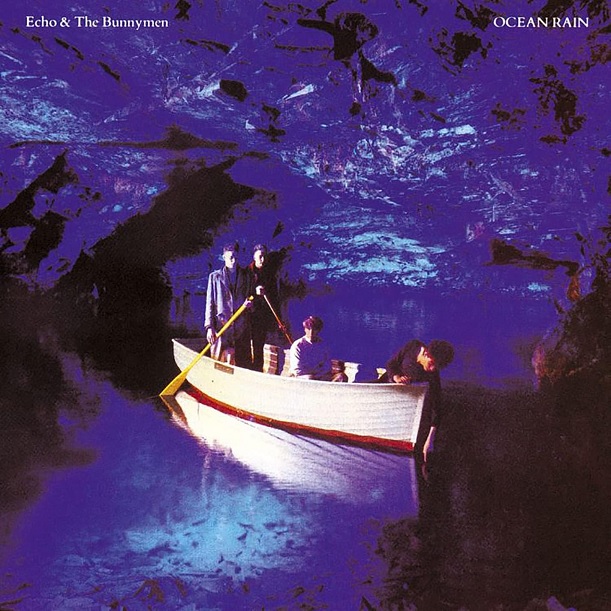
Will Sergeant's original ideas for Ocean Rain were stolen before the album was made
Sergeant kept a TEAC four-track recorder at Ian McCulloch's house, where the pair recorded numerous musical ideas. The house was burgled and the recorder tapes were stolen along with other belongings. In a later interview with Guitar World, Sergeant said he would love to hear what had been on those tapes, wondering whether some of the lost ideas might have become classics. It means that a collection of early Bunnymen sketches from this period has effectively disappeared.
--
"The Killing Moon" was recorded before the band went to Paris
Although Ocean Rain is closely associated with its Paris recording sessions, its best-known song was recorded earlier at Crescent Studios in Bath. Producer David Lord worked with the band on the track, with Adam Peters contributing cello and synthesised strings helping to develop its orchestral sound. The recording established an important part of the musical direction that the group subsequently pursued in France.
--
The opening guitar figure on "The Killing Moon" was almost an afterthought
Will Sergeant told Guitar World that the distinctive guitar run at the beginning of the song was something he played without thinking before the recording. After the musicians went out for a curry, David Lord was assembling the mix and recognised the value of the phrase, placing it at the beginning. One of the most immediately identifiable introductions in the band's catalogue therefore came from an informal moment rather than a carefully planned arrangement.
--
Ian McCulloch believed the lyrics to "The Killing Moon" came to him in his sleep
In an interview with The Quietus, McCulloch described waking up one morning with the chorus already in his head. He said he immediately went looking for a guitar so that he could capture the words and chords. He regarded the experience as an instance of divine inspiration, adding that it had never happened to him in quite the same way before or since. His account helps explain the almost mystical significance he has long attached to the song.
--
The band used a 35-piece orchestra without abandoning its experimental instincts
For Ocean Rain, Echo & the Bunnymen worked with a 35-piece orchestra in Paris, but the arrangements were not simply a conventional rock band with strings added. The musicians experimented with unusual instruments and sounds, including celeste, marimba and glockenspiel. Will Sergeant recalled the studio having a piano fitted with drawing pins in the beaters to produce a metallic clank. These details helped the album achieve its distinctive mixture of orchestral grandeur and strange, sometimes abrasive textures.
--
"The Yo-Yo Man" features the band members playing instruments outside their usual roles
The Ocean Rain sessions gave the musicians opportunities to experiment beyond their familiar instruments. Pete de Freitas played celeste on "The Yo-Yo Man", Les Pattinson played marimba, and Sergeant contributed glockenspiel. These parts are a reminder that the album's unusual atmosphere came not just from its orchestral arrangements but also from the band's willingness to explore unfamiliar sounds within individual tracks.
--
Will Sergeant's guitar solo on "My Kingdom" was recorded in an unusual way
Rather than relying on a standard electric-guitar setup, Sergeant played the solo on an acoustic guitar routed through an old valve amplifier and driven hard. The resulting sound fitted the album's approach to treating instruments as sources of texture as well as melody. It is one of the lesser-known production details from an album often remembered primarily for its strings and McCulloch's vocals.
--
McCulloch abandoned his Paris vocal sessions because he disliked the sound
The instrumental recordings went ahead in Paris while McCulloch was sometimes sleeping after late nights. When he came to record vocals at Studio Davout, he was unhappy with how they sounded and the sessions were abandoned. He subsequently recorded vocals at Amazon Studios in Kirkby, near Liverpool, where he also refined the lyrics. The finished album was therefore assembled across several locations rather than completed in one uninterrupted Paris session.
--
Ocean Rain's early reception was not universally enthusiastic
Despite its later reputation as one of the defining albums of the 1980s, Ocean Rain received mixed reviews when it first appeared in May 1984. Will Sergeant recalled that some critics compared its orchestral sound to the Moody Blues, apparently intending the comparison as criticism. Sergeant himself was happy with the association, pointing out that he owned plenty of the band's albums and thought they were great. The record's standing grew considerably beyond its initial critical response.
--
Ian McCulloch considered the album a complete work rather than simply a collection of singles
When discussing Ocean Rain with The Quietus, McCulloch emphasised the way the opening and closing tracks of each side worked together. He singled out "The Yo-Yo Man" as an important opening statement and described the title track as an ideal closing song. He also noted that the album ran for less than 40 minutes, comparing its concise length to records from the 1960s. For him, the sequence was part of what made the album feel complete.
```
--
ECHO & THE BUNNYMEN
Links
Buy
Echo & The Bunnymen Japanese Vinyl - direct link @ ebay.co.uk
(Lenin is a participant in the eBay (EPN) affiliate program)
--
```html
David Bowie changed Ian McCulloch's life before he was even a teenager
McCulloch was 12 when he heard David Bowie's "Starman" on the radio before school. He later recalled knowing immediately that singing was what he wanted to do. The experience was so decisive that he continued to identify the song as the starting point of his musical life decades later. Bowie wasn't simply an influence he discovered as a musician; he was the person who made McCulloch imagine becoming one.
--
He wrote "The Killing Moon" after waking with its chorus in his head
McCulloch has described waking up one morning with the words "Fate up against your will" already in his mind. He got out of bed and searched for a guitar to work out the chords before the idea disappeared. He said the experience felt so unusual that he half-credited God with the lyric. The song's astronomical imagery also drew on childhood interests including the moon landing, Star Trek and the BBC astronomy programme The Sky at Night.
--
He briefly played David Bowie's "Space Oddity" backwards while writing "The Killing Moon"
In a Guardian interview about the song, McCulloch recalled playing "Space Oddity" backwards before experimenting with the chords for "The Killing Moon". He acknowledged the connection but stressed that the finished music sounded nothing like Bowie's track. The anecdote offers a glimpse of his creative process: an idea could begin with a deliberately strange experiment before turning into something entirely his own.
--
McCulloch has admitted that he isn't a great reader
Despite his reputation for literary-sounding lyrics, McCulloch once told The Washington Post that he wasn't much of a reader. He joked about using literary references without necessarily understanding all the works behind them. On "Buried Alive", for example, he borrowed lines from Dylan Thomas's "Do Not Go Gentle Into That Good Night" and Lou Reed's "Sweet Jane". His writing often draws on memorable phrases and images rather than being the product of extensive literary study.
--
Leonard Cohen and Lou Reed were among his greatest songwriting heroes
McCulloch has singled out Leonard Cohen and Lou Reed as two of the greatest writers he had encountered. Reed's Transformer was particularly important to him, and he once described it as one of his five favourite albums of all time. He even wanted to make a solo record with the same sort of direct, character-driven appeal. His admiration for Reed helps explain the combination of cool detachment, urban imagery and emotional intensity in some of his own writing.
--
He didn't initially think "The Killing Moon" would become so universally loved
In a later interview with XS Noize, McCulloch said he hadn't imagined that everyone in the world would love "The Killing Moon". He has since expressed pleasure at the song's continuing growth in popularity, years after its original release. Its later use in the film Donnie Darko introduced it to another generation, although McCulloch himself once told an interviewer that he hadn't seen the film and wasn't keen on going to the cinema.
--
He regards his solo songwriting as more personal than his work with the Bunnymen
McCulloch explained to The Guardian that writing solo songs can feel like keeping a diary, allowing him to lower his guard and explore subjects more directly. With Echo & the Bunnymen, he feels as though he is singing as part of a group rather than addressing one person. He has said that he doesn't always consciously decide which project a song belongs to; sometimes he simply knows instinctively that a particular song is meant for the band.
--
"Nothing Lasts Forever" was written long before the Bunnymen recorded it
McCulloch revealed that he had the song around the time of his first solo album, Candleland, or shortly afterwards. He initially thought it might suit another singer, even joking that he could sell it to Frank Sinatra. When Echo & the Bunnymen reunited, he realised that the song belonged with the band after all. It eventually became one of their best-known later-period singles, demonstrating how a song can wait years for its natural home.
--
His nickname "Mac the Mouth" reflected his willingness to criticise other musicians
McCulloch's outspoken interviews earned him the nickname "Mac the Mouth" in the music press. He was never particularly interested in giving diplomatic answers merely to avoid controversy, and his comments about other artists sometimes attracted more attention than the music itself. He later joked that the Bunnymen had songs and charisma and didn't need to be nice about it. That combative public persona became part of his identity during the band's 1980s peak.
--
He has a different relationship with his voice now than he did in the 1980s
In interviews about the later re-recordings of Bunnymen songs, McCulloch has spoken about wanting listeners to hear the texture and detail inside his voice. He has described some performances as being recorded in a single take, concentrating on how he now understands the phrasing and emotion of songs he has lived with for decades. Although he is famously confident about his singing, he has also acknowledged that the voice he has today is different from the one on the original recordings.
--
ECHO & THE BUNNYMEN
Links
Buy
Echo & The Bunnymen Japanese Vinyl - direct link @ ebay.co.uk
(Lenin is a participant in the eBay (EPN) affiliate program)
--
Will Sergeant bought his first electric guitar for just £13
Sergeant's first guitar was a Hofner that he bought when he was 13. He later recalled that he had no idea how to tune it and regarded it as a mysterious machine. He eventually sold it for £4. Years later, that lack of formal knowledge would become part of his approach to playing: he preferred experimenting until something sounded right rather than following established guitar-playing rules.
--
He deliberately avoided learning other people's songs
In a 1997 interview with Total Guitar, Sergeant said he had never understood why aspiring guitarists spent so much time learning songs such as "House of the Rising Sun". He preferred making strange noises and developing his own ideas. His attitude reflected the do-it-yourself spirit of punk, but it also helps explain why his guitar parts rarely sound like conventional rock solos.
--
Tom Verlaine was one of his most important guitar influences
Sergeant admired the playing of Television's Tom Verlaine, particularly its sharp, wiry sound. Ian McCulloch later described Sergeant's approach as being loosely based on Verlaine's guitar tone, with little reliance on effects. Sergeant's admiration was not about copying individual solos; he was drawn to the way a guitar could sound angular, restless and melodic without becoming a conventional lead instrument.
--
The distinctive intro to "The Killing Moon" was never meant to be part of the song
Sergeant was checking his guitar before a take when he played the little phrase that became the song's famous opening. The band went out for a curry, and producer David Lord copied the phrase from tape and incorporated it into the recording. Sergeant later explained that the same piece of playing was effectively used twice. A casual tuning exercise became one of the most recognisable guitar introductions of the 1980s.
--
He bought a 12-string guitar because of David Bowie's television appearances
Sergeant told Reverb that he was attracted to the bright, jangling sound of 12-string guitars after seeing Bowie perform on television. He particularly liked the sound of the instrument on "Ziggy Stardust". He used a 12-string acoustic on the Bunnymen's first single, "The Pictures on My Wall", helping establish the chiming guitar texture that would become one of the band's trademarks.
--
He chose guitars partly because of how they looked
Sergeant has admitted that appearance often came before sound when he selected instruments. He bought a Fender Jaguar because he liked its shape and associated it with Television's Tom Verlaine. He later explained that he could usually find something interesting in almost any guitar, even if its sound was rough, thin or imperfect. Rather than correcting every limitation, he treated those qualities as potential advantages.
--
He didn't realise for years that musical notes followed an alphabetical sequence
Sergeant has joked that he only realised the notes ran in alphabetical order around 10 or 15 years after he started playing guitar. He developed his parts by ear, remembering combinations of notes and fret positions that sounded right to him. His method was instinctive rather than theoretical, and he believed that a wrong note could sometimes become interesting if it was repeated instead of corrected.
--
George Harrison helped shape the Eastern flavour of his guitar playing
Sergeant traced some of the exotic-sounding guitar lines in songs such as "The Cutter" and "The Killing Moon" to 1960s psychedelia. He specifically mentioned George Harrison and the Cosmic Brotherhood's track "Journey to the East". These influences helped him develop melodic phrases that sounded slightly unfamiliar within British post-punk, adding to the mysterious atmosphere of the Bunnymen's records.
--
He initially disliked Les Pattinson's bassline for "Thorn of Crowns"
Pattinson recalled that Sergeant initially hated the bassline he had written for "Thorn of Crowns", from Ocean Rain. Pattinson and drummer Pete de Freitas continued working on it together until Sergeant joined in with his scratchy guitar part. The arrangement eventually became one of Sergeant's favourite pieces. The story illustrates how a Bunnymen song could develop through the interaction of the musicians, rather than arriving as a finished composition from one writer.
--
He thinks knowing when not to play is more important than guitar virtuosity
Sergeant has repeatedly criticised the idea that a guitarist must demonstrate technical skill at every opportunity. In his view, a good part needs space around it, and adding more notes can weaken a song. He once compared overplaying to guitarists showing off in music shops. That philosophy explains why his contributions to the Bunnymen often consist of brief, sharply placed phrases that leave room for the vocals and rhythm section.
--
ECHO & THE BUNNYMEN
Links
Buy
Echo & The Bunnymen Japanese Vinyl - direct link @ ebay.co.uk
(Lenin is a participant in the eBay (EPN) affiliate program)
--
Les Pattinson bought his first bass just two days before the band's debut gig
Pattinson had never played an instrument before Will Sergeant challenged him to buy a bass and join the group. He found a second-hand Grant bass and amplifier for £30, but the instrument had only three strings. With virtually no preparation time, he rehearsed with Sergeant before the band's first performance at Eric's in Liverpool in November 1978. The Bunnymen began their live career with a rhythm section that was learning its instruments as it went along.
--
He spent five years working in boatbuilding before becoming a full-time musician
Before joining Echo & the Bunnymen, Pattinson worked in boatbuilding for five years. In a 1983 interview with Eccentric Sleeve Notes, he described those years as some of the best of his life, recalling the satisfaction of finishing a day's physical work. His transition into music was therefore not the familiar story of someone who had spent years trying to break into the industry; the Bunnymen were his first band.
--
His bass playing was influenced by film and television soundtracks
Pattinson was largely self-taught and drew inspiration from the music accompanying films and television programmes, alongside psychedelic and lounge music. This was an unusual foundation for a bassist in a post-punk band. Rather than simply reinforcing the guitar chords, he developed basslines that could carry their own melodies and help create the Bunnymen's cinematic atmosphere.
--
He helped give "The Killing Moon" its unusual, almost Eastern-sounding middle section
During a trip to the Soviet Union with Will Sergeant, Pattinson encountered music that left the pair thinking about Russian balalaika bands. Sergeant later recalled that Pattinson used those ideas to develop the rumbling, mandolin-like bass figure in the middle of "The Killing Moon". The passage is one of the track's most distinctive musical details, and its inspiration came partly from an experience far removed from the band's Liverpool surroundings.
--
His bassline for "Thorn of Crowns" initially annoyed Will Sergeant
Pattinson recalled that Sergeant disliked the bassline he had devised for the Ocean Rain track. Pattinson and drummer Pete de Freitas continued playing it together, however, until Sergeant added his own scratchy guitar part. The combination eventually won Sergeant over, and the song became a favourite of his. It is a revealing example of the band's arrangements developing through disagreement rather than instant agreement.
--
He and Pete de Freitas developed an almost instinctive musical partnership
Pattinson later described the connection between himself and de Freitas as being like a shared language. He said he could anticipate the drummer's movements on stage, a closeness that helped give the band's rhythm section its unusual force. After de Freitas died in 1989, Pattinson named his son Louis after the drummer's middle name, Vincent, was not used; Louis was de Freitas's first name, Peter Louis Vincent de Freitas.
--
He was one of the people who helped create the bass sound of Heaven Up Here
From Heaven Up Here onwards, Pattinson favoured a Fender Jazz Bass, which became closely associated with the band's powerful low end. His playing often moved high up the neck or used rapid repeated notes, giving songs such as "Over the Wall" and "All in Your Mind" a restless, pulsing quality. The sound was not simply a matter of the instrument: his unusual phrasing helped make the bass an active melodic voice in the arrangements.
--
He didn't play the bass parts in the conventional way on "Bring on the Dancing Horses"
Pattinson's style was not limited to the low, driving lines associated with the band's earliest records. On songs including "Bring on the Dancing Horses", he explored the higher register of the bass, giving the arrangement a lighter, more melodic movement. This flexibility helped the Bunnymen move towards a more polished sound in the middle of the 1980s without losing the distinctive character of their rhythm section.
He was absent from much of the band's later career after leaving in the 1990s
After the original group fractured, Pattinson did not follow the same path as Sergeant and McCulloch into the continuing Echo & the Bunnymen line-up. He stepped away from the music business for a lengthy period, making his later return to performing with the band a significant event for longtime fans. His relative absence also meant that his contribution to the group's sound was sometimes overlooked when the Bunnymen's later history was discussed.
--
He was initially drawn to Eric's as a fan rather than a musician
Before he joined the Bunnymen, Pattinson regularly attended Liverpool's Eric's Club, spending his wages on seeing bands. In his 1983 interview, he remembered seeing the Damned, Generation X and the Clash there. The club was his entry point into the local punk scene, but he did not arrive as an experienced musician looking for a band. His eventual place in one of Liverpool's most celebrated groups came from an impromptu challenge among friends.
--
ECHO & THE BUNNYMEN
Links
Buy
Echo & The Bunnymen Japanese Vinyl - direct link @ ebay.co.uk
(Lenin is a participant in the eBay (EPN) affiliate program)
--
Pete de Freitas was born in Trinidad, not Liverpool
De Freitas was born in Port of Spain, Trinidad, on 2 August 1961. He was the only non-Liverpudlian in Echo & the Bunnymen's original four-piece line-up. His background set him apart from the other members, who had developed their musical identities within Liverpool's local scene. He joined the group in 1979, replacing the drum machine that had featured on their earliest recordings.
--
He wasn't initially a fan of Echo & the Bunnymen
When de Freitas first encountered the band, he wasn't particularly impressed by them. The group nevertheless recognised his potential and recruited him to replace their rhythm machine. His arrival transformed their live performances, giving the songs a physical intensity and rhythmic freedom that a machine could not provide. The reluctant recruit became one of the defining musicians in the band's history.
--
Ian McCulloch specifically encouraged him to play the tom-toms
McCulloch told de Freitas to concentrate on the tom-toms, rather than simply using the conventional snare-and-cymbal patterns common in rock. De Freitas admired Budgie of Siouxsie and the Banshees, another drummer known for his distinctive tom-heavy approach. The resulting sound gave the Bunnymen's music a rolling, tribal quality that became particularly striking on songs such as "Over the Wall".
--
His drumming was so forceful that the band kept spare snare drums ready
Will Sergeant recalled that de Freitas hit the snare so hard that he sometimes broke the drumhead during performances. The group kept a spare snare ready so they could change it quickly when necessary. Sergeant also stressed that de Freitas could play with great subtlety, moving from thunderous tom-tom patterns to much quieter passages. That contrast between power and restraint was crucial to the band's sound.
--
He played brushes instead of sticks when the band re-recorded "The Killing Moon"
The original drum track for "The Killing Moon" was recorded at Crescent Studios in Bath. When the band later reconsidered the backing track, de Freitas replaced his original performance at Amazon Studios near Liverpool, using brushes rather than drumsticks. Sergeant recalled that the decision was risky because the original drums had to be erased from the multitrack tape. De Freitas completed the replacement in one take, helping create the song's more restrained, atmospheric pulse.
--
He played celeste on "The Yo-Yo Man"
During the recording of Ocean Rain, the band experimented with instruments outside their usual roles. De Freitas played celeste on "The Yo-Yo Man", while Les Pattinson played marimba and Sergeant contributed glockenspiel. These unusual parts helped give the album its distinctive orchestral colour. De Freitas was therefore involved in the record's delicate, carefully arranged textures as well as its more forceful percussion.
--
He left the band at the height of their success and travelled around Europe by motorcycle
After Ocean Rain established Echo & the Bunnymen as one of Britain's leading alternative bands, de Freitas spent much of 1985 travelling around Europe on a motorcycle. He subsequently left the group, apparently wanting a break from the pressures and absurdities of success. His departure left the remaining members trying different drummers while preparing their next album, before he eventually returned to the line-up.
--
He returned while the band were struggling to complete their fifth album
The recording of the self-titled Echo & the Bunnymen album became complicated after de Freitas's departure. The band tried working with other drummers and producers, but the sessions failed to produce the result they wanted. De Freitas eventually asked to return, and his involvement helped the group finish the album with producer Laurie Latham. Released in 1987, it was the last studio album to feature all four original members.
--
He was also a producer and worked outside the Bunnymen
De Freitas's musical activity extended beyond his role as the Bunnymen's drummer. He worked as a producer and was associated with the Wild Swans, the Liverpool group formed by former Teardrop Explodes guitarist Paul Simpson. His interests were not confined to maintaining the Bunnymen's established sound; he was involved in the wider Liverpool music network and explored other creative opportunities during his career.
--
Les Pattinson named his son Louis in memory of de Freitas
De Freitas died in a motorcycle crash on 14 June 1989, aged 27, while travelling to Liverpool for a rehearsal. Pattinson later recalled how closely the two musicians had connected, describing their musical understanding as a kind of private language. When Pattinson's son was born a few months after the accident, he and his partner chose the name Louis, taken from de Freitas's full name, Peter Louis Vincent de Freitas. It was a deeply personal tribute to the drummer and friend he had lost.
--
ECHO & THE BUNNYMEN
Links
Buy
Echo & The Bunnymen Japanese Vinyl - direct link @ ebay.co.uk
(Lenin is a participant in the eBay (EPN) affiliate program)
--
Jake Brockman was known as the fifth Bunnyman
Keyboard player Jake Brockman became so closely associated with Echo & the Bunnymen that he was often described as the “fifth Bunnyman”. He spent years working with the group before becoming a full member in 1989.
--
He was born in Borneo
Brockman was born James Ralph Drake-Brockman in Borneo in 1955. His route into the Bunnymen was rather different from that of the original Liverpool-based members.
--
He had a background in theatre
Before becoming closely associated with the band, Brockman studied at the Bristol Old Vic Theatre School. His interests and career later extended well beyond playing keyboards on stage.
--
He was part of the Bunnymen world before joining officially
Brockman had worked with the group for several years before the 1989 change in his status. He contributed to their 1987 self-titled album, then became a full-time member as the band continued without Ian McCulloch.
--
Will Sergeant credited him with teaching the band a Doors song
When Echo & the Bunnymen recorded “People Are Strange” for *The Lost Boys* soundtrack, guitarist Will Sergeant recalled that Brockman showed the group how to play it. Sergeant was a big Doors fan, but admitted he hadn't sat down and learned their songs properly.
--
He was around for the band's Ray Manzarek connection
The Doors connection went further: Ray Manzarek produced and played keyboards on the Bunnymen's cover of “People Are Strange”, and also played on “Bedbugs and Ballyhoo”. Brockman was part of the band's keyboard story during this period, helping them work out the Doors material.
--
He became part of a very different Bunnymen line-up
After McCulloch left, Brockman continued with Will Sergeant and Les Pattinson. With singer Noel Burke and drummer Damon Reece, the group recorded *Reverberation*, released in 1990. It was a difficult period for a band whose identity had been strongly tied to McCulloch's voice.
--
He helped keep the band going after two major losses
Brockman's promotion to full member came after McCulloch's departure and the death of drummer Pete de Freitas. Sergeant and Pattinson were determined to continue, and Brockman was one of the people who helped them build the next version of the group.
--
Music wasn't his only career
Later in life, Brockman worked as a sound recordist, including on programmes made by the BBC's Natural History Unit. It was a striking change of setting from touring with one of Liverpool's best-known post-punk bands.
--
His death came in another motorcycle accident
Brockman died on 1 September 2009, aged 53, after a motorcycle collision on the Isle of Man. The news was a sad echo of the loss of Pete de Freitas, who had also died in a motorcycle crash in 1989.
--
ECHO & THE BUNNYMEN
Links
Buy
Echo & The Bunnymen Japanese Vinyl - direct link @ ebay.co.uk
(Lenin is a participant in the eBay (EPN) affiliate program)
--
Their first gig featured just one song
Echo & the Bunnymen made their live debut at Liverpool's Eric's Club on 15 November 1978, supporting the Teardrop Explodes. They played a lengthy version of “Monkeys”, which was then known as “I Bagsy Yours”. The band had so little material ready that they built their first appearance around that one song.
--
Their name came from a list of deliberately silly suggestions
Will Sergeant recalled that a friend suggested several possible band names, including “The Daz Men”, “Glisserol” and “The Fan Extractors”. Echo & the Bunnymen was one of the suggestions. Sergeant thought it was just as ridiculous as the others, but it stuck.
--
Their debut single appeared before their first album
“The Pictures on My Wall” was released in May 1979 on Zoo Records, the independent Liverpool label associated with Bill Drummond and David Balfe. It arrived more than a year before the band's debut album, *Crocodiles*, and gives a glimpse of the group before Pete de Freitas replaced their drum machine.
--
“Read It in Books” became part of a long-running songwriting dispute
“Read It in Books” appeared on the B-side of “The Pictures on My Wall” and was later recorded by the Teardrop Explodes. The song was associated with Ian McCulloch and Julian Cope, but McCulloch subsequently disputed Cope's involvement in writing it. It's a small early example of how the relationship between the two Liverpool frontmen became complicated.
--
Their first John Peel session was recorded while they still used a drum machine
The band recorded four songs for John Peel's BBC Radio 1 show in August 1979. At that point, the group consisted of McCulloch, Sergeant and Les Pattinson, with a drum machine providing the beat. Pete de Freitas joined later, changing the feel of the band's rhythm section considerably.
--
The original “Killing Moon” backing track was rejected
The band initially recorded “The Killing Moon” at Crescent Studios in Bath with producer David Lord. They weren't happy with the backing track, so they recorded it again at Amazon Studios in Kirkby, near Liverpool. Pete de Freitas used brushes rather than drumsticks on the later recording, contributing to its distinctive, restrained pulse.
--
“The Yo-Yo Man” features a surprising mix of instruments
On *Ocean Rain*, Pete de Freitas played celeste on “The Yo-Yo Man”, Les Pattinson played marimba and Will Sergeant played glockenspiel. Those sounds help give the track a different texture from a conventional guitar, bass and drums arrangement.
--
Paris was chosen partly for its atmosphere
When the band made *Ocean Rain*, Ian McCulloch wanted to record in Paris to capture what he saw as a romantic mood. They were listening to Jacques Brel and wanted to pursue a more expansive sound, including orchestration. Will Sergeant later recalled that the band initially felt out of its depth in unfamiliar studios and working methods.
--
The orchestral sound on “Ocean Rain” was a deliberate departure
The band added a 35-piece orchestra to parts of the album, including “Silver” and “Crystal Days”. The strings helped create the sweeping, cinematic sound that distinguishes *Ocean Rain* from the more stripped-back attack of their earlier records.
--
They performed new songs in public before *Ocean Rain* was released
In October 1983, the band played at the Royal Shakespeare Theatre in Stratford-upon-Avon as part of a youth festival. The demand for tickets led to an extra matinee performance, and “Seven Seas” made its live debut there. The evening performance reportedly went better than the matinee, which had felt more nerve-racking with record-company representatives in attendance.
--
Search Keywords
Echo & The Bunnymen
The Bunnymen
Icons
ECHO & THE BUNNYMEN
Links
Buy
Echo & The Bunnymen Vinyl - direct link @ ebay.co.uk
(Lenin is a participant in the eBay (EPN) affiliate program)
Echo & The Bunnymen Fascinating Facts
Kathleen Ferrier Fascinating Facts
Siouxsie and the Banshees Fascinating Facts
Led Zeppelin Fascinating Facts
Human League Fascinating Facts
Visage / Steve Strange Fascinating Facts
Tears For Fears Fascinating Facts
Queen / Freddie Mercury Fascinating Facts
Danny Thompson Fascinating Facts
Talking Heads Fascinating Facts
Porcupine Tree Fascinating Facts
Adam and the Ants Fascinating Facts
Visage / Steve Strange Fascinating FactsTears For Fears Fascinating Facts
Queen / Freddie Mercury Fascinating Facts
Marc Bolan and T. Rex Fascinating Facts
Sting & The Police Fascinating Facts
Jean-Michel Jarre Fascinating Facts
Peter Gabriel Fascinating Facts
Holger Czukay Fascinating Facts
Anton Corbijn Fascinating Facts
Dexys Midnight Runners Fascinating Facts
Roxy Music / Bryan Ferry Fascinating Facts
Elvis Presley Fascinating Facts
Scott Walker Fascinating Facts
Michael Brook Fascinating Facts
Penguin Cafe Orchestra Fascinating Facts
David Bowie Rarities (Shipped From UK)
Cocteau Twins Fascinating Facts
Roxy Music / Bryan Ferry Fascinating Facts
Ryuichi Sakamoto Fascinating Facts
Haruomi Hosono Fascinating Facts
Yukihiro Takahashi Fascinating Facts
Hector Zazou Fascinating Facts
Frank Auerbach Fascinating Facts