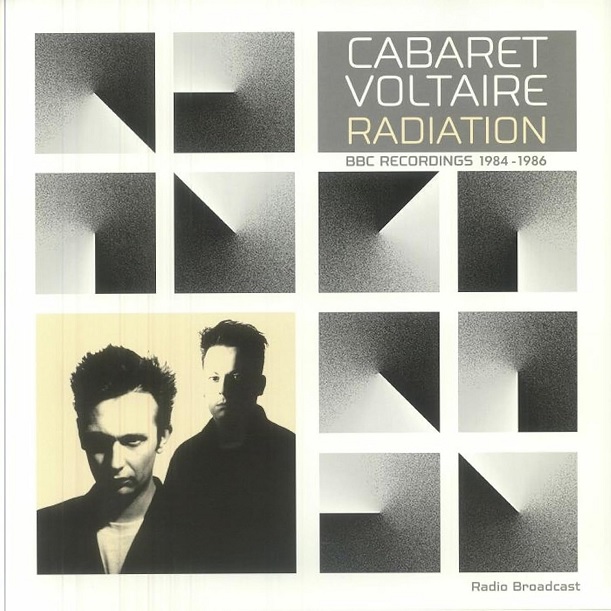
CABARET VOLTAIRE
Links
Buy
Cabaret Voltaire Vinyl - direct link @ ebay.co.uk
(Lenin is a participant in the eBay (EPN) affiliate program)
Cabaret Voltaire Fascinating Facts
Echo & The Bunnymen Fascinating Facts
Kathleen Ferrier Fascinating Facts
Siouxsie and the Banshees Fascinating Facts
Led Zeppelin Fascinating Facts
Human League Fascinating Facts
Visage / Steve Strange Fascinating Facts
Tears For Fears Fascinating Facts
Queen / Freddie Mercury Fascinating Facts
Danny Thompson Fascinating Facts
Talking Heads Fascinating Facts
Porcupine Tree Fascinating Facts
Adam and the Ants Fascinating Facts
Cabaret Voltaire Fascinating FactsQueen / Freddie Mercury Fascinating Facts
Marc Bolan and T. Rex Fascinating Facts
Sting & The Police Fascinating Facts
Jean-Michel Jarre Fascinating Facts
Peter Gabriel Fascinating Facts
Holger Czukay Fascinating Facts
Anton Corbijn Fascinating Facts
Dexys Midnight Runners Fascinating Facts
Roxy Music / Bryan Ferry Fascinating Facts
Masami Tsuchiya Fascinating Facts
Elvis Presley Fascinating Facts
Scott Walker Fascinating Facts
Michael Brook Fascinating Facts
Penguin Cafe Orchestra Fascinating Facts
David Bowie Rarities (Shipped From UK)
Cocteau Twins Fascinating Facts
Ryuichi Sakamoto Fascinating Facts
Haruomi Hosono Fascinating Facts
Yukihiro Takahashi Fascinating Facts
Hector Zazou Fascinating Facts
Frank Auerbach Fascinating Facts
Cabaret Voltaire
Artist
Cabaret Voltaire
Content
All the fascinating facts
More
Bitesized
Year
1970s to Present Day
Random and bite-sized facts on all things on the mythical band Cabaret Voltaire. Totally random but totally fascinating if you're into it. Do you know Cabaret Voltaire now?
--
Cabaret Voltaire began as something larger than a band
Stephen Mallinder recalled that the original circle of people experimenting together was much larger than the familiar trio. They started exploring ideas in 1973, before the project had settled into the identity of Richard H. Kirk, Chris Watson and Mallinder.
--
Their first studio was Chris Watson’s parents’ attic
The early recordings were made in a tiny loft space, using whatever equipment the group could afford. Rather than beginning with expensive synthesizers, they built their sound around second-hand tape recorders, crude electronics and the manipulation of recorded noise.
--
A telephone engineer helped shape their sound
Chris Watson’s practical knowledge of electronics was crucial to Cabaret Voltaire’s early experiments. He worked as a telephone engineer, giving him useful technical skills for a group that wanted to make unfamiliar sounds with homemade equipment rather than rely on conventional musical instruments.
--
They bought tape recorders through Exchange and Mart
In recalling the early days, Mallinder described buying second-hand reel-to-reel machines through the classified-advertising paper *Exchange and Mart*. One government-surplus recorder was so heavy that carrying it up to the attic became a memorable part of the process.
--
Richard H. Kirk played clarinet as well as guitar
Kirk’s early musical equipment included a clarinet, an instrument that sat rather unexpectedly alongside the group’s crude electronics and distorted guitar. Mallinder recalled that Kirk may have chosen it because he could not afford an oboe like the one associated with Roxy Music’s Andy Mackay.
--
A homemade fuzzbox was part of the early set-up
Mallinder asked Watson to build him a fuzzbox using a circuit from *Practical Electronics* magazine. It is a small but revealing detail about the band’s early approach: their equipment was often improvised, repaired or built from instructions rather than bought ready-made.
--
Their early performances were not always conventional gigs
Before regular concerts became part of their life, the group took tape machines into public spaces around Sheffield, including pubs and streets. They sometimes played strange sounds through loudspeakers simply to provoke a reaction, blurring the line between music, performance art and public nuisance.
--
Their first proper concert ended in violence
Cabaret Voltaire’s first gig, at Sheffield University in May 1975, ended in a confrontation with the audience. Mallinder was injured and taken to hospital. The incident became an early example of how radically their performances challenged the expectations of a conventional rock crowd.
--
Western Works became more than their own studio
Chris Watson helped finance the establishment of Western Works in Sheffield in 1977. The studio later became an important meeting point for the city’s developing electronic and experimental scene, with groups including Clock DVA and the Human League recording there; New Order also made early recordings at the studio.
--
They were fascinated by sound before they thought of themselves as musicians
The trio’s early objective was not simply to write songs using synthesizers. Their experiments centred on recording, cutting up and transforming sound itself. Mallinder later described the tape recorder as a tool for manipulating sound, a philosophy that helps explain why their earliest work could feel closer to an audio experiment than a conventional song.
--
CABARET VOLTAIRE
Links
Buy
Cabaret Voltaire Japanese Vinyl - direct link @ ebay.co.uk
(Lenin is a participant in the eBay (EPN) affiliate program)
--
A steam hammer became one of their earliest drum tracks
While travelling through Belgium, the group recorded a steam hammer pounding metal structures into the seabed at Ostend. Richard H. Kirk captured the sound on cassette, and they turned it into a repetitive percussion loop. They used it at their first gig, long before sampling became commonplace in popular music.
--
The original group included someone whose mother reclaimed an organ
Stephen Mallinder recalled that Cabaret Voltaire began as a loose collective of roughly ten people, rather than a fixed trio. One early participant, Mick, had to leave when his mother asked for the organ he had been playing back. It was a wonderfully ordinary obstacle for a group trying to make extraordinary sounds.
--
They shared a remarkable bill with William Burroughs
In Brussels, Cabaret Voltaire appeared at the Plan K arts venue alongside Joy Division, writer William S. Burroughs and artist Brion Gysin. The event combined live music, film screenings and readings across the building, making it closer to a multi-day avant-garde happening than a normal concert.
--
Sheffield's steel industry left a mark on their music
The group grew up surrounded by the noise of steel production, including the immense rhythmic pounding of industrial machinery. Mallinder even spent a year working in a steelworks, moving boxes of ingots through a factory that produced everything from raw steel to cutlery sold in expensive London shops. The experience strengthened his awareness of class and industry.
--
Western Works was designed to keep them independent
When the band received money from Virgin, they invested it in a 16-track recording studio rather than spending it all on conventional recording sessions. Later, after signing with EMI, they upgraded to 24-track recording while retaining the same mixing desk. Mallinder explained that owning the studio let them experiment for as long as they needed without commercial studio bills mounting up.
--
New Order recorded privately at Western Works after Ian Curtis died
New Order made early demos at Cabaret Voltaire's studio shortly after the death of Joy Division's Ian Curtis. Mallinder recalled that they wanted to avoid the attention that would come with booking a conventional commercial studio. Western Works offered a discreet place where friends could work without the press or fans knowing they were there.
--
“Sensoria” was assembled from two separate songs
The familiar 12-inch version of “Sensoria” was created by combining parts of “Do Right” and “Sensoria”. Richard H. Kirk explained that the band experimented with editing the multitrack recordings together after producer Robin Scott suggested that the material could be joined. The finished single became one of their most recognisable tracks.
--
The word “Sensoria” was invented by Mallinder
The title wasn't borrowed from an established scientific or philosophical term. Mallinder said he made the word up to suggest an explosion of sensations and the absorption of different sensory experiences. He also explained that he liked inventing words and fitting them to the rhythm and structure of the music.
--
The “Sensoria” video found its audience in America
Director Peter Care's stark, unconventional video struggled to gain regular exposure on British television, reportedly being shown on only one UK programme. In America, however, it received extensive MTV rotation. The contrast helped establish Care's reputation as a music-video director and brought Cabaret Voltaire to a much wider audience.
--
Chris Watson left because he feared losing his original interests
When Watson departed in 1981, Cabaret Voltaire were becoming more successful and increasingly operating as a conventional touring and recording band. He had always been fascinated by recording real-world sounds and shaping music from them. He worried that the band's growing commitments were pulling him away from that work, so he chose to pursue sound recording for film and television.
--
CABARET VOLTAIRE
Links
Buy
Cabaret Voltaire Japanese Vinyl - direct link @ ebay.co.uk
(Lenin is a participant in the eBay (EPN) affiliate program)
--
He couldn't write music in conventional notation
Kirk admitted that he couldn't write music down as conventional sheet music that another musician could read and reproduce. That limitation helped make recording so central to Cabaret Voltaire: ideas could be captured on tape, manipulated and developed without needing to translate them into written scores.
--
His father was an amateur radio enthusiast
Kirk's father worked in the steel industry but was also an amateur radio enthusiast. Kirk later credited this exposure to electronics with helping spark his interest in the possibilities of manipulating sound, long before electronic music became widely accessible.
--
He attended Communist youth meetings as a teenager
Kirk briefly attended Young Communist League meetings with his father. Although Cabaret Voltaire became known for politically charged recordings and unsettling media samples, Kirk's interest in radical politics began well before the band developed its distinctive musical identity.
--
He studied sculpture at art school
Before Cabaret Voltaire became established, Kirk attended a one-year art course specialising in sculpture. That background is an important part of understanding the band's approach: their work was as much about assembling and reshaping materials as it was about writing conventional songs.
--
He was listening to funk as well as avant-garde music
Kirk repeatedly stressed that Cabaret Voltaire's influences included James Brown, Miles Davis and Fela Kuti, alongside German experimental groups such as Can and Neu! He felt the importance of African-American dance music was often overlooked when critics described the band solely as an industrial or avant-garde act.
--
He preferred accidents to perfectly planned results
Kirk credited Brian Eno with helping him appreciate the creative possibilities of mistakes. In an interview, he recalled Eno discussing a Velvet Underground guitar solo in which Lou Reed repeatedly failed to play the passage cleanly. For Kirk, those imperfections were part of what made a recording interesting.
He worked with a surprisingly old computer setup
Even in a later-career interview, Kirk said he was using an old Mac G4 computer with an older version of Pro Tools. He was not particularly interested in adopting every new recording technology simply because it was available; he preferred equipment he already understood and could work with effectively.
He used dozens of different musical identities
Away from Cabaret Voltaire, Kirk released music under numerous aliases, including Sandoz and Electronic Eye. Sandoz allowed him to explore rhythm-led electronic music influenced by African and Caribbean sounds, rather than being confined to the expectations attached to the Cabaret Voltaire name.
He once rented a Fairlight by the hour
In the mid-1980s, Cabaret Voltaire used the Fairlight CMI, one of the era's pioneering digital sampling systems. It was so expensive that Kirk recalled renting it by the hour, along with an engineer to show them how to operate it. The sampler's cost makes a striking contrast with the band's earlier experiments using inexpensive tape machines.
He personally assembled a major archive of the band's work
Kirk took responsibility for compiling Cabaret Voltaire's *#8385 Collected Works 1983–1985* project. He tracked down recordings, dealt with deteriorating analogue tapes that needed specialist treatment before transfer, gathered video material and wrote the accompanying notes. It was a substantial archival undertaking, not simply a reissue assembled by a record company.
--
CABARET VOLTAIRE
Links
Buy
Cabaret Voltaire Japanese Vinyl - direct link @ ebay.co.uk
(Lenin is a participant in the eBay (EPN) affiliate program)
--
He was interested in art before Cabaret Voltaire existed
Mallinder had taken art A-level and spent his teenage years visiting galleries and making art himself. He was particularly interested in Abstract Expressionism and Pop Art before discovering Dada and Surrealism, influences that helped shape Cabaret Voltaire's confrontational approach.
--
Brian Eno helped him understand what electronic music could be
Mallinder has described seeing Eno perform with Roxy Music as a revelation. Watching someone use a synthesizer and tape recorder on stage made electronic sound seem like something young musicians could explore themselves, rather than a mysterious process confined to professional studios.
--
His first solo album was made alongside Cabaret Voltaire
Mallinder recorded *Pow Wow*, released in 1982, while Cabaret Voltaire were still active. He said the project began partly because Fetish Records asked him to make a release, rather than because he had planned a separate solo career. It gave him room to explore musical ideas that didn't necessarily belong in the group.
--
He wanted his voice to become part of the instrumentation
On *Pow Wow*, Mallinder often treated his voice as one element among the instruments, rather than always placing it at the centre. He played multiple instruments himself, combining drum machines and synthesizers with live bass, guitar, drums, horns and percussion.
--
Ennio Morricone was among his unexpected influences
Mallinder has spoken about his enthusiasm for early Morricone, whose film scores inspired him to experiment with sounds associated with Spaghetti Westerns. Elements of that cinematic approach found their way into his solo work, alongside funk, electronic music and more abstract influences.
--
He founded a record label after moving to Australia
After Cabaret Voltaire's original run, Mallinder moved to Australia and established Off World Sounds. Between approximately 1998 and 2006, the label released more than 30 records, including his own projects and work by a range of Australian and international artists.
--
He recorded under the name Ku-Ling Bros.
Mallinder used several names outside Cabaret Voltaire, including Ku-Ling Bros. and Sassi & Loco. These projects allowed him to work with different collaborators and explore styles that weren't necessarily associated with the group's industrial reputation.
--
He collaborated with Soft Cell's David Ball
In 1988, Mallinder worked with David Ball and Robert Gordon on Love Street, a one-off project exploring house music. It demonstrated how closely his interests were connected to the emerging dance-music scene, even while Cabaret Voltaire were developing their own relationship with club culture.
--
He regarded William Burroughs as more than a literary influence
Mallinder described Burroughs as someone who helped him think differently about how to make music and interpret the world. The writer's cut-up techniques and treatment of language suggested ways of dismantling familiar material and rearranging it into something unsettling—an approach that Cabaret Voltaire applied to sound and recorded speech.
--
He returned to making solo albums under his own name decades later
After years of recording through groups and aliases, Mallinder released *Um Dada* in 2019 and later *Tick Tick Tick*. He explained that using his own name helped connect his newer music with the many different projects he had pursued throughout his career.
--
CABARET VOLTAIRE
Links
Buy
Cabaret Voltaire Japanese Vinyl - direct link @ ebay.co.uk
(Lenin is a participant in the eBay (EPN) affiliate program)
--
A childhood tape recorder changed the direction of his life
Watson's parents gave him a portable, battery-powered National reel-to-reel recorder when he was about 12. He began by recording sounds around the house, then took it outside to capture birds. He still retained that original recorder decades later, a remarkable link between his childhood experiments and his later career.
--
He was recording sounds before Cabaret Voltaire existed
Watson's interest in recording the world around him predated the band. He became fascinated by the difference between seeing something happen and actually hearing it, and started using his recorder to capture sounds that people ordinarily overlooked. That curiosity eventually became central to Cabaret Voltaire's tape-based experiments.
--
Pierre Schaeffer gave him a name for what he was doing
Watson discovered the French composer Pierre Schaeffer's work in musique concrète, which uses recorded sounds as material for composition. The approach helped him understand that recordings of everyday life could be manipulated and assembled into music, rather than merely documenting events.
--
His day job involved telephone engineering
Before becoming a professional sound recordist, Watson worked as a telephone engineer at the Post Office. He met people through that job who were involved in science and community events, which helped create the opportunity for Cabaret Voltaire's first performance at Sheffield University in 1975.
--
He helped turn a steam hammer into a musical instrument
During a trip to Belgium, the group recorded a steam hammer pounding metal piles into the seabed at Ostend. Watson and the others transformed the recording into a repetitive loop and used it as percussion at their first concert. The harsh, mechanical pulse became part of the performance that ended in chaos and a fight with members of the audience.
--
He helped finance Western Works
Watson played a crucial role in establishing Cabaret Voltaire's Western Works studio in Sheffield in 1977. The facility gave the band room to experiment independently and later became an important resource for other musicians from the city, including Clock DVA and the Human League.
--
He left just as the band was becoming more successful
Watson left Cabaret Voltaire in 1981, despite the band's growing profile. He later explained that he felt increasingly removed from the location recording and tape manipulation that had first attracted him to sound. Leaving was difficult, but a television sound-recording opportunity gave him a route into a different career.
His television career began with Tyne Tees
After leaving the band, Watson joined Tyne Tees Television in 1981 and trained in location sound recording. This move took him from experimental music into professional television production, where his ability to capture distinctive real-world sounds became a specialised skill.
He has recorded sounds from places people rarely get to hear
Watson became known for recording wildlife and environments at exceptionally close range, including sounds from underwater and from inside animal habitats. His approach often involves patience and careful positioning rather than simply pointing a microphone at the most obvious sound source.
He helped make natural sound a major part of wildlife television
Watson worked on major BBC natural-history productions, including David Attenborough's *The Life of Birds* and *Frozen Planet*. His work earned BAFTA recognition for factual sound, demonstrating how far his career had travelled from the noisy tape experiments of Cabaret Voltaire's early Sheffield days.
--
CABARET VOLTAIRE
Links
Buy
Cabaret Voltaire Japanese Vinyl - direct link @ ebay.co.uk
(Lenin is a participant in the eBay (EPN) affiliate program)
--
One of their earliest tracks featured a piano being smashed apart
“The Dada Man” was recorded around 1974, before the group had even settled on the Cabaret Voltaire name. Stephen Mallinder remembers them experimenting with a smashed piano, recording the process as they took it apart. The track eventually appeared on the cassette compilation *1974–1976*, released by Throbbing Gristle's Industrial Records in 1980.
--
They recorded in Chris Watson's attic twice a week
The early sessions were regular but informal affairs, with the three friends meeting in Watson's attic to experiment with tape recorders and primitive electronics. Mallinder recalled that they worked with a four-track TEAC machine, adding delays and changing instruments rather than following a conventional songwriting process.
--
They gave experimental recordings deliberately odd titles
Early pieces included “The Dada Man”, “Do the Snake” and “A Sunday Night in Biot”. Mallinder explained that the titles were often tongue-in-cheek and sometimes came long after the music had been recorded. The group wasn't necessarily setting out to create finished songs; they were documenting whatever happened during their experiments.
--
“Do the Mussolini” was meant to provoke a physical reaction
The full title of the 1978 track is “Do the Mussolini (Head Kick)”. Its deliberately provocative dance concept reflected the group's Dada-inspired humour and hostility towards authoritarianism. They were interested in turning the idea of a dance craze into something deliberately uncomfortable rather than offering a conventional club routine.
They struggled to find a drum machine that did what they wanted
The band spent years trying to get the right drum-machine sound. Stephen Mallinder recalled the difficulties of working with early machines and trying to make their rigid rhythms fit the group's music. The mechanical pulse eventually became a defining feature, but it took considerable experimentation to make it feel distinctive rather than merely repetitive.
Record companies initially rejected their experimental tapes
The group sent recordings to record labels even when they had little expectation of being signed. Mallinder remembered that the tapes did not receive much interest. By around 1977, they began trying to distil the raw experimentation into more coherent tracks that could be sent out to a wider audience.
Their early recordings reached listeners through Throbbing Gristle's label
Industrial Records released *1974–1976* in 1980 as a cassette-only compilation of Cabaret Voltaire's early experiments. It preserved material that had originally been made privately in the attic years earlier, giving listeners a glimpse of the group before their more structured post-punk records appeared.
Their later dance music was a return to an old influence
When the group worked with Chicago house producer Marshall Jefferson on *Groovy, Laidback and Nasty* in 1989, some fans criticised the collaboration. Mallinder defended the move by pointing to Cabaret Voltaire's longstanding connection with Black American music. For him, house was not a sudden change of direction but part of a musical conversation that had been going on for years.
Their 2025 anniversary performances incorporated a new Sheffield-themed track
When Mallinder and Watson returned to performing Cabaret Voltaire material, they worked with Ben “Benge” Edwards and Eric Random. Although they decided not to make new Cabaret Voltaire music without Richard H. Kirk, they incorporated Watson's sound design into the performances. This led to “Tinsley”, a new piece with a strong connection to Sheffield.
The three members developed their own private language
Mallinder recalled that the trio had their own jargon and syntax, communicating in a way that outsiders might not understand. This insular bond helped them develop a shared approach to experimentation, performance and their often confrontational attitude towards the outside world.
--
CABARET VOLTAIRE
Links
Buy
Cabaret Voltaire Japanese Vinyl - direct link @ ebay.co.uk
(Lenin is a participant in the eBay (EPN) affiliate program)
--
Western Works was originally shared with the Human League
When Cabaret Voltaire first established themselves at Western Works in 1977, they shared the space with the Human League. Richard H. Kirk later recalled that it was a fairly rough building, but it became the centre of a remarkable Sheffield music scene. Cabaret Voltaire eventually took over the whole space.
--
The studio became a late-night film club
Kirk recalled that Western Works was somewhere to go after the pubs closed. The band accumulated films, B-movies and strange television recordings, and friends would gather to watch them into the early hours. The studio was therefore a social meeting place as well as a recording space.
--
Their debut album included a cover of an obscure American garage-rock song
The 1979 album *Mix-Up* included “No Escape”, originally recorded by Californian garage-rock band the Seeds for their 1966 debut album. The choice reveals a connection to raw American underground music that is sometimes overlooked when Cabaret Voltaire are described purely as an experimental electronic group.
--
They issued an album before many listeners knew what they sounded like
Their debut album, *Mix-Up*, appeared in October 1979, but the group had already spent years making experimental recordings and releasing very limited tapes. The album was a more accessible entry point into their work, although contemporary reviewers still found its mixture of sound collage, rhythm and fragments of speech difficult to categorise.
--
Their early cassette archive was finally collected decades later
The triple-CD set *Methodology '74/'78: The Attic Tapes*, released by Mute in 2002, brought together recordings made before the group's commercial breakthrough. Much of the material had originally existed as private experiments rather than planned album tracks, preserving the sound of the band discovering its own methods.
They used tape loops to create rhythms before sampling was commonplace
The early group repeatedly recorded, cut and reassembled sounds on reel-to-reel machines. This made it possible to turn fragments of speech, machinery and instrumental noises into recurring rhythmic patterns. Their approach was laborious, but it anticipated techniques that later became routine in electronic and sample-based music.
They were connected to Factory Records before their biggest electronic hits
Cabaret Voltaire contributed tracks to Factory's *A Factory Sample*, the label's 1979 sampler. Their appearance placed them in the same emerging independent-label network as Joy Division and other Manchester acts, even though their sound and their base in Sheffield made them outsiders to the Manchester scene.
“Yashar” existed in more than one musical world
The track appeared on *2x45* in 1982 and was subsequently remixed for release as a dance single by John Robie. Its evolution from a Cabaret Voltaire album track into a club-oriented version illustrates the group's increasing interest in rhythm and the possibilities of electronic music beyond the post-punk audience.
They could be both deeply experimental and surprisingly disciplined
Although their reputation rests partly on chaotic early performances and sound collage, Cabaret Voltaire developed a highly organised recording practice. At Western Works they could capture performances, edit them across multiple tape machines and refine arrangements over time. The apparent disorder in the finished music often came from careful construction.
Richard Kirk's archive preserved a decade of independent experimentation
Kirk's collected-work projects brought together recordings that had appeared on different labels and under different names. The material documents how Cabaret Voltaire moved from abrasive tape experiments towards funk-influenced electronics and club music without entirely abandoning their original interest in collage and unsettling sounds.
--
CABARET VOLTAIRE
Links
Buy
Cabaret Voltaire Japanese Vinyl - direct link @ ebay.co.uk
(Lenin is a participant in the eBay (EPN) affiliate program)
--
They bought their drum machine after a shopkeeper mocked them
Stephen Mallinder recalled that the group wanted to exchange an old drum machine for a newer Selmer model. The shopkeeper asked if they were offering a kazoo in part exchange. They walked out, withdrew cash from the bank and returned to buy the machine outright. It supplied the distinctive tom-roll rhythm on “Nag Nag Nag”.
--
“Nag Nag Nag” was one of their least electronic-sounding hits
Mallinder has pointed out the irony that one of Cabaret Voltaire's best-known tracks is among their least electronic recordings. Its insistent rhythm and simple chord movement owe more to direct, physical rock music than to elaborate synthesizer programming. The band still enjoy performing it because of its immediate energy.
--
They had to recreate a drum sound because the original machine was missing
When the band returned to playing “Nag Nag Nag” live, they couldn't trace the Selmer drum machine used on the original recording. They adapted a Korg Mini Pops to approximate its sound. A tiny piece of obsolete equipment had become part of the challenge of reconstructing their own musical history.
--
They recorded American televangelists while staying in San Francisco
During their first US visit around 1980, the group stayed in San Francisco's North Beach area with V. Vale of Re/Search Publications. They were fascinated by the television preachers they found on cable, particularly the way they used language to persuade viewers to send money. They recorded their voices and later built music around them for “Sluggin' Fer Jesus”.
--
They were exploring television sampling at the same time as David Byrne and Brian Eno
Cabaret Voltaire's use of televangelist recordings on “Sluggin' Fer Jesus” emerged around the same period as the experiments that appeared on Byrne and Eno's *My Life in the Bush of Ghosts*. Mallinder later acknowledged the similarity, saying the idea of using found voices in music was already circulating among adventurous musicians at the time.
“Seconds Too Late” involved a vocoder brought in by train
For the recording, Rough Trade's Geoff Travis wanted to help produce the track. The band were keen to use an EMS vocoder, so they asked Travis to bring the rented machine with him on the train to Sheffield. Mallinder joked that, although Travis received a co-production credit, the group already knew how they wanted the track to sound.
“Kneel to the Boss” was designed as a standalone single
Cabaret Voltaire sometimes deliberately kept catchy tracks off their albums so they could issue them as seven-inch singles. Mallinder explained that they hoped a self-contained release might attract radio play from John Peel. “Kneel to the Boss” was one such release, rather than simply an album track chosen after the event.
The sleeve of *2x45* was part of the artistic experiment
For the 1982 album *2x45*, designer Neville Brody created an unusual sleeve with an envelope-like opening. The release was also issued with a seven-inch single in a plastic zip-lock bag, sold as a combined package rather than as separately purchasable formats. The band treated packaging as another part of the work, not just a container for the records.
“Yashar” included a sample from a science-fiction television series
Mallinder identified a sample from the American science-fiction series *The Outer Limits* as one of the ingredients in “Yashar”. The recording also used rototoms played by Alan Fish, whose high, tight percussion gave the track an unusual rhythmic character. The combination reflected the group's interest in science fiction and sounds outside conventional rock music.
They deliberately refused to settle on one sound
Mallinder explained that the group wanted every track to stand on its own, rather than making each release a polished continuation of the previous one. That philosophy helps explain why their catalogue jumps between harsh industrial pieces, dub-influenced experiments, funk, ambient instrumentals and dance music. They saw changing direction as part of the point.
--
CABARET VOLTAIRE
Links
Buy
Cabaret Voltaire Japanese Vinyl - direct link @ ebay.co.uk
(Lenin is a participant in the eBay (EPN) affiliate program)
--
They once described their music as “the Outer Limits”
Science-fiction television series *The Outer Limits* was a major early influence on the group. Stephen Mallinder recalled that the trio even had promotional stickers made in the early 1970s bearing the words “Cabaret Voltaire – The Outer Limits”. They wanted their music to suggest unfamiliar, unsettling sounds from another world.
--
Richard H. Kirk was already recording music in 1972
Although Cabaret Voltaire's public career is usually dated from the mid-1970s, Kirk and Mallinder were experimenting with tape recorders before then. Kirk later described the group's early aim as making music without knowing how to play conventional instruments, using recorders and discarded equipment to discover what sounds they could create.
--
Their first American major-label release came surprisingly late
Despite their influence on electronic and industrial music, Cabaret Voltaire did not receive their first album release on a US major label until *Code* in 1987. By then, they had been experimenting with tape collage for around fifteen years, and had already released a substantial catalogue in Britain and Europe.
--
They upgraded their studio rather than keep paying London rates
After recording *The Crackdown* in London, Kirk calculated that studio costs and management deductions had left him and Mallinder with only a fraction of the money involved. For the next album, they upgraded Western Works and brought producer Flood to Sheffield, allowing them to work for longer without watching the studio clock.
--
They made *The Covenant, The Sword and the Arm of the Lord* at home
Released in 1985, the album was recorded at Western Works rather than in an expensive London studio. Kirk later described it as a deliberate return to working independently after the experience of *The Crackdown* and *Micro-Phonies*. The result retained the group's electronic precision without the same sense of commercial polish.
Their record sleeves were part of a wider design culture
Cabaret Voltaire worked with designer Neville Brody during the early 1980s, including on *2x45*. Brody's use of typography, unusual layouts and unconventional packaging complemented the band's experimental approach. Their releases were designed to look different as well as sound different.
They had a connection to the earliest Warp sound
Richard H. Kirk's later work with Richard Barratt as Sweet Exorcist helped define the Sheffield “bleep” sound associated with Warp Records. Although this was a separate project from Cabaret Voltaire, it extended Kirk's interest in stark electronic rhythms into the emerging British techno scene.
They kept making ambient music after the club years
During the 1990s, Cabaret Voltaire released albums including *Plasticity*, *International Language* and *The Conversation*. These records often moved away from the vocal-led format of their earlier work, exploring spacious electronic textures and longer instrumental passages. Mallinder later said that this period was particularly suited to the CD format.
They used the studio as an instrument in its own right
Kirk described the group's tape experiments as a way of adding a cinematic dimension to music. A voice or environmental recording could establish a place or mood alongside the rhythm, rather than serving as a conventional lyric. This technique remained central to their work even as their equipment became more sophisticated.
Their influence reached well beyond industrial music
Cabaret Voltaire's catalogue influenced musicians working in techno, electro, house, industrial rock and experimental sound. Kirk's work with Sandoz and Sweet Exorcist carried his ideas into different scenes, while the original band's recordings remained a reference point for artists interested in treating recorded sound as raw material rather than simply performing songs.
--
Search Keywords
Cabaret Voltaire
Band
Icons
CABARET VOLTAIRE
Links
Buy
Cabaret Voltaire Vinyl - direct link @ ebay.co.uk
(Lenin is a participant in the eBay (EPN) affiliate program)
Cabaret Voltaire Fascinating Facts
Echo & The Bunnymen Fascinating Facts
Kathleen Ferrier Fascinating Facts
Siouxsie and the Banshees Fascinating Facts
Led Zeppelin Fascinating Facts
Human League Fascinating Facts
Visage / Steve Strange Fascinating Facts
Tears For Fears Fascinating Facts
Queen / Freddie Mercury Fascinating Facts
Danny Thompson Fascinating Facts
Talking Heads Fascinating Facts
Porcupine Tree Fascinating Facts
Adam and the Ants Fascinating Facts
Sex Pistols Fascinating FactsVisage / Steve Strange Fascinating Facts
Tears For Fears Fascinating Facts
Queen / Freddie Mercury Fascinating Facts
Marc Bolan and T. Rex Fascinating Facts
Sting & The Police Fascinating Facts
Jean-Michel Jarre Fascinating Facts
Masami Tsuchiya Fascinating Facts
Peter Gabriel Fascinating Facts
Holger Czukay Fascinating Facts
Anton Corbijn Fascinating Facts
Dexys Midnight Runners Fascinating Facts
Roxy Music / Bryan Ferry Fascinating Facts
Elvis Presley Fascinating Facts
Scott Walker Fascinating Facts
Michael Brook Fascinating Facts
Penguin Cafe Orchestra Fascinating Facts
David Bowie Rarities (Shipped From UK)
Cocteau Twins Fascinating Facts
Roxy Music / Bryan Ferry Fascinating Facts
Ryuichi Sakamoto Fascinating Facts
Haruomi Hosono Fascinating Facts
Yukihiro Takahashi Fascinating Facts
Hector Zazou Fascinating Facts
Frank Auerbach Fascinating Facts